Vietnam – The “Royal Inspector” of the Global Supply Chain
Home|News & Event|Vietnam – The “Royal Inspector” of the Global Supply Chain
Detail
Vietnam – The “Royal Inspector” of the Global Supply Chain
In recent years, Vietnam has emerged as one of the most attractive destinations for industrial investment in the Asia-Pacific region. With a growing network of over 700 industrial parksand thousands of well-planned industrial clusters, along with highly favorable tax and trade incentives, Vietnam is drawing strong interest from global investors across the United States, Europe, South Korea, Japan, China, and Taiwan.
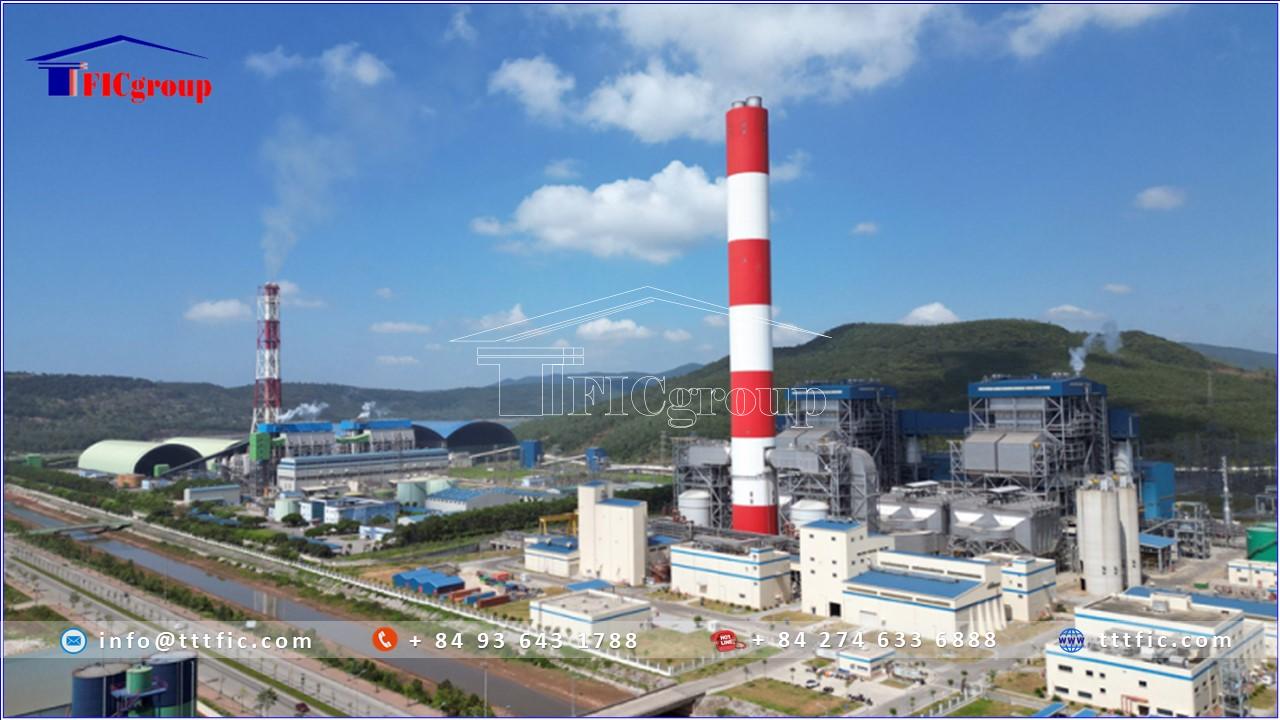
Land for sale in Nghi Son Economic Zone – Thanh Hoa – TTTFIC Group
A Modern and Synchronized Industrial Ecosystem
Vietnam’s industrial zones are strategically located in major economic hubs such as Hanoi, Ho Chi Minh City, and Hai Phong, and are expanding rapidly into key coastal and central provinces like Nghe An, Ha Tinh, Quang Ngai, and Da Nang. The government is also aggressively developing new industrial parks in the Mekong Delta region, including provinces like Can Tho and Soc Trang.
Each industrial park is equipped with:
Transportation infrastructure connected to seaports, airports, and expressways;
Utilities such as power, water, and wastewater treatment built to international standards;
On-site services including legal support, logistics, skilled labor, and housing for professionals.
Unmatched Tax Incentives – A Major Competitive Advantage
The Vietnamese government offers exceptional incentives to foreign investors, including:
Corporate income tax exemptions for 2 to 4 years, followed by a 50% tax reduction for up to 9 additional years;
Import duty exemptions for machinery, equipment, and raw materials not available domestically;
No nationality restrictions for company establishment or investment.
Strong Administrative Reforms – A Leaner, More Efficient Government Structure
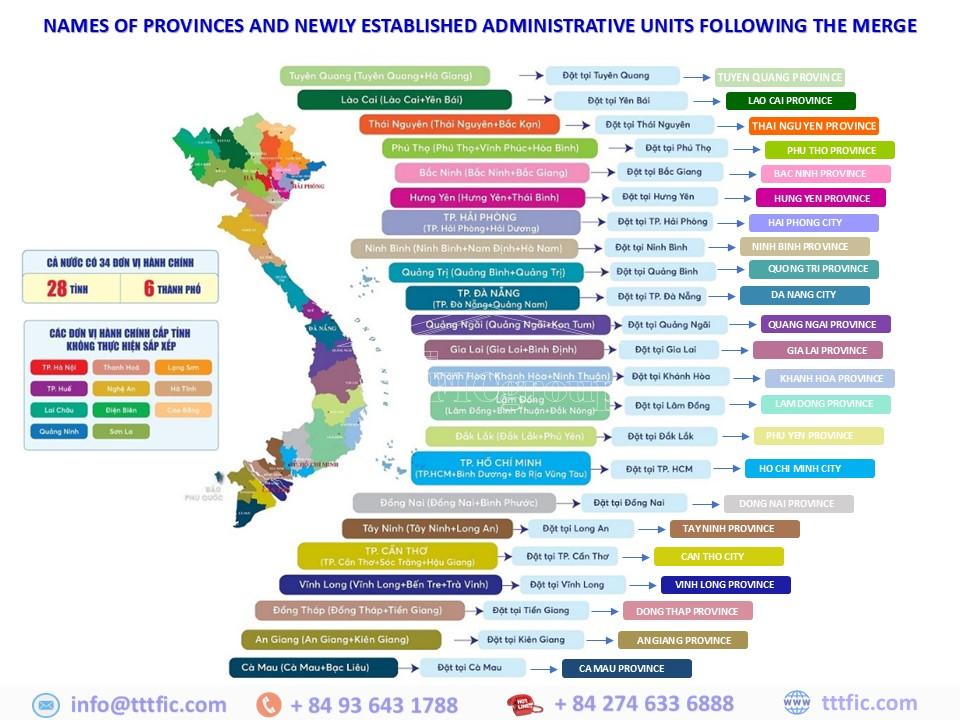
A key milestone in Vietnam’s development has been its bold administrative reform aimed at streamlining governance and improving service delivery. Recently, the country has reduced the number of provinces from 63 down to 34 through regional consolidation and eliminated the district level of government, leaving only two administrative tiers: provincial and communal levels.
New Map of Merged Provinces and Administrative Units of Vietnam
These changes are designed to:
Eliminate overlapping management structures;
Increase transparency and administrative efficiency;
Enable businesses, investors, and citizens to access public services more quickly and conveniently;
Significantly shorten the time required for investment licensing, construction permits, land clearance, and environmental procedures.
This reform creates a friendlier, more transparent, and more responsive business environment — especially important amid intensifying global competition.
Vietnam – The World’s Gateway for Quality Assurance and Final Processing
In the global supply chain, Vietnam is increasingly viewed as a “royal food taster” — the trusted final checkpoint before goods are presented to the world’s most demanding markets.
Global corporations are choosing Vietnam as the final destination for fine-tuning, assembly, quality control, and export-standard packaging before shipping products to strict markets like the U.S., EU, and Japan.
With a skilled and detail-oriented workforce, competitive labor costs, and a modern certification infrastructure, Vietnam has earned a reputation for consistently meeting high international standards. This makes the country a crucial “golden link” in the journey of getting products to global consumers.
An Irresistible Investment Destination
Vietnam’s political stability, low operating costs, rapid institutional reform, and commitment to deep global integration — evidenced by 15 major Free Trade Agreements (including CPTPP and EVFTA) — have positioned the country as a must-consider destination for manufacturing and industrial investment in the post-COVID era and the ongoing global supply chain realignment.
VIETNAM INDUSTRIAL REAL ESTATE – KICKING OFF A PROMISING YEAR 2026
Vietnam industrial real estate – kicking off a promising year 2026. the past year has been filled with challenges, marked by global economic fluctuations, geopolitical...
TTTFIC Group – Vietnam’s Leading Industrial Real Estate & Investment Ecosystem
Tttfic group – vietnam’s leading ecosystem in industrial real estate & investment promotion tttfic group is proud to be one of the leading ecosystems in...
TTTFIC Group – New Project at Cai Mep Industrial Park & Port
Tttfic group – new project at cai mep industrial park & port we has officially signed a lease agreement for 30,000 sqm of customized-built factory...
Standard Factory Leasing At Bac Dong Phu Industrial Park – Dong Nai Province (Formerly Binh Phuoc)
Standard factory leasing at bac dong phu industrial park – dong nai province (formerly binh phuoc) strategic location – competitive rental rates – fixed price...
Industrial Design & Build Services For Factories – TTTFIC
Industrial design & build services for factories – tttfic with over a decade of experience in industrial construction, tttfic is proud to be a trusted...
Vietnam – The “Royal Inspector” of the Global Supply Chain
Vietnam – the “royal inspector” of the global supply chain in recent years, vietnam has emerged as one of the most attractive destinations for industrial...