VIETNAM - RENOVATION & INTEGRATION, A STRATEGIC INVESTMENT HUB OF ASIA
Home|News & Event|VIETNAM – RENOVATION & INTEGRATION, A STRATEGIC INVESTMENT HUB OF ASIA
Detail
VIETNAM – RENOVATION & INTEGRATION, A STRATEGIC INVESTMENT HUB OF ASIA
Choosing TTTFIC Group means Vietnam’s industrial parks are within your reach
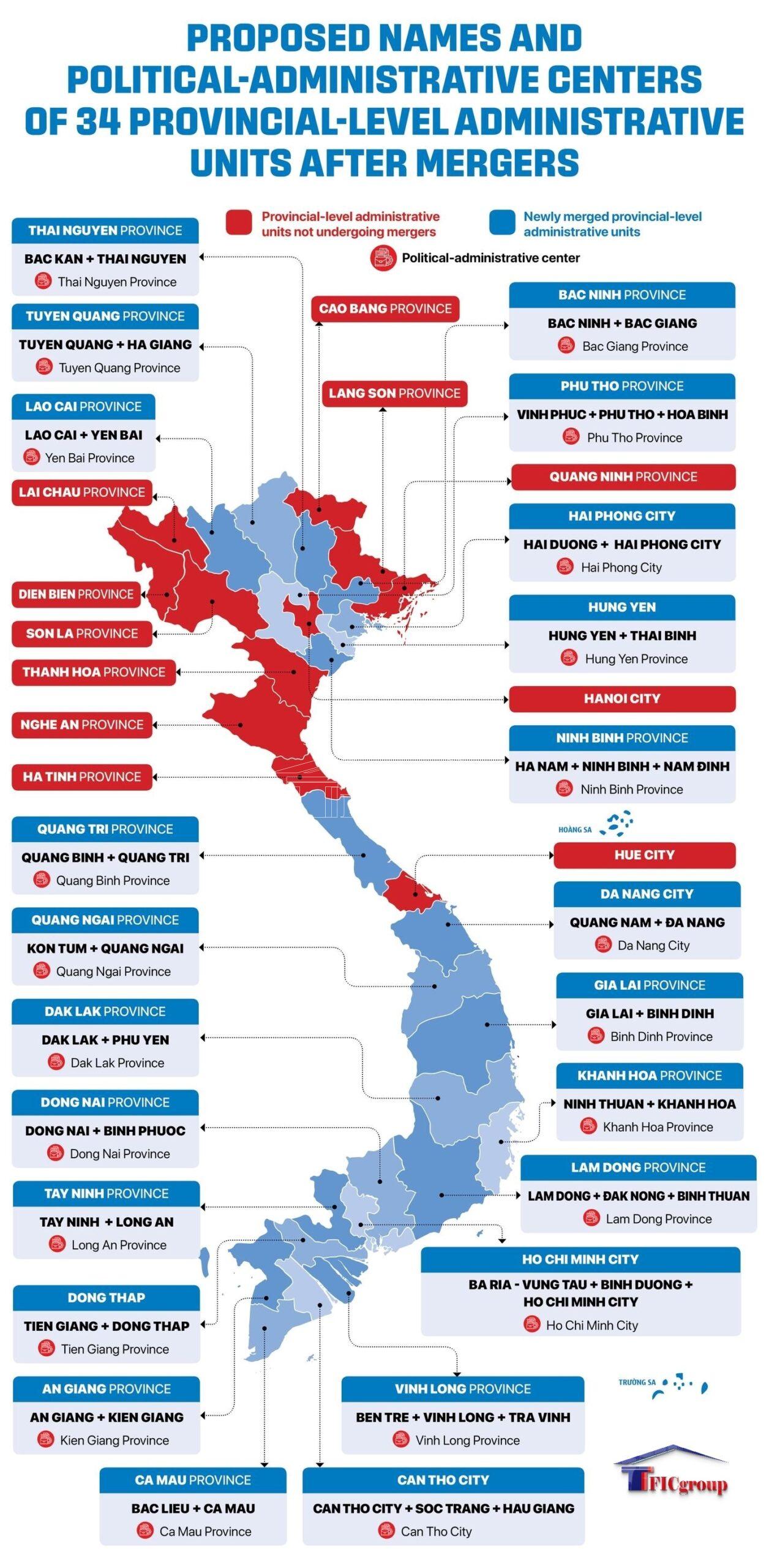
Comprehensive Administrative Reform Following the Merger into 34 Provinces and Cities
Vietnam is entering a new era of administrative reform and territorial restructuring—the most significant transformation in decades. Under the latest direction, the administrative system has been streamlined from 63 provinces and centrally governed cities down to 34 provincial-level administrative units, while simultaneously eliminating the district-level government system, leaving only a two-tier administrative structure consisting of:
Provincial/Municipal Level
Commune/Ward Level
This is considered a strategic transformation aimed at building a more modern, flexible, transparent, and globally competitive Vietnam for investment attraction.
Investing in Vietnam is the right choice
The trend toward comprehensive digital transformation in industry
AI & Data
Research and manufacture electronic components (such as chips, integrated circuits, and transistors) using semiconductor materials
1 – OVERVIEW OF VIETNAM
Vietnam is located at the center of Southeast Asia and holds a strategic position connecting:
China
ASEAN
Northeast Asia
International maritime routes
Key Advantages:
Population of over 100 million people
Young and dynamic workforce
Stable political environment
Strong economic growth rate
Extensive network of FTAs:
CPTPP
EVFTA
RCEP
UKVFTA…
Vietnam is currently a strategic manufacturing destination for many global corporations in sectors such as:
Electronics
High technology
Logistics
Supporting industries
Clean energy
AI & data
Medical equipment
Automotive and components
2 – NEW ADMINISTRATIVE REFORM – A MAJOR TURNING POINT FOR INVESTORS
From 63 Provinces and Cities Down to 34 Provinces and Cities
The merger helps create localities with:
Larger economic scale
More synchronized infrastructure
Larger industrial land reserves
More concentrated labor resources
Stronger regional planning capabilities
This is not merely a change in administrative boundaries, but rather:
“A complete restructuring of the entire governance and regional economic development ecosystem.”
Vietnam’s New Administrative Map After the Provincial and Municipal Merger
3 – ELIMINATION OF DISTRICT-LEVEL GOVERNMENT – ACCELERATING INVESTMENT PROCEDURES
Previously, many procedures had to go through:
Commune/Ward
District
Province/City
This multi-layered process often caused:
Overlapping responsibilities
Delayed approvals
Coordination difficulties
Increased time costs
After the reform:
All procedures will be streamlined to only:
Commune/Ward
Province/City
This will help:
Shorten the processing time for:
Investment approvals
Construction permits
Environmental assessments
Business registration
Land-related documentation
Customs and logistics procedures
Significantly reduce:
Administrative intermediaries
Bureaucratic costs
Risks of legal overlap
Increase:
Transparency
Administrative efficiency
Processing speed
Government responsiveness
4 – DIRECT BENEFITS FOR INVESTORS
4.1. Easier Site Selection and Location Assessment
Following the mergers, the new provinces will have larger scale and stronger regional connectivity, making it easier to:
Develop synchronized industrial planning
Analyze supply chains
Connect seaports, airports, and expressways
Optimize logistics and labor recruitment
Examples:
Northern industrial regions are more closely connected with China and Hai Phong seaports
Southern Vietnam is forming a mega industrial-logistics region linked among Ho Chi Minh City, Dong Nai, Binh Duong, and Ba Ria–Vung Tau
Central Vietnam is developing a corridor for seaports, energy, and clean industry
4.2. Faster Investment Decision-Making
Investors will be able to:
Work directly with provincial/city authorities
Reduce approval layers
Access local leadership more easily
Receive faster support in land clearance and licensing
This is especially important for:
Manufacturing plants
Logistics centers
Data centers
Cold storage facilities
Renewable energy projects
High-tech industrial parks
4.3. Larger-Scale Planning – Greater Long-Term Development Potential
The newly merged provinces will have:
Larger land reserves
Bigger populations
Stronger regional GDP
More complete industrial ecosystems
As a result:
Mega industrial parks can be developed more efficiently
Global supply chains can be attracted
Specialized industrial clusters can be established
Vietnam’s competitiveness against Thailand, Indonesia, Malaysia, and India will be strengthened
Choosing TTTFIC Group means Vietnam’s industrial parks are within your reach
Ho Chi Minh City Public Administrative Service Center
Streamlining administrative procedures and supporting investors
SMART URBAN MANAGEMENT IN VIETNAM – APPLYING DIGITAL TECHNOLOGY AND SUSTAINABLE SOLUTIONS
5 – VIETNAM’S THREE STRATEGIC ECONOMIC REGIONS
Northern Vietnam
Strengths:
Electronics
High technology
Supporting industries
China connectivity
Key centers:
Hanoi
Hai Phong
Bac Ninh
Thai Nguyen
Central Vietnam
Strengths:
Deep-water seaports
Energy
Clean industry
Tourism & logistics
Key centers:
Da Nang
Hue
Quang Ngai
Khanh Hoa
Southern Vietnam
Strengths:
Export manufacturing
Logistics
Finance
Technology
Consumer markets
Key centers:
Ho Chi Minh City
Dong Nai
Tay Ninh
Phu Bai Industrial Park – Thua Thien Hue Province – TTTFIC Group
6 – MESSAGE TO INTERNATIONAL INVESTORS
Vietnam is not only opening its doors to investment, but is also:
Restructuring its governance system
Upgrading national infrastructure
Accelerating digital transformation
Enhancing global competitiveness
The streamlining into 34 provinces/cities and the elimination of district-level government sends a strong message that:
Vietnam is transitioning from an “administrative management model” to a “development- and investor-oriented governance model.
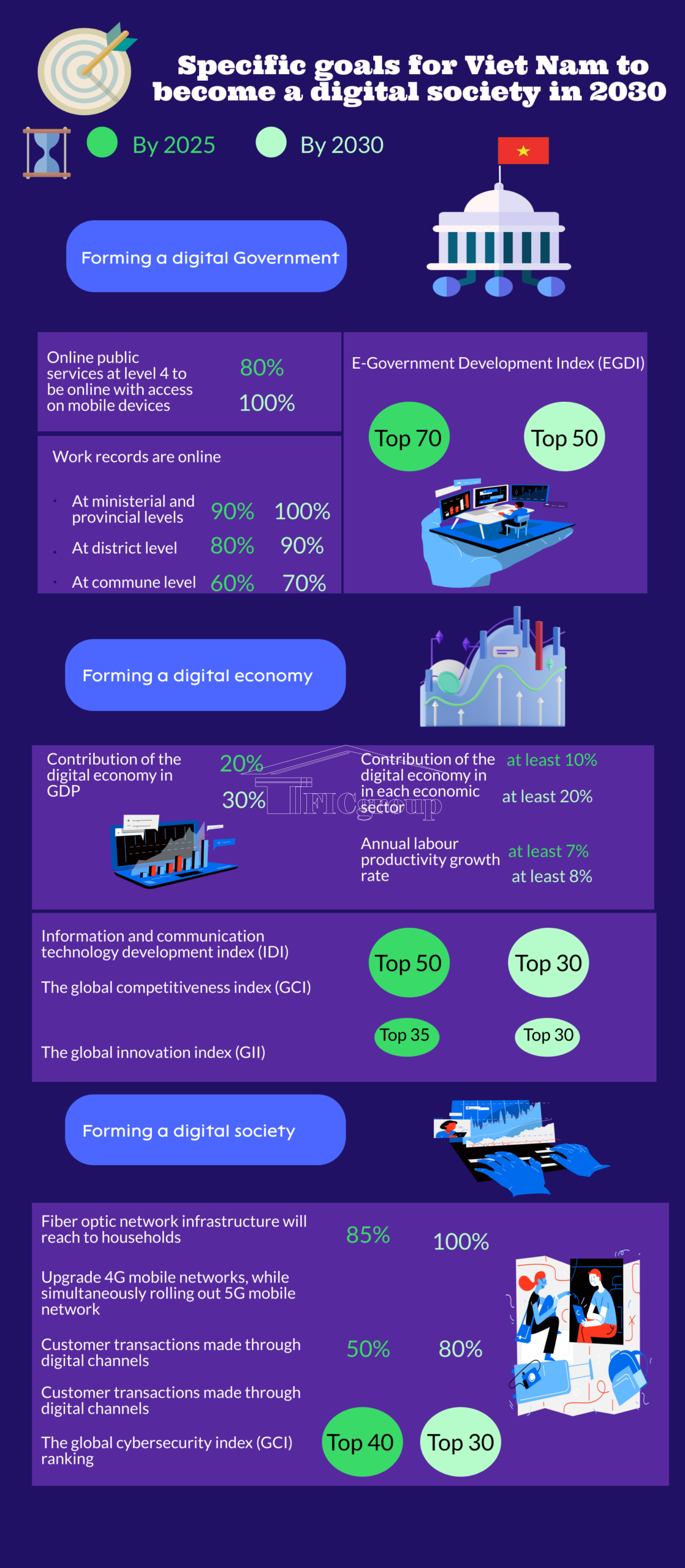
Specific goals for Viet Nam to become a digital society in 2030
CONCLUSION
Vietnam’s new administrative reform will deliver:
A leaner government structure
Faster administrative procedures
More effective planning
More competitive investment costs
Stronger regional connectivity
This is a strategic moment to:
Survey the market
Search for factory locations
Expand supply chains
Make long-term investments in Vietnam
Vietnam is entering a new era of development:
“Faster – More Transparent – Larger in Scale – More Investor-Friendly for the Global Market.”
For Lease - New Build-To-Suit Industrial Factory Complex
For lease - new build-to-suit industrial factory complex rach bap industrial park - ho chi minh city, vietnam approximately 50,000 sqm - designed around your...
Clarification of Our Representation Services - Brokerage Practices and Strategic Investment Support in Vietnam
Dear valued investor, thank you very much for your interest in investing in vietnam and for providing us with information regarding your proposed investment project....
VIETNAM - RENOVATION & INTEGRATION, A STRATEGIC INVESTMENT HUB OF ASIA
Vietnam - renovation & integration, a strategic investment hub of asia choosing tttfic group means vietnam’s industrial parks are within your reach comprehensive administrative reform...
PHU BAI INDUSTRIAL PARK – HUE
Phu bai industrial park – hue i. overview phu bai industrial park is one of the most established and strategically located industrial zones in hue,...
A SHIFT IN MINDSET – FROM “RURAL EXODUS” TO “RETURN-TO-LOCAL INVESTMENT”
Industrial market - a shift in mindset – from “rural exodus” to “return-to-local investment” in the 80s & 90s, migrating to big cities was almost...
LAM SON – SAO VANG INDUSTRIAL PARK (THANH HOA)
Lam son – sao vang industrial park (thanh hoa) i. overview lam son – sao vang industrial park is located in tho xuan district, thanh...