Tam Duong I Industrial Park - Phu Tho
- Investor: Sonha International Corporation
- Price: 110 USD/m2
- Area: 162.3 Ha
PHU THO PROVINCE, VIETNAM
Where Advanced Manufacturing, Automotive Industry and the Western Hanoi Economic Corridor Converge
TTTFIC GLOBAL INVESTMENT PROFILE 2026
Phu Tho has entered a fundamentally new phase of industrial and economic development.
Following Vietnam’s 2025 administrative restructuring, the new Phu Tho Province was formed through the consolidation of the former Phu Tho, Vinh Phuc and Hoa Binh provinces, creating a substantially larger economic territory extending from the western edge of the Hanoi metropolitan region toward Northern Vietnam’s midland and northwestern economic corridors.
The new province covers approximately 9,361.38 km², has a population of more than 4.02 million people, and comprises 148 commune-level administrative units — 133 communes and 15 wards.
More importantly for international investors, the consolidation brings together three complementary economic platforms:
Vinh Phuc’s automotive, motorcycle and advanced-manufacturing ecosystem
Phu Tho’s electronics, supporting industries and central northern manufacturing base
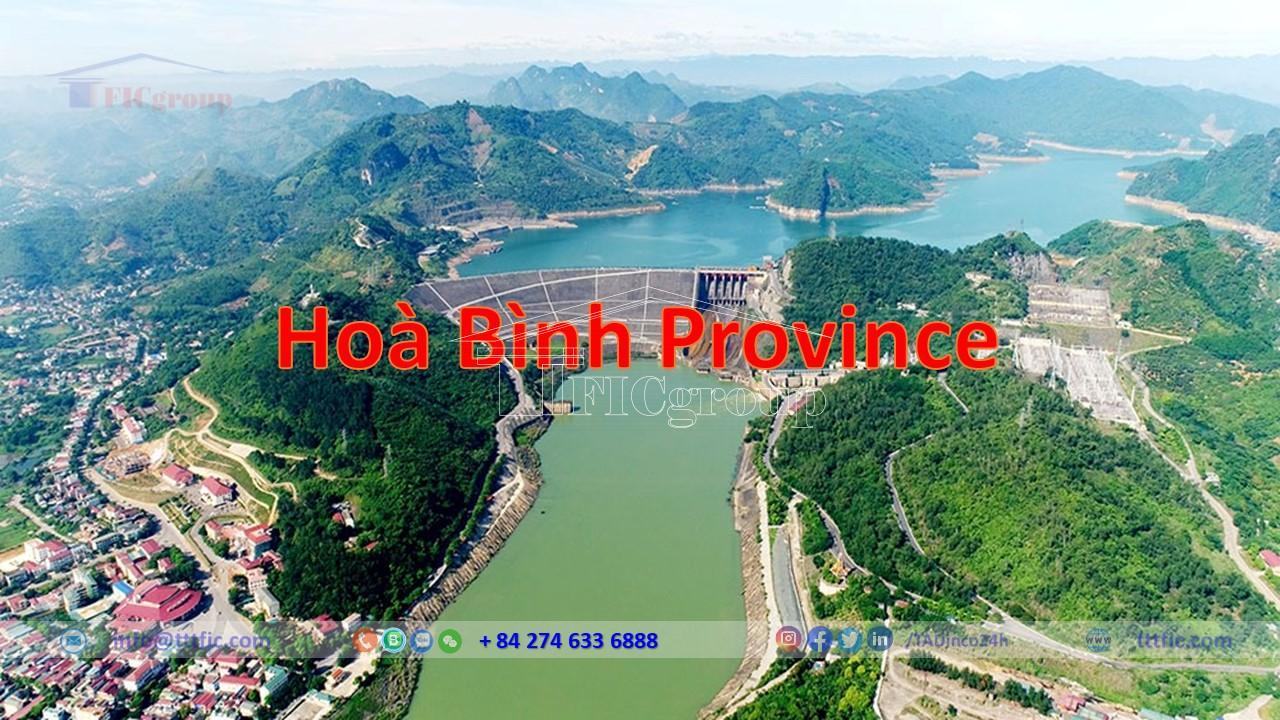
Hoa Binh’s energy platform, industrial expansion potential and strategic gateway toward Northwestern Vietnam.
The result is a new investment geography with a distinctive competitive proposition:
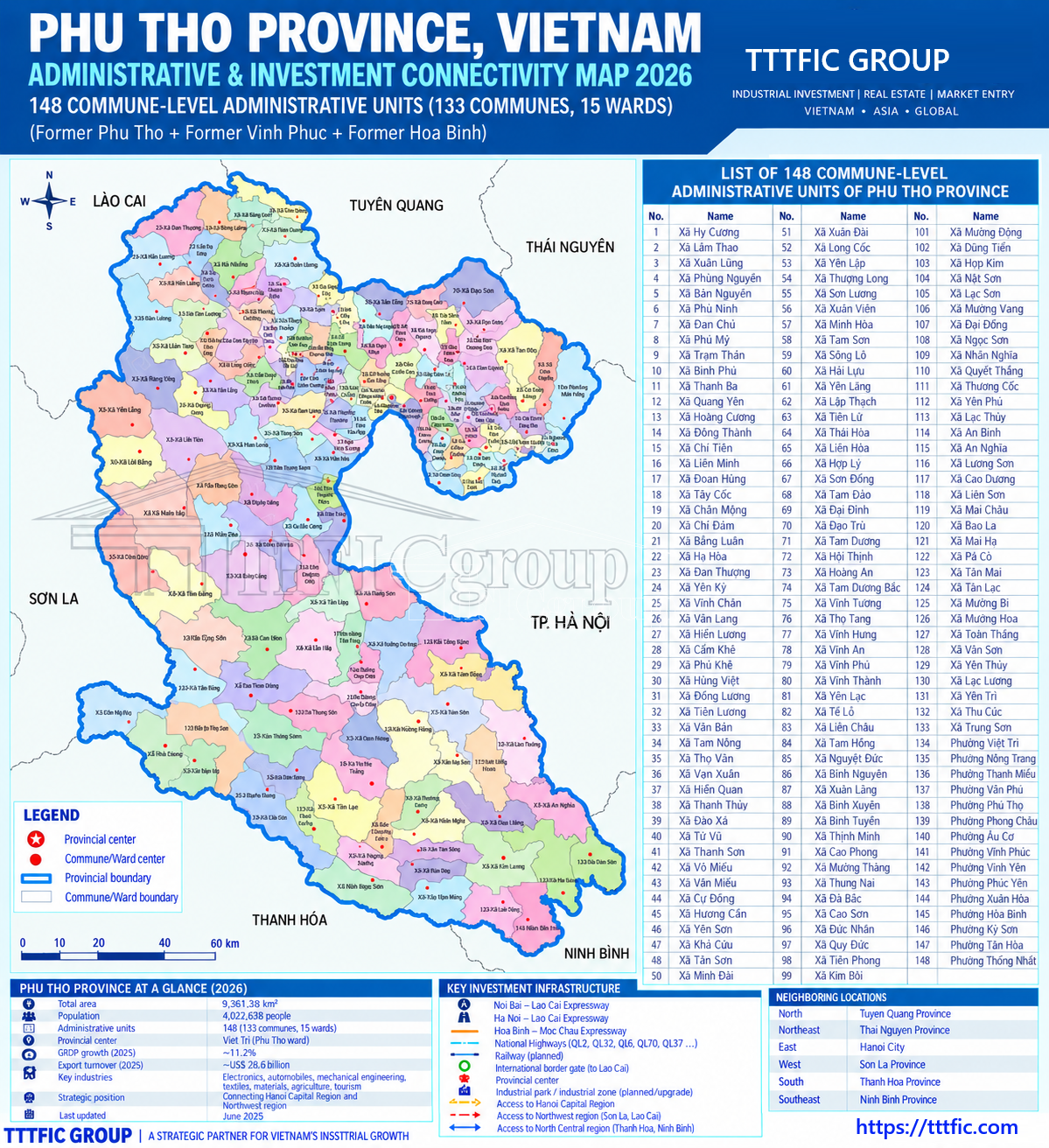
The investment case for Phu Tho can no longer be understood through the economic profile of the former province alone.
The new Phu Tho combines established industrial centers close to Hanoi with a much larger development corridor extending west and northwest.
Its competitive position can be summarized as:
Hanoi Proximity → Automotive & Advanced Manufacturing → Electronics & Supporting Industries → Industrial Expansion → Energy Infrastructure → Northwest Connectivity
This creates a differentiated proposition within Northern Vietnam.
Hanoi provides the country’s political, corporate, technology and talent command center.
Bac Ninh provides one of Vietnam’s densest electronics and semiconductor ecosystems.
Hai Phong provides deep-sea ports and maritime logistics.
Phu Tho complements these locations as a large diversified manufacturing and industrial-expansion platform west of Hanoi, anchored by automotive manufacturing, electronics, precision engineering and strategic transport corridors.
For investors seeking access to Hanoi without necessarily locating inside the most concentrated eastern industrial belts, Phu Tho presents an increasingly important alternative.
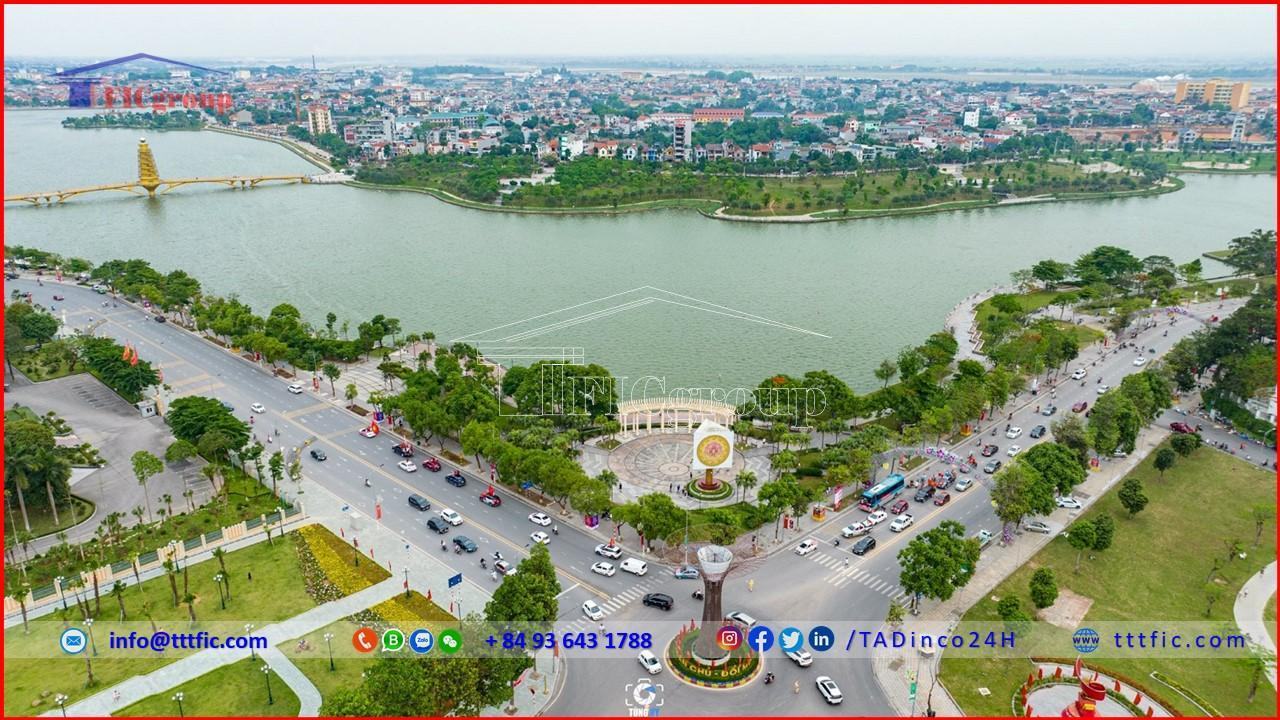
The new Phu Tho Province was established through the consolidation of:
Former Phu Tho Province
Former Vinh Phuc Province
Former Hoa Binh Province
Following commune-level restructuring, the province has:
148 commune-level administrative units
comprising:
133 communes
15 wards.
The province covers approximately:
with a population of approximately:
Its enlarged territory connects the Hanoi metropolitan economy with the Northern Midlands and Northwestern Vietnam.
This geographical transformation is strategically important because the province now combines highly industrialized areas near Hanoi with larger territories available for future infrastructure, industrial, energy and urban development.
The consolidation has dramatically increased Phu Tho’s economic scale.
In 2025, the province’s GRDP at current prices was estimated at approximately:
placing the province 6th among Vietnam’s 34 province-level jurisdictions by economic scale according to provincial reporting.
The province’s industrial economy is particularly significant.
The former Vinh Phuc industrial platform has long been associated with major automotive and motorcycle manufacturers, while the former Phu Tho has developed electronics, supporting industries and diversified manufacturing. Hoa Binh adds an important energy and western development dimension.
The new economic structure therefore provides considerably greater sectoral diversification than the former Phu Tho Province.
Phu Tho is already home to a substantial foreign-invested manufacturing base.
In 2025 alone, the province attracted approximately:
according to provincial investment reporting.
The province’s operating industrial parks collectively host hundreds of foreign-invested projects, while the wider manufacturing ecosystem includes multinational companies in automotive, motorcycles, electronics, engineering and supporting industries.
But Phu Tho’s future FDI strategy is even more important.
For 2026–2030, the province has established a target of attracting:
with approximately:
including high technology, R&D, innovation, green manufacturing and sustainable investment.
This represents an important shift from investment quantity toward investment quality.
The incorporation of the former Vinh Phuc Province fundamentally changes Phu Tho’s industrial identity.
The new province inherits one of Vietnam’s best-established automotive and motorcycle manufacturing ecosystems.
Major international manufacturers associated with this industrial base include:
Toyota
Honda
Piaggio
Provincial reporting continues to identify these manufacturers as important anchors of the former Vinh Phuc industrial economy.
Their presence has helped create a wider supporting-industry network involving:
Automotive components
Motorcycle components
Precision engineering
Metal stamping
Machining
Molds and tooling
Engineering plastics
Electrical systems
Electronic components
Industrial automation
Packaging
Factory logistics
For component manufacturers and supporting-industry investors, customer proximity can create significant operational advantages.
The relevant industrial equation becomes:
This established automotive and mobility ecosystem is one of the clearest ways in which Phu Tho differentiates itself from other Northern Vietnam investment destinations.
Automotive manufacturing is only one component of the province’s industrial platform.
Phu Tho also hosts a growing electronics and advanced-manufacturing ecosystem.
Recent investment activity has included projects involving electronic components and printed circuit boards, while existing industrial zones support electronics, mechanical engineering, electrical equipment, plastics and supporting industries. Provincial reporting for 2025 highlighted projects such as Jahwa’s electronic-component manufacturing investment and Allied Circuit Meiko Vietnam’s printed-circuit-board manufacturing project.
This creates opportunities across:
Electronic components
Printed circuit boards
Precision engineering
Industrial electronics
Electrical equipment
Automation
Optical and high-precision products
Engineering plastics
Metal processing
Industrial machinery
Supporting industries
Phu Tho should therefore be viewed as a diversified advanced-manufacturing platform, rather than an economy dependent on a single industrial cluster.
The consolidation of three provinces has created a much larger industrial-land platform.
Under the current industrial development planning, Phu Tho has:
and
As of April 2026, provincial reporting indicated that 18 industrial parks were operational, hosting 818 investment projects, including 507 FDI projects and 311 domestic-investment projects. Thirty-five industrial clusters were also operating with approximately 930 projects.
This provides international investors with a range of location choices across mature industrial centers and emerging development corridors.
One of the established industrial locations inherited from the former Vinh Phuc Province.
Khai Quang covers approximately 221.46 hectares and has a long operating history serving FDI and domestic manufacturers.
Strategic strengths:
Best fit: Automotive suppliers, engineering, electronics, components and supporting industries.
The Binh Xuyen industrial corridor is one of the former Vinh Phuc area’s important manufacturing locations.
Strategic strengths:
Best fit: Electronics, automotive components, precision engineering and supporting industries.
These industrial locations form part of the province’s important advanced-manufacturing belt.
Strategic strengths:
Best fit: Electronics, components, engineering and technology manufacturing.
An internationally oriented industrial development serving manufacturers seeking modern infrastructure and access to the Hanoi industrial region.
Strategic strengths:
Best fit: High-quality FDI manufacturing, engineering, electronics and supporting industries.
One of the major industrial locations in the former Phu Tho Province and an important electronics and export-manufacturing platform.
The park continues to host significant factory employment and manufacturing activity.
Strategic strengths:
Best fit: Electronics, components, supporting industries and export manufacturing.
An established manufacturing location in the Viet Tri industrial area.
Strategic strengths:
Best fit: Manufacturing, supporting industries, engineering and industrial materials.
Located within the important Red River–Da River regional industrial geography.
Strategic strengths:
Best fit: Diversified manufacturing, materials and supporting industries.
An increasingly important industrial development area along the western portion of the province.
Strategic strengths:
Best fit: Manufacturing, electronics, supporting industries and industrial expansion projects.
The former Hoa Binh industrial belt provides a different investment proposition.
Strategic strengths:
Best fit: Supporting industries, engineering, consumer products and diversified manufacturing.
Industrial park selection should never be based solely on headline land price.
TTTFIC evaluates:
Permitted Industry → Customer Proximity → Supplier Proximity → Power → Water → Wastewater → Environmental Classification → Labor → Logistics → Expansion Potential → Land Tenure → Legal Readiness → Total Occupancy Cost
The best industrial park is therefore not necessarily the cheapest industrial park.
It is the location that best fits the investor’s operating model.
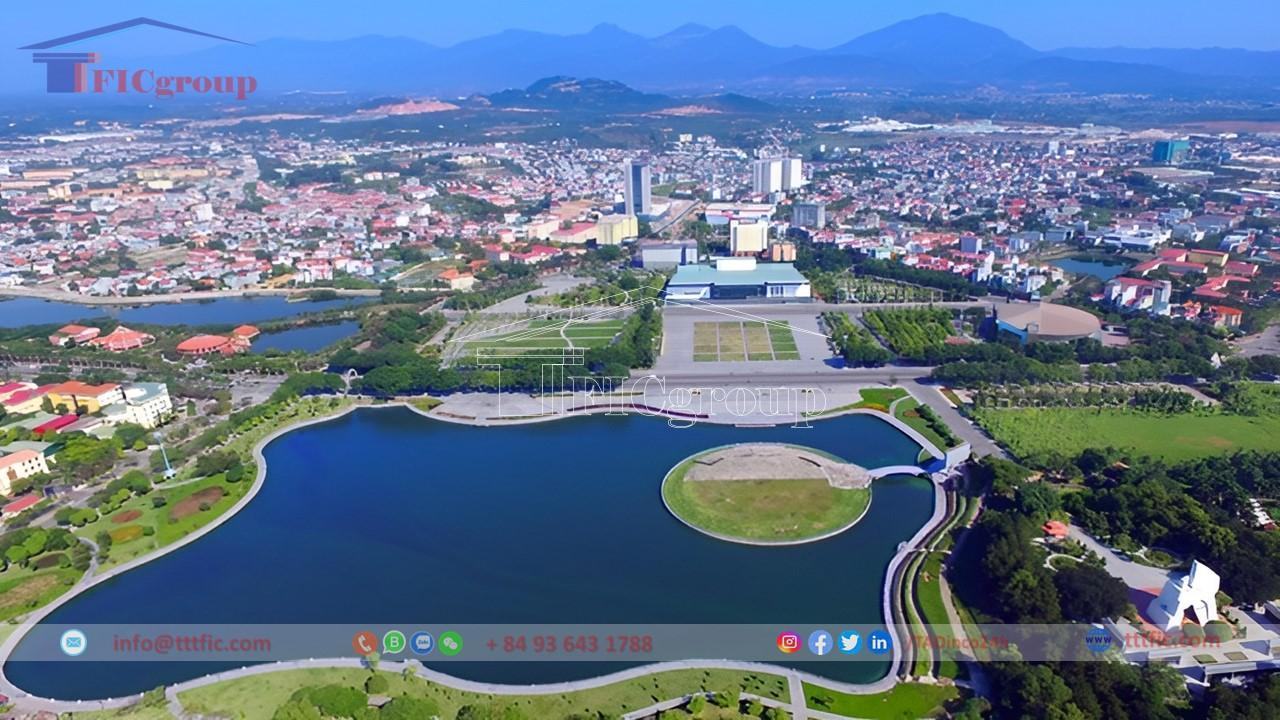
Phu Tho’s industrial strategy goes beyond conventional industrial-land expansion.
The province’s 2026–2030 FDI strategy targets the formation of at least:
and
The same strategy targets 100% of industrial parks having digital and environmental-treatment infrastructure and at least 50% renewable-energy utilization in industrial parks.
This is strategically significant.
It suggests that Phu Tho intends to compete increasingly on technology, sustainability and industrial specialization, rather than simply industrial-land availability.
One of Phu Tho’s strongest geographical advantages is its relationship with Hanoi.
The province occupies a broad territory immediately west and northwest of the capital region.
This creates multiple industrial-development axes:
Hanoi → Vinh Phuc Industrial Belt → Phu Tho → Lao Cai
and
Hanoi → Hoa Lac → Hoa Binh → Northwestern Vietnam
These corridors provide manufacturers with access to:
Hanoi’s corporate and financial ecosystem
Noi Bai International Airport
Northern industrial markets
Northwestern Vietnam
Lao Cai and the China trade corridor
Hai Phong ports through the wider Hanoi logistics network
Phu Tho therefore functions as a strategic bridge between the Hanoi metropolitan economy and a much larger western and northwestern economic territory.
The Noi Bai–Lao Cai Expressway is particularly important for the northern portion of Phu Tho’s industrial geography.
It supports movement toward:
Hanoi
Noi Bai International Airport
Lao Cai
China
and intermediate industrial markets.
For manufacturers with China-linked supply chains, this creates a continental logistics route:
while international maritime exports can move:
This dual orientation provides manufacturers with both continental and maritime supply-chain options.
The former Hoa Binh territory creates another strategic development axis.
Improved connectivity between Hanoi, Hoa Lac and Hoa Binh is progressively integrating western areas with the Hanoi metropolitan economy.
For industrial investors, this corridor offers longer-term opportunities related to:
Industrial expansion
Supporting industries
Logistics
Urban-industrial development
Energy-related investment
Green manufacturing
Data and digital infrastructure
This western corridor should be understood as complementary to — rather than a substitute for — the province’s mature industrial areas closer to Hanoi.
The new Phu Tho inherits one of Vietnam’s most important energy assets:
The presence of major hydropower infrastructure strengthens the province’s overall strategic energy profile and provides a foundation for wider discussions around:
energy infrastructure
renewable electricity
grid development
green industrialization
ESG-oriented manufacturing
However, investors should not interpret proximity to power generation as an automatic guarantee of project-level power availability, pricing or redundancy.
For industrial projects, especially high-load manufacturing, TTTFIC recommends verification of:
substation capacity
grid connection
power quality
redundancy
future load availability
renewable-energy sourcing options
at the specific industrial site.
A population of more than four million provides the enlarged province with a substantial labor base.
More importantly, the three former provinces contribute different workforce capabilities.
The former Vinh Phuc industrial belt provides workers experienced in:
Automotive manufacturing
Motorcycles
Electronics
Precision engineering
International factory systems
The former Phu Tho provides experience in:
Electronics
Supporting industries
Chemicals
Materials
General manufacturing
The former Hoa Binh contributes additional labor potential for future western industrial expansion.
Proximity to Hanoi further expands access to engineers, managers, universities and professional services.
For the 2026–2030 period, the province aims to train at least 20,000 highly skilled technical workers specifically to support advanced FDI sectors.
Phu Tho’s next stage of industrial development depends increasingly on localization.
The province’s FDI strategy targets at least:
including at least:
This is particularly relevant for:
Automotive components
Motorcycle components
Electronics
Precision engineering
Metal processing
Engineering plastics
Electrical equipment
Industrial automation
Packaging
Logistics
Supporting industries
For suppliers, the ability to serve multiple manufacturers across the same regional industrial system can significantly improve the economics of establishing production in Vietnam.
Although Phu Tho should not be positioned as a replica of Bac Ninh’s semiconductor ecosystem, high-tech investment is becoming increasingly important.
The province’s official 2026–2030 FDI strategy targets approximately 80% of new FDI projects toward priority sectors including:
High-tech manufacturing
Electronics
Semiconductors
Automotive
Electric motorcycles
Precision engineering
Medical equipment
Renewable energy
New materials
Supporting industries.
This provides a clear direction for future industrial transformation.
The opportunity is not merely to attract more factories.
It is to move the province toward higher-value manufacturing and deeper participation in global value chains.
Environmental performance is becoming increasingly important in global site-selection decisions.
International manufacturers are under growing pressure to reduce:
carbon emissions
energy intensity
water consumption
waste
supply-chain emissions
and overall environmental impact.
Phu Tho’s combination of industrial expansion potential and renewable-energy assets creates an opportunity to integrate sustainability more deeply into future industrial development.
The province’s FDI strategy specifically prioritizes green and sustainable investment and targets increased renewable-energy utilization within industrial parks.
This could become an increasingly important differentiator for manufacturers serving Europe, North America and other markets with demanding ESG requirements.
Foreign-invested projects in Phu Tho may qualify for incentives under Vietnam’s investment, corporate income tax, import-export tax, land and high-technology regulations.
Eligibility depends on factors including:
Industry
Technology
Project scale
Location
R&D activities
High-tech classification
Supporting-industry status
Socioeconomic location classification
Applicable legislation at the time of licensing
Potential benefits for qualifying projects may include:
Preferential corporate income tax rates
Corporate income tax exemptions and reductions
Import-duty exemptions for qualifying machinery and equipment
Import-duty treatment for eligible materials and components
Land-related incentives where legally applicable
High-tech and R&D incentives
Supporting-industry incentives
Location-based incentives in eligible areas
Projects located in certain qualifying mountainous or socioeconomically disadvantaged areas may be subject to different incentive frameworks from projects in the more developed eastern industrial belt.
Investors should never base a financial model on a generic statement that “Phu Tho offers tax incentives.”
The geographical scale of the new Phu Tho creates a diverse industrial real estate market.
Opportunities include:
Primary industrial land
Secondary industrial land
Ready-built factories
Ready-built warehouses
Built-to-suit factories
Automotive supplier facilities
Electronics factories
High-tech manufacturing facilities
Operating factory acquisitions
Industrial M&A
Logistics facilities
Large-scale industrial development
Future high-tech and specialized industrial parks
The appropriate location depends heavily on the project.
An automotive supplier may prioritize proximity to OEM customers.
An electronics manufacturer may prioritize skilled labor and reliable utilities.
A China-linked supply chain may prioritize access to the Noi Bai–Lao Cai corridor.
A manufacturer requiring substantial expansion land may consider emerging western locations.
A project requiring Hanoi executive and engineering access may prioritize eastern industrial corridors.
This means Phu Tho cannot be evaluated as a single industrial real estate market.
It is a multi-corridor industrial territory.
TTTFIC identifies particularly strong potential in Phu Tho for:
1. Automotive components
2. Electric vehicle & electric motorcycle components
3. Electronics & electronic components
4. Precision engineering
5. Industrial automation & robotics
6. Semiconductor-related supporting industries
7. Printed circuit boards
8. Mechanical engineering
9. Engineering plastics
10. Metal processing
11. Medical equipment
12. High-tech manufacturing
13. Supporting industries
14. New materials
15. Renewable energy
16. Green manufacturing
17. Industrial logistics
18. R&D and innovation
19. Built-to-suit industrial facilities
20. Industrial real estate & factory M&A
Direct strategic relationship with Vietnam’s capital and its corporate, financial, engineering and talent ecosystem.
A mature automotive and motorcycle manufacturing ecosystem anchored by internationally recognized manufacturers.
Electronics, automotive, engineering, components, materials and supporting industries reduce dependence on a single sector.
The province’s planning encompasses 29 industrial parks and 67 industrial clusters, with 18 IPs already operational as reported in April 2026.
A much larger post-merger territory provides new options beyond mature industrial locations.
Access through the Hanoi–Lao Cai axis provides strategic connectivity toward the China border.
Manufacturers can connect through Hanoi-region logistics corridors to Hai Phong and Lach Huyen deep-sea ports.
Hoa Binh’s hydropower and broader energy infrastructure strengthen the province’s strategic energy position.
More than four million residents combined with decades of industrial manufacturing experience.
Phu Tho is explicitly targeting high-tech, R&D, green manufacturing and higher-value global supply-chain investment for 2026–2030.
The strategic value of the new Phu Tho is greater than the simple addition of three former provinces.
Each territory contributes a different industrial capability:
Automotive + motorcycles + advanced manufacturing + mature FDI ecosystem
Electronics + supporting industries + manufacturing + northern logistics
Energy + western expansion + Hanoi gateway + green-development potential
Together, they create:
This is the foundation of Phu Tho’s new investment proposition.
For international manufacturers, the province provides something increasingly valuable:
A company can prioritize customer proximity.
Another can prioritize labor.
Another can prioritize industrial land scale.
Another can prioritize Hanoi access.
Another can prioritize the Lao Cai–China corridor.
Another can prioritize future green industrial development.
That flexibility is a significant competitive advantage.
TTTFIC Group supports foreign manufacturers, institutional investors and industrial companies throughout the investment lifecycle in Phu Tho and across Vietnam.
Our services include:
Industrial land sourcing
Industrial park comparison & site selection
Ready-built factory and warehouse leasing
Built-to-suit factory solutions
Operating factory acquisition & industrial M&A
Industrial real estate investment
FDI market-entry advisory
IRC/ERC coordination
Environmental and fire-safety coordination
Industrial legal and transaction support
Factory Design & Build coordination
Technical and commercial site due diligence
Utility and infrastructure assessment
Location-cost comparison
Investment incentive assessment
Negotiation and transaction management
Supplier-location and supply-chain advisory
For foreign manufacturers, TTTFIC’s role is not simply to locate industrial land or available factories.
We evaluate whether each location is:
INVEST IN PHU THO. CONNECT TO HANOI. MANUFACTURE FOR GLOBAL MARKETS.
Table of contents