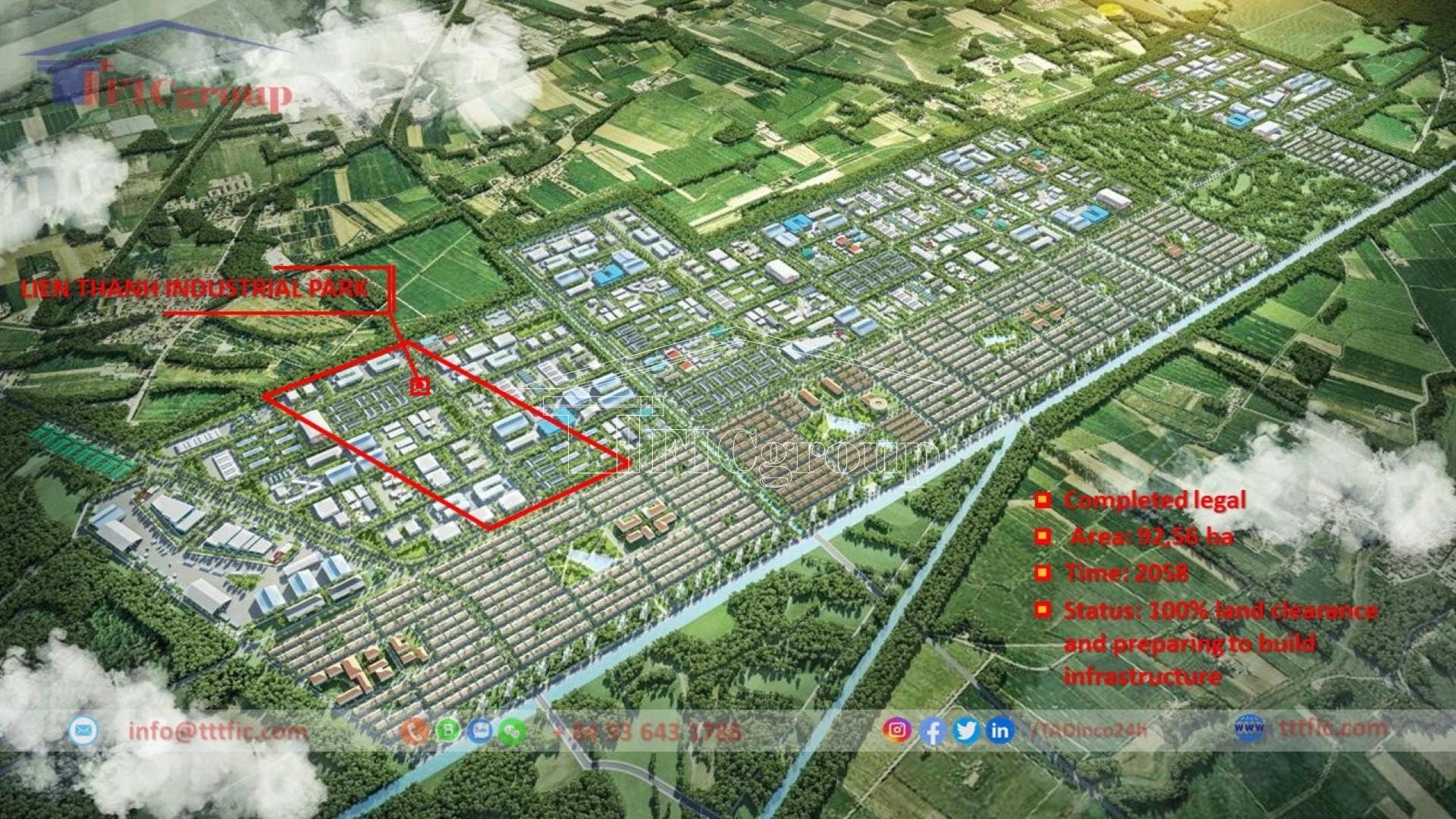
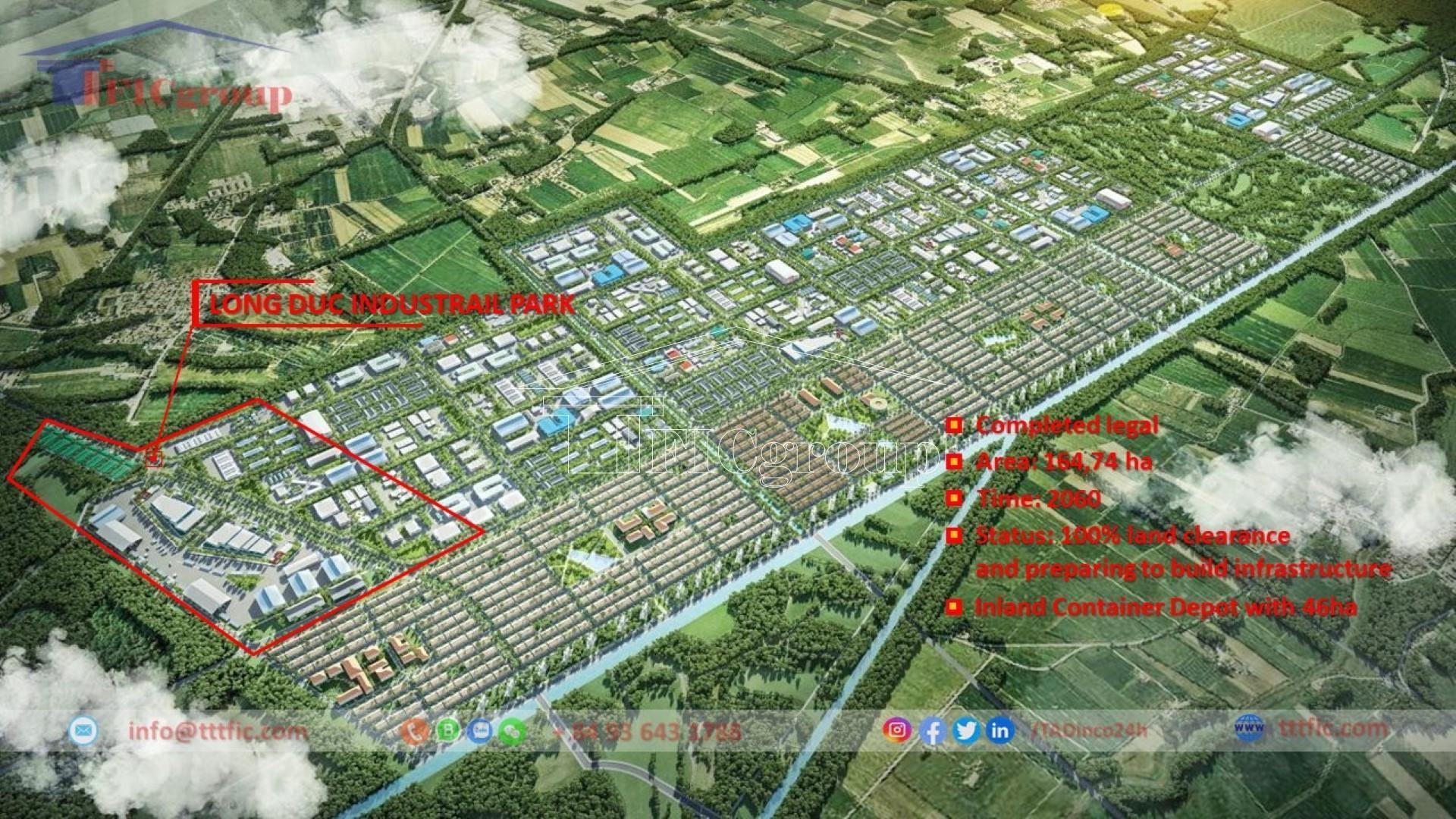
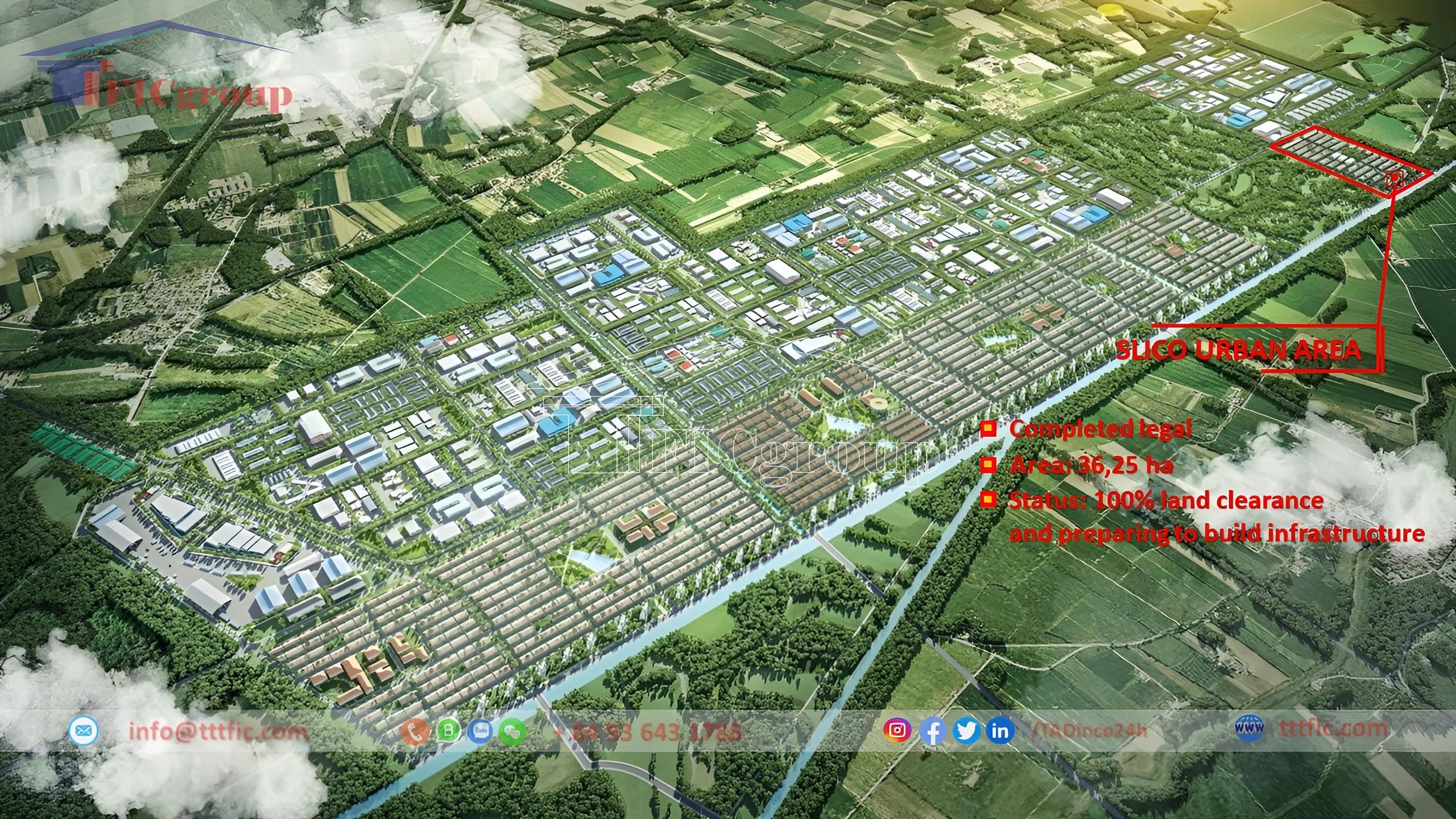
Prodezi Industrial Park - Tay Ninh Province - Vietnam
- Investor: Prodezi Long An Joint Stock Company
- Price: 190 usd/m2
- Area: 400ha
TAY NINH PROVINCE, VIETNAM
TTTFIC GLOBAL INVESTMENT PROFILE 2026
Tay Ninh Province has entered a fundamentally new stage of economic development.
Following the 2025 administrative consolidation of former Tay Ninh Province and former Long An Province, the new Tay Ninh is no longer defined primarily as a border province northwest of Ho Chi Minh City. It has emerged as a significantly larger industrial and logistics economy connecting Ho Chi Minh City, the Southeast Region, the Mekong Delta and Cambodia within a single strategic investment geography.
The consolidation brings together two highly complementary economic platforms.
Former Tay Ninh contributes large-scale industrial land, the Moc Bai and Xa Mat border-gate corridors, established manufacturing centers such as Trang Bang and Phuoc Dong, renewable energy resources and direct access to Cambodia.
Former Long An contributes one of the most important manufacturing belts surrounding Ho Chi Minh City, including Duc Hoa, Ben Luc, Can Giuoc and Can Duoc, together with major industrial parks, logistics infrastructure and access to Long An International Port.
The result is one of the most strategically diversified industrial provinces in southern Vietnam.
INDUSTRIAL LAND + HO CHI MINH CITY GATEWAY + CROSS-BORDER TRADE + CAMBODIA + MEKONG CONNECTIVITY + INTERNATIONAL PORT + LOGISTICS + LARGE-SCALE MANUFACTURING
For manufacturers, logistics operators and long-term industrial investors, this combination creates a compelling proposition: access to Vietnam’s largest metropolitan market while maintaining the land availability, industrial scale and cross-border connectivity of an emerging manufacturing frontier.
Natural Area: approximately 8,536.44 km²
Population: approximately 3.25 million
Administrative Structure: 96 commune-level administrative units, including 82 communes and 14 wards
Economic Region: Southeast Vietnam
2025 GRDP Growth: approximately 9.52%
2026 First-Half GRDP Growth: 10.12%
2025 Exports: approximately USD 14.59 billion
FDI: more than USD 26 billion in cumulative registered capital reported in 2026
Industrial Parks: 59 industrial parks planned, covering approximately 16,800 hectares
Established Industrial Parks: 46 as reported in late 2025
International Border Gates: Moc Bai, Xa Mat, Tan Nam and Binh Hiep
International Port: Long An International Port
Border-Gate Economic Zones: Moc Bai, Xa Mat and Long An
Major Adjacent Market: Ho Chi Minh City
International Gateway: Cambodia and the Greater Mekong / Trans-Asia corridor
The province borders Ho Chi Minh City, Dong Nai Province, Dong Thap Province and Cambodia. This geography places Tay Ninh at a strategic intersection between Vietnam’s largest metropolitan economy, the industrialized Southeast, the agricultural and export economy of the Mekong Delta, and mainland Southeast Asia.
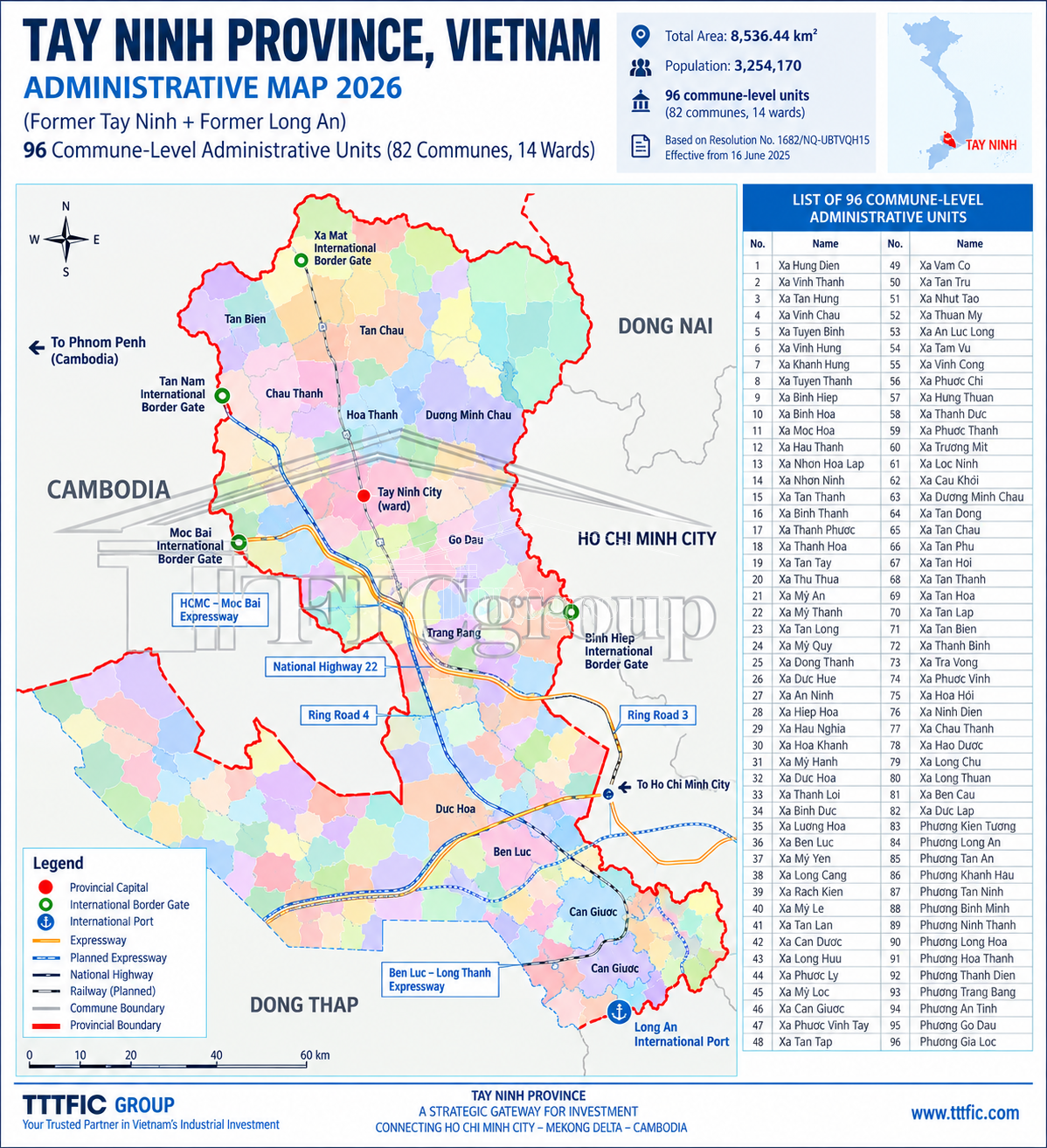
The 2025 consolidation of former Tay Ninh and former Long An created an economic territory far more diversified than either province possessed independently.
Historically, former Tay Ninh was recognized for its Cambodia border, Moc Bai International Border Gate, agricultural processing industries, renewable energy development and major industrial projects such as Phuoc Dong.
Former Long An developed along a different trajectory. Its proximity to Ho Chi Minh City transformed areas such as Duc Hoa, Ben Luc, Can Giuoc and Can Duoc into major manufacturing and logistics locations serving the southern metropolitan economy.
Bringing these territories together creates an integrated province stretching conceptually from the industrial perimeter of Ho Chi Minh City toward the Cambodian border and from inland manufacturing centers toward an international seaport.
This creates a development structure rarely found within a single Vietnamese province:
METROPOLITAN MARKET → INDUSTRIAL BELT → LOGISTICS NETWORK → INTERNATIONAL PORT → BORDER-GATE ECONOMY → CAMBODIA
This geography is the foundation of Tay Ninh’s new investment identity.
Tay Ninh occupies a distinctive position within southern Vietnam.
Rather than serving only one economic region, the province connects four major economic spaces simultaneously:
Ho Chi Minh City provides the country’s largest consumer market, corporate ecosystem, financial center and international business community.
Southeast Vietnam provides Vietnam’s most concentrated manufacturing and industrial supply-chain ecosystem.
The Mekong Delta provides a major agricultural, food-processing and export economy.
Cambodia and the Trans-Asia corridor provide opportunities for cross-border trade and access toward the wider mainland Southeast Asian market.
The Government has specifically identified the province as an important connection between the Southeast Region, Central Highlands, Mekong Delta and the Trans-Asia Economic Corridor.
For international manufacturers, this means Tay Ninh should not be evaluated simply as a lower-cost alternative to Ho Chi Minh City.
It should increasingly be evaluated as a regional manufacturing and distribution platform.
Industrial scale is becoming one of Tay Ninh’s defining competitive advantages.
Government reporting in late 2025 identified 46 established industrial parks with approximately 14,507 hectares of planned area, of which 32 were eligible to receive investment at that time. Those parks had attracted approximately 2,500 projects, including more than 1,400 FDI projects.
At the broader planning level, the new province is positioned for 59 industrial parks covering approximately 16,800 hectares.
This creates a large and diversified industrial real estate market ranging from mature industrial parks near Ho Chi Minh City to large-scale development areas farther inland and toward the Cambodia border.
The industrial landscape can be understood through several major investment corridors.
The former Long An industrial belt around Duc Hoa represents one of the most important additions to the new Tay Ninh investment landscape.
Located directly adjacent to the Ho Chi Minh City metropolitan area, Duc Hoa has developed into a dense manufacturing ecosystem.
Official provincial information in 2026 reported that the Duc Hoa area alone contains six industrial parks, five industrial clusters and approximately 900 companies and enterprises, illustrating the extraordinary concentration of industrial activity in this corridor.
For investors, Duc Hoa offers a combination of:
proximity to Ho Chi Minh City; access to a large industrial workforce; established supplier networks; industrial parks and clusters; logistics connectivity; and a broad base of domestic and foreign manufacturers.
This makes the corridor particularly suitable for manufacturing operations that require close access to Ho Chi Minh City but do not necessarily require a central metropolitan location.
Ben Luc occupies another strategically important position within the new province.
Its value is increasingly driven by regional transportation infrastructure rather than by administrative boundaries.
The wider Ben Luc corridor connects industrial areas west of Ho Chi Minh City with major highways and logistics routes toward the Southeast Region, the Mekong Delta and the seaport system.
The Ben Luc–Long Thanh Expressway is especially significant because it strengthens east–west connectivity across southern Vietnam, reducing the need for freight traffic to pass through the central urban core of Ho Chi Minh City.
Together with regional ring roads and expressway development, this creates the potential for Ben Luc to evolve into a major logistics, warehousing, distribution and industrial service center.
For companies operating regional supply chains, this corridor can provide strategic access to both production locations and consumption markets.
Toward the southeast of the province, the former Long An territory provides Tay Ninh with something the former province did not possess:
direct maritime logistics capability.
Can Giuoc and Can Duoc form part of an emerging industrial and logistics corridor connected to the Soai Rap navigation channel and Long An International Port.
This dramatically changes Tay Ninh’s investment proposition.
The province is now not only a Cambodia-facing border economy; it also possesses access to international maritime trade.
This creates opportunities for export manufacturing, logistics centers, distribution facilities, warehouses, port-related industries and large-scale industrial developments requiring access to international shipping.
One of the most transformational assets inherited from former Long An Province is Long An International Port.
The port gives the new Tay Ninh Province direct access to international maritime logistics and creates the potential to connect inland industrial areas with global shipping networks.
This produces an unusually complete logistics architecture:
FACTORY → INDUSTRIAL PARK → EXPRESSWAY / REGIONAL ROAD → LOGISTICS CENTER → INTERNATIONAL PORT → GLOBAL MARKET
At the same time:
FACTORY → INDUSTRIAL CORRIDOR → MOC BAI / OTHER BORDER GATES → CAMBODIA → MAINLAND SOUTHEAST ASIA
Few industrial provinces can combine both maritime and land-border gateways within the same administrative territory.
Provincial investment-promotion information in 2026 also reported plans and infrastructure involving 17 logistics centers, dozens of cargo ports and a large network of industrial parks, demonstrating the province’s ambition to develop an integrated logistics ecosystem.
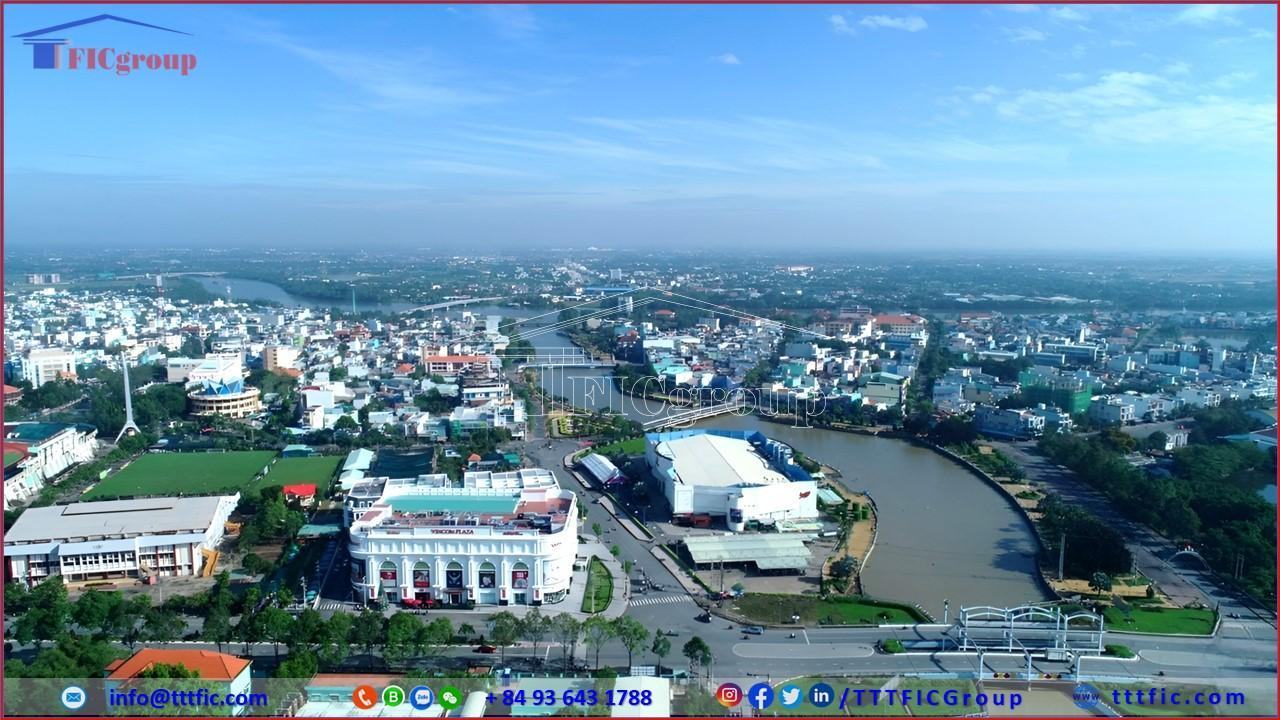
At the opposite end of the province, Moc Bai International Border Gate provides direct access to Cambodia through the Trans-Asia corridor.
Moc Bai is significantly more than a border checkpoint.
The Government is positioning the Moc Bai Border Gate Economic Zone and the surrounding industrial–urban corridor as an important future development area, supported by improved connectivity with Ho Chi Minh City.
The Ho Chi Minh City–Moc Bai Expressway is expected to strengthen this relationship further by improving the movement of people, goods and industrial traffic between Vietnam’s largest metropolitan economy and the Cambodian border.
For companies serving Cambodia or developing regional ASEAN distribution strategies, the corridor has substantial long-term potential.
The expanded province possesses approximately 369 kilometers of international border with Cambodia.
Government reporting identifies four international border gates:
Moc Bai – Xa Mat – Tan Nam – Binh Hiep
and three major border-gate economic zones:
Moc Bai – Xa Mat – Long An.
Together, these assets provide a foundation for cross-border logistics, warehousing, processing, distribution, trade services and industrial development.
This is particularly important as manufacturing supply chains across ASEAN continue to become more integrated.
Tay Ninh can potentially function not only as a production location, but also as a Vietnam–Cambodia trade and distribution platform.
The new Tay Ninh is already a major foreign investment destination.
By late 2025, Government reporting recorded more than 1,900 FDI projects with approximately USD 24.39 billion in registered capital.
By August 2026, provincial leaders reported cumulative FDI of more than USD 26 billion, placing Tay Ninh 7th among Vietnam’s 34 provinces and centrally governed cities.
This scale demonstrates that Tay Ninh is not an experimental or emerging FDI location without an established industrial base.
It already hosts a substantial international manufacturing community.
The investment opportunity now lies in integrating the industrial strengths inherited from both former provinces into a larger and more efficient investment ecosystem.
Economic performance has strengthened alongside administrative consolidation.
Tay Ninh recorded approximately 9.52% GRDP growth in 2025, ranking among Vietnam’s fastest-growing provincial economies.
Industrial production remained particularly strong, with the industrial production index increasing approximately 14.74%.
Exports reached approximately USD 14.59 billion, while total merchandise trade continued to expand strongly.
The momentum continued into 2026.
During the first six months of 2026, provincial GRDP grew approximately 10.12%, the highest growth rate reported in southern Vietnam for the period. By August 2026, provincial authorities reported that Tay Ninh’s 2025 economic scale ranked 9th among Vietnam’s 34 provincial-level jurisdictions.
This combination of industrial expansion, FDI and infrastructure investment reinforces Tay Ninh’s transition toward a major regional growth center.
The province supports a broad spectrum of industrial activities.
Existing and emerging investment sectors include:
textiles and garments; footwear; mechanical engineering; electronics and electrical equipment; furniture and wood processing; plastics and packaging; food and agricultural processing; supporting industries; logistics and warehousing; renewable and conventional energy; construction materials; consumer goods; and increasingly higher-value and technology-oriented manufacturing.
Major established industrial locations include the Trang Bang, Phuoc Dong, Thanh Thanh Cong, Linh Trung III, Tan Duc, Long Hau, Thuan Dao and Xuyen A industrial areas, among many others.
The inclusion of industrial parks from both former provinces creates significantly greater choice for investors.
A company seeking proximity to Ho Chi Minh City may prioritize the Duc Hoa or Ben Luc corridors.
An export manufacturer may prioritize access toward Can Giuoc, Can Duoc and Long An International Port.
A large-scale land-intensive project may evaluate emerging industrial locations farther from the metropolitan core.
A company focused on Cambodia may prioritize Trang Bang or the Moc Bai corridor.
This geographic diversity is one of the province’s greatest strengths.
Tay Ninh’s future competitiveness will increasingly be shaped by transportation infrastructure.
Strategic projects and corridors affecting the province include:
Ho Chi Minh City–Moc Bai Expressway – strengthening the metropolitan-to-border economic corridor.
Ben Luc–Long Thanh Expressway – creating an east–west freight connection toward Dong Nai and the wider southeastern port and airport system.
Ho Chi Minh City Ring Road 3 and Ring Road 4 connections – improving regional industrial logistics and reducing dependence on inner-city freight routes.
Trans-Asia Highway / National Highway 22 corridor – maintaining direct connectivity toward Cambodia.
Long An International Port – providing the province with maritime access.
The Government has also prioritized stronger internal connectivity between the territories of former Long An and former Tay Ninh, recognizing that transportation integration is essential to realizing the economic benefits of the merger.
Perhaps the most important strategic transformation is logistics.
Before consolidation, former Tay Ninh was predominantly associated with road-based cross-border trade.
The new province can potentially integrate:
INTERNATIONAL PORTS
+
EXPRESSWAYS
+
REGIONAL RING ROADS
+
INDUSTRIAL PARKS
+
LOGISTICS CENTERS
+
INTERNATIONAL BORDER GATES
into a single multimodal industrial logistics system.
This creates the possibility of moving goods between factories, Ho Chi Minh City, the Mekong Delta, Cambodia and international maritime markets through multiple transportation corridors.
For global manufacturers, supply-chain flexibility of this kind can become increasingly valuable.
Tay Ninh’s investment potential extends beyond conventional manufacturing.
The province combines the agricultural strengths of the Mekong transition zone with large agricultural areas, renewable energy resources and major planned energy infrastructure.
The Government has specifically highlighted the Long An I and Long An II LNG power projects among strategic energy projects requiring accelerated implementation.
Former Tay Ninh has also developed significant solar energy capacity and agricultural processing industries associated with rubber, cassava, sugarcane and other crops.
This creates opportunities for food processing, agri-tech, cold-chain logistics, biomass, renewable energy, sustainable manufacturing and export-oriented agricultural value chains.
The expanded province has a population of approximately 3.25 million, providing a considerably larger labor base than former Tay Ninh alone.
More importantly, industrial corridors such as Duc Hoa, Ben Luc and Can Giuoc are closely integrated with the wider Ho Chi Minh City labor and economic market.
This allows investors to combine provincial industrial locations with access to metropolitan engineering, management, logistics, financial and professional services.
The province therefore offers both local industrial labor and access to the broader human-capital ecosystem of southern Vietnam.
The new Tay Ninh offers a wide range of industrial real estate strategies.
Investors can consider:
Industrial land for greenfield manufacturing projects.
Ready-built factories for faster market entry.
Built-to-suit facilities designed around specific manufacturing requirements.
Warehouses and logistics facilities serving domestic and international distribution.
Existing factories and M&A opportunities for investors seeking operational assets or accelerated project implementation.
Large-scale industrial development sites for strategic manufacturing, energy and infrastructure projects.
The correct location depends heavily on the investor’s business model.
Distance to Ho Chi Minh City alone should never be the only criterion.
Port access, border access, labor, utility capacity, environmental requirements, fire protection requirements, industrial zoning, logistics cost, supply-chain location and future expansion requirements must all be evaluated together.
The new Tay Ninh offers a combination that is difficult to replicate elsewhere in southern Vietnam:
A large industrial land bank.
Direct adjacency to Ho Chi Minh City.
Established manufacturing clusters.
Access to an international port.
Four international border gates.
Direct Cambodia connectivity.
Integration with the Mekong Delta.
Major expressway and ring-road infrastructure.
A large and growing FDI ecosystem.
Competitive opportunities for large-scale industrial development.
Potential for logistics, high-tech, green manufacturing and supporting industries.
The province is therefore becoming relevant to investors who might previously have considered only Ho Chi Minh City, Dong Nai, former Binh Duong or former Long An.
TTTFIC Group views the new Tay Ninh Province not as one uniform industrial market, but as a collection of specialized investment corridors.
Duc Hoa – Ben Luc
Best suited to manufacturers requiring proximity to Ho Chi Minh City, established industrial ecosystems, workforce access and regional logistics.
Can Giuoc – Can Duoc – Long An International Port
Best suited to export manufacturing, warehousing, logistics, port-oriented industries and companies dependent on maritime supply chains.
Trang Bang – Go Dau – Phuoc Dong
Suitable for established industrial manufacturing, larger production facilities and companies seeking competitive industrial locations with access toward both Ho Chi Minh City and Cambodia.
Moc Bai – Xa Mat – Cambodia Border
Strategically suited to cross-border logistics, trade, warehousing, distribution and companies serving Cambodia and mainland Southeast Asian markets.
This corridor-based approach is critical.
The question for an investor should not simply be:
“Should we invest in Tay Ninh?”
The more important question is:
“Which Tay Ninh industrial corridor best supports our manufacturing, logistics, workforce and market-access strategy?”
That is where professional location advisory creates measurable value.
TTTFIC Group supports international investors throughout the industrial investment lifecycle in Tay Ninh Province and across Vietnam.
Our services include industrial location advisory, industrial land sourcing, ready-built factory leasing, built-to-suit factory solutions, warehouse and logistics property sourcing, factory acquisition and disposal, industrial M&A advisory, investment licensing support, legal and regulatory coordination, environmental and fire-protection support, site surveys, due diligence coordination and transaction management.
Our objective is not simply to introduce available properties.
We help investors identify the right location, understand the risks, compare alternatives and structure an industrial investment strategy appropriate to their operational requirements.
For Tay Ninh in particular, this requires understanding the very different investment characteristics of the Ho Chi Minh City gateway, former Long An manufacturing belt, international-port corridor, established Tay Ninh industrial zones and Cambodia border economy.
Team Marketing – TTTFIC Group
Tel: +84 274 633 6888
Email: info@tttfic.com
Phone: +84 93 643 1788
Table of contents