Yen My II Industrial Park - Hung Yen
- Investor: HOA PHAT URBAN DEVELOPMENT AND CONSTRUCTION JOINT STOCK COMPANY
- Price: 50 USD/m2
- Area: 313.5 Ha
HUNG YEN PROVINCE, VIETNAM 2026
TTTFIC GLOBAL INVESTMENT PROFILE 2026
TTTFIC INVESTMENT THESIS
Vietnam has changed. So has its investment map.
Few provinces in Northern Vietnam have been transformed as fundamentally by the 2025 administrative restructuring as Hung Yen.
Following the merger of former Hung Yen Province and former Thai Binh Province, the new Hung Yen combines two complementary economic geographies.
Former Hung Yen contributed:
HANOI PROXIMITY + ESTABLISHED INDUSTRIAL PARKS + GLOBAL FDI + URBANIZATION + EXPRESSWAYS + MANUFACTURING + LOGISTICS.
Former Thai Binh contributed:
COAST + THAI BINH ECONOMIC ZONE + VSIP THAI BINH + INDUSTRIAL LAND + ENERGY + AGRICULTURE + AQUACULTURE + MARINE ECONOMY.
Together, they create something neither province possessed independently:
A HANOI-TO-COAST INDUSTRIAL ECONOMY.
The new investment geography can be visualized as:
HANOI CAPITAL REGION
↓
VAN GIANG / VAN LAM
↓
MY HAO / YEN MY
↓
PHO NOI INDUSTRIAL CORRIDOR
↓
CENTRAL HUNG YEN
↓
FORMER THAI BINH INDUSTRIAL BELT
↓
THAI BINH ECONOMIC ZONE
↓
VSIP THAI BINH / LIEN HA THAI
↓
COASTAL ECONOMY
↓
GULF OF TONKIN / GLOBAL MARKET.
The merger therefore creates:
ONE PROVINCE.
TWO COMPLEMENTARY INDUSTRIAL GEOGRAPHIES.
ONE HANOI-TO-SEA INVESTMENT CORRIDOR.
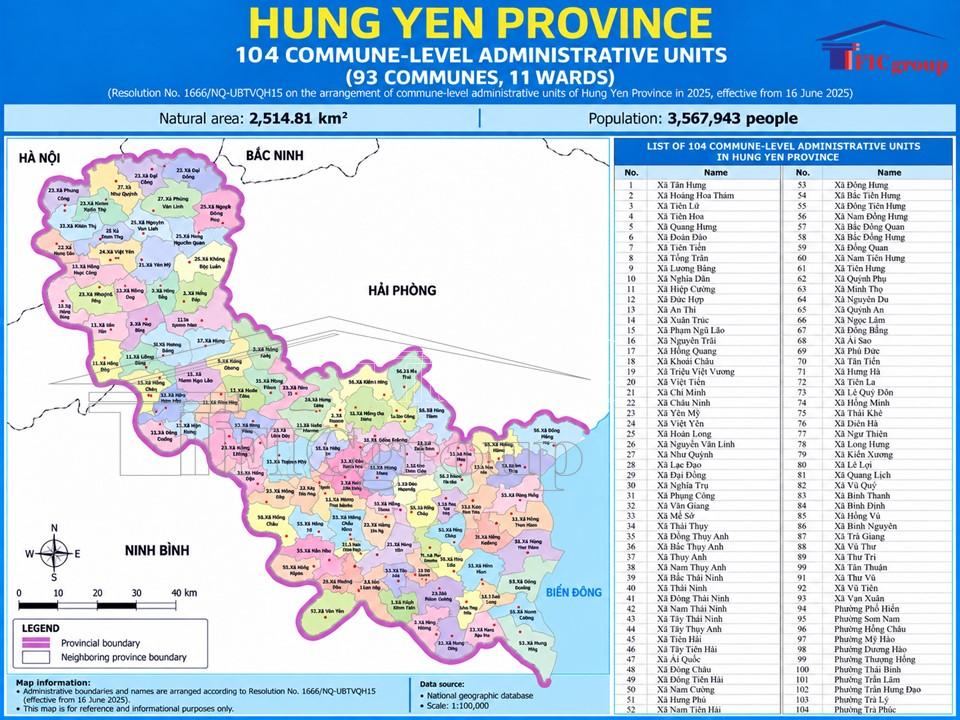
The new Hung Yen Province was established in 2025 through the merger of the entire territories and populations of:
The post-merger province has approximately:
This merger fundamentally changes Hung Yen’s economic geography.
The former Hung Yen was:
The new Hung Yen additionally possesses:
This is not simply a larger Hung Yen.
IT IS A NEW INDUSTRIAL GEOGRAPHY.
The merger combines two economic systems with highly complementary strengths.
Hanoi Gateway + Industrial Parks + FDI + Manufacturing + Urbanization + Logistics
Coast + Economic Zone + Energy + Industrial Land + Agriculture + Aquaculture + Marine Economy
Together:
HANOI + INDUSTRY + LOGISTICS + COAST + ENERGY + MARINE ECONOMY.
This changes the province’s investment proposition.
Previously, Hung Yen’s strategic advantage was primarily:
PROXIMITY TO HANOI.
Today, its strategic advantage can increasingly be understood as:
PROXIMITY TO HANOI + ACCESS TO COASTAL INDUSTRIAL DEVELOPMENT.
The province can now participate simultaneously in:
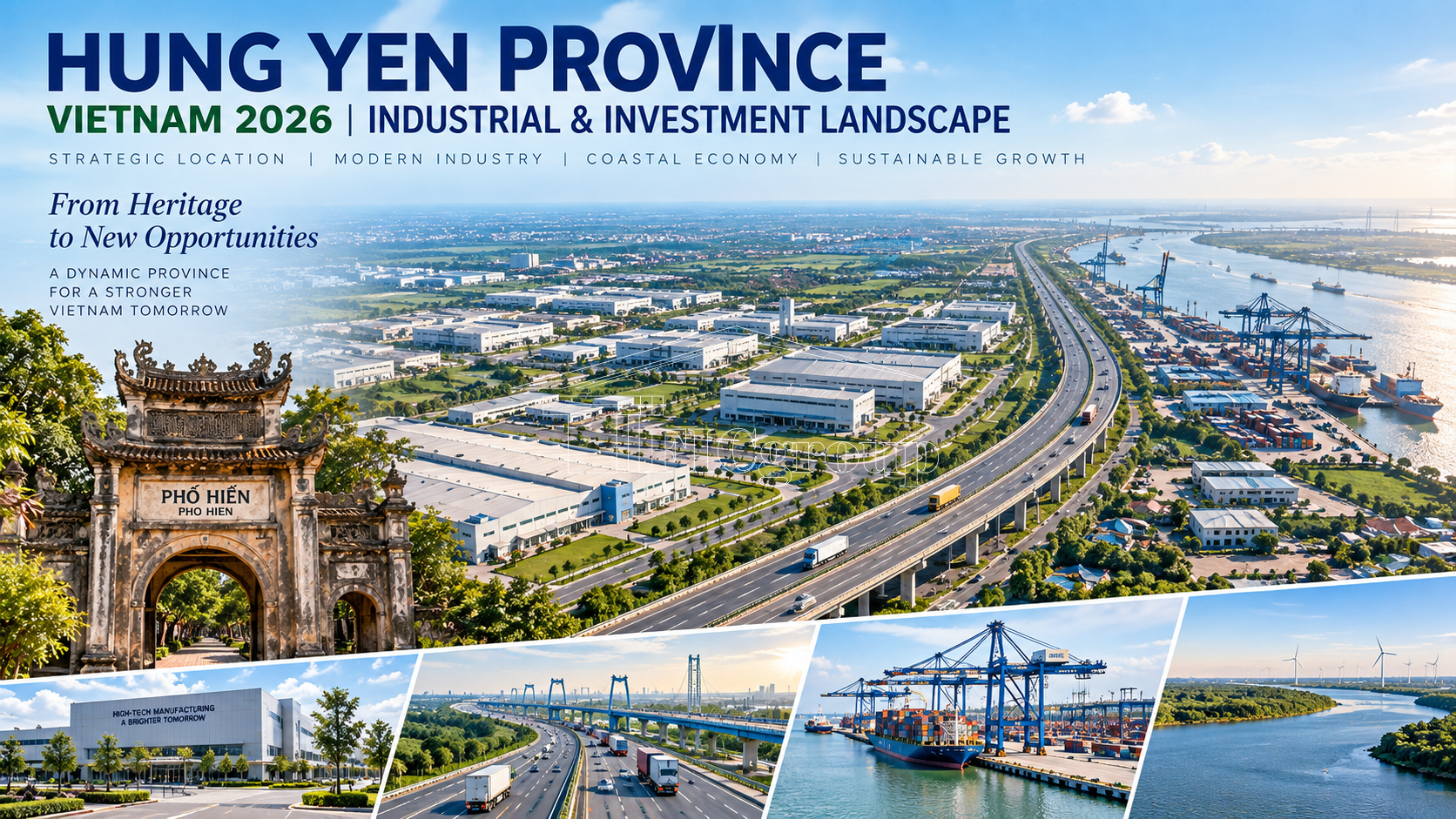
One of the most important consequences of the merger is geographical.
HUNG YEN IS NO LONGER LANDLOCKED.
The former Thai Binh territory contributes approximately 54 km of coastline, major estuaries, tidal flats and coastal development space.
For international investors, this expands the provincial investment proposition into:
The economic model changes from:
HANOI → INDUSTRIAL PARK → FACTORY
to:
HANOI → INDUSTRIAL PARK → LOGISTICS → ECONOMIC ZONE → COAST → GLOBAL MARKET.
This is one of the defining structural changes of the new Hung Yen.
The enlarged Hung Yen entered the post-merger period with a substantial economic base.
Provincial estimates place 2025 GRDP at approximately:
VND 328.3 TRILLION.
GRDP per capita was estimated at approximately:
VND 101.5 MILLION.
The province also recorded strong fiscal performance, with 2025 state budget revenue estimated above:
VND 74.4 TRILLION.
Industrialization remains central to the province’s development strategy.
For the 2026–2030 period, Hung Yen targets average annual GRDP growth of approximately:
10–11%.
The province aims for a 2030 GRDP scale exceeding:
VND 600 TRILLION.
Its targeted 2030 economic structure places:
INDUSTRY & CONSTRUCTION AT APPROXIMATELY 60%.
This confirms the strategic direction.
INDUSTRY WILL REMAIN THE CORE ENGINE OF HUNG YEN’S ECONOMY.
Hung Yen has one of Northern Vietnam’s increasingly significant foreign-investment platforms.
By the end of 2025, cumulative registered FDI across the enlarged province had reached approximately:
USD 17.13 BILLION.
During 2025 alone, new and additional investment attraction included approximately:
USD 2.33 BILLION
in foreign capital.
The province has attracted investors from major manufacturing economies and global supply chains, including:
Established and emerging industries include:
The merger adds another important dimension:
COASTAL FDI.
International investors can now evaluate locations ranging from Hanoi-adjacent industrial corridors to coastal Economic Zone developments within the same province.
CUMULATIVE FDI ≠ ANNUAL FDI
REGISTERED CAPITAL ≠ DISBURSED CAPITAL
INVESTOR INTEREST ≠ MOU
MOU ≠ APPROVED PROJECT
APPROVED PROJECT ≠ OPERATING PROJECT
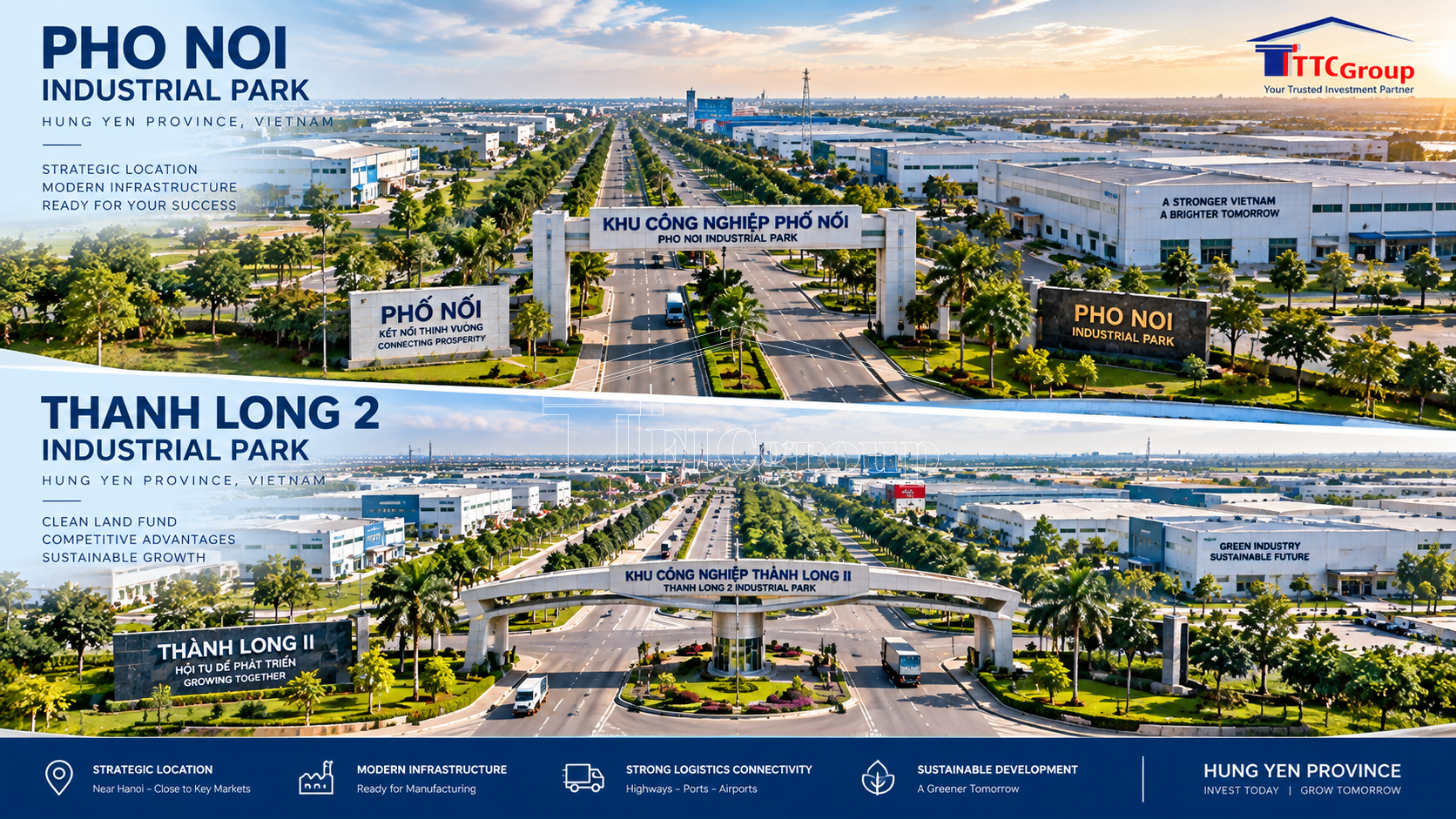
Industrial Parks (IPs) are at the center of Hung Yen’s investment proposition.
The merger combines:
The resulting provincial industrial network includes established, developing and future Industrial Parks distributed across several investment corridors.
For investors, the key point is not simply the total number of IPs.
It is their:
STATUS + LOCATION + INFRASTRUCTURE + INDUSTRY ORIENTATION + AVAILABLE LAND + UTILITIES + LOGISTICS.
The northern and western parts of the province inherit one of the Red River Delta’s established manufacturing ecosystems.
Major established industrial locations include:
A major multi-sector manufacturing location within the Hanoi–Hai Phong industrial corridor.
One of the province’s important Japanese-oriented manufacturing platforms, with a strong presence of high-quality industrial production and supporting industries.
An important manufacturing location associated historically with textile and related industries.
An established industrial location serving manufacturing and supporting industries.
Part of the wider Yen My industrial corridor.
An important manufacturing location along the province’s eastern industrial axis.
Supporting manufacturing development within the province’s established industrial geography.
These parks helped build the former Hung Yen into a major industrial location.
But the new Hung Yen industrial story is much larger.
Before the merger, former Hung Yen had already planned a substantial expansion of its industrial system.
Its planning framework toward 2030 envisaged approximately:
30 INDUSTRIAL PARKS
with a combined area approaching:
9,600 HECTARES.
Important developing or future industrial projects include areas associated with:
Some planned parks exceed several hundred hectares.
This represents a significant future industrial land pipeline.
However:
30 PLANNED IPs ≠ 30 OPERATING IPs
PLANNED IP ≠ ESTABLISHED IP
ESTABLISHED IP ≠ INFRASTRUCTURE COMPLETED
INFRASTRUCTURE COMPLETED ≠ READY LAND AVAILABLE
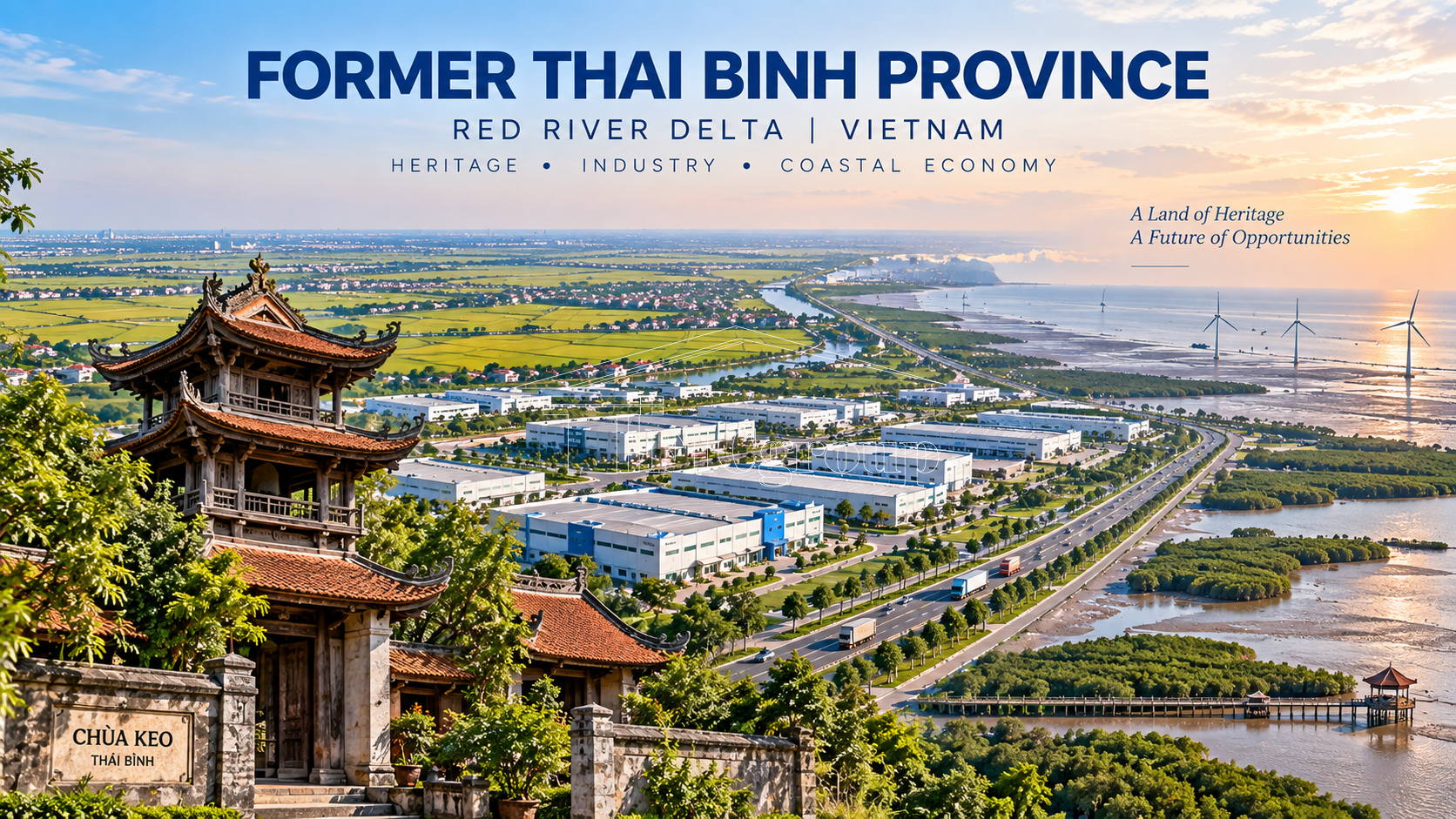
The merger adds another major industrial system to Hung Yen.
Important industrial locations inherited from former Thai Binh include:
These assets extend Hung Yen’s industrial geography eastward toward:
THAI BINH ECONOMIC ZONE + COAST.
This is one of the most important post-merger changes.
A particularly important industrial project is:
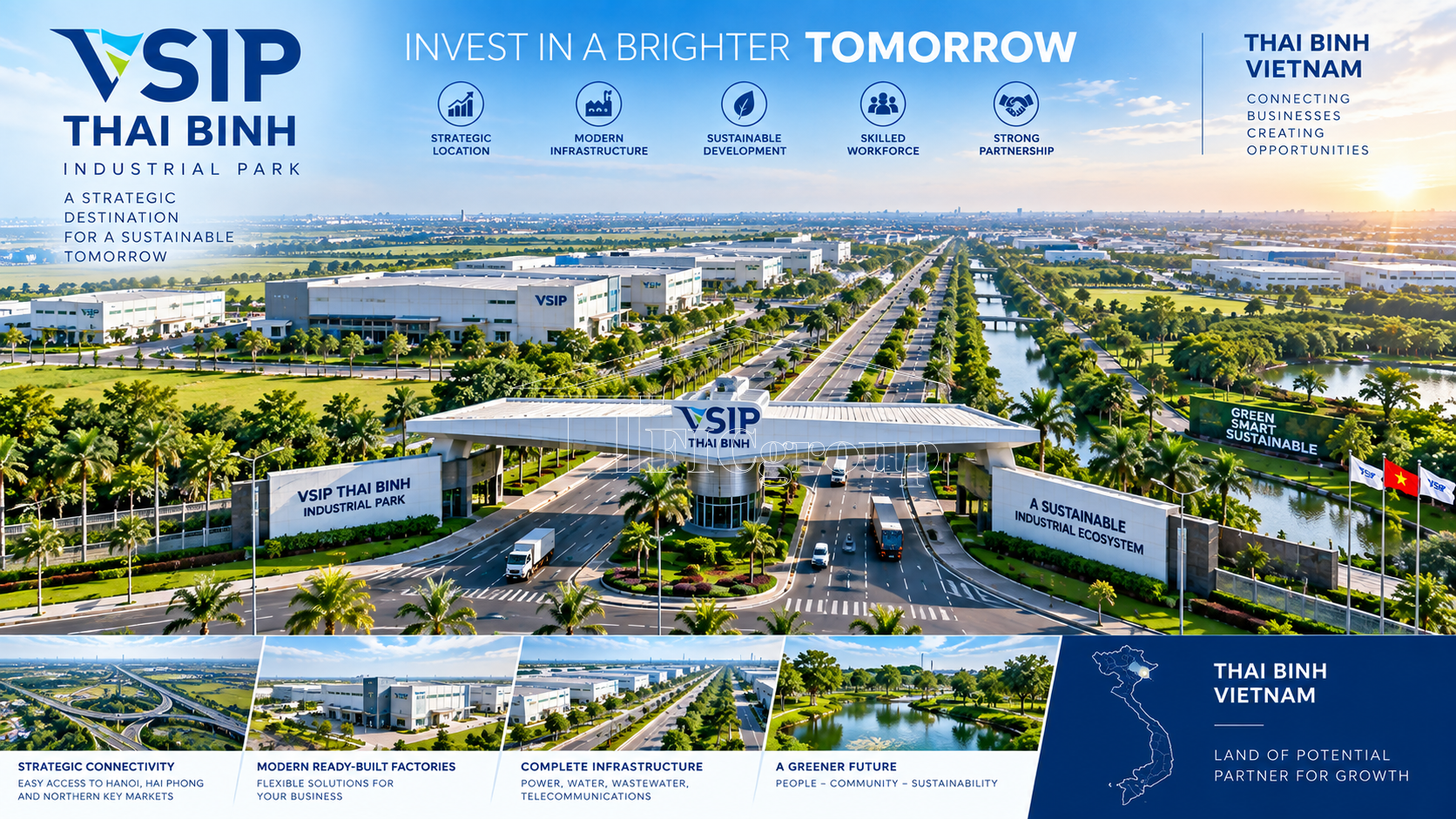
VSIP THAI BINH.
Although the project retains its established commercial name, following the provincial merger:
VSIP THAI BINH IS NOW LOCATED IN HUNG YEN PROVINCE.
The project has an area of approximately:
333.4 HECTARES.
Its development is led by the Vietnam–Singapore industrial development ecosystem.
The project broke ground in 2025 and continued land clearance and infrastructure implementation through 2026.
VSIP Thai Binh represents more than additional industrial land.
It introduces another internationally recognized industrial infrastructure platform into the enlarged Hung Yen investment ecosystem.
Its strategic advantages include:
The project can support the province’s strategy to attract:
GROUNDBREAKING ≠ COMPLETED INDUSTRIAL PARK
LAND CLEARANCE ≠ READY-TO-LEASE LAND
PLANNED INDUSTRIAL CAPACITY ≠ AVAILABLE CAPACITY
TARGET INDUSTRY ≠ OPERATING INDUSTRY
Actual ready land and utility availability must be verified at the time of investment.
Liên Ha Thai Industrial Park is another important industrial platform in the coastal investment geography.
Located within Thai Binh Economic Zone, the park has attracted international manufacturing projects and continues to strengthen connections with foreign-investor networks.
Its location provides access to:
Together:
LIEN HA THAI + VSIP THAI BINH
form two important anchors for the emerging coastal industrial economy of Hung Yen.
One of the most important assets brought into the new Hung Yen is:
THAI BINH ECONOMIC ZONE (EZ).
The Economic Zone covers approximately:
30,583 HECTARES.
Following administrative restructuring, its territory extends across 11 current commune-level units in the coastal area.
The EZ provides development space for:
For Hung Yen, this is transformational.
Former Hung Yen’s industrial strength was concentrated inland.
The new province can now connect:
HANOI-ADJACENT INDUSTRY
with:
COASTAL ECONOMIC-ZONE DEVELOPMENT.
The strategic corridor becomes:
HANOI
↓
HUNG YEN INDUSTRIAL CORE
↓
CENTRAL PROVINCIAL CORRIDOR
↓
THAI BINH ECONOMIC ZONE
↓
COAST.
In 2026, Hung Yen advanced a proposal to establish:
HUNG YEN FREE ECONOMIC ZONE
based on the existing Thai Binh Economic Zone and potential expansion areas.
The concept is being studied as an integrated multi-sector development platform focused on areas such as:
If ultimately approved and implemented, this could substantially elevate Hung Yen’s position within the Northern Vietnam investment landscape.
But status control is essential.
PROPOSAL ≠ APPROVED FREE ECONOMIC ZONE
PROVINCIAL ENDORSEMENT ≠ FINAL NATIONAL APPROVAL
PLANNED EXPANSION ≠ LEGALLY ESTABLISHED BOUNDARY
FREE-TRADE ORIENTATION ≠ OPERATING FREE-TRADE REGIME
Until final legal establishment and implementation, investors should continue to evaluate projects under the currently applicable Economic Zone and investment framework.
Industrial Clusters (ICs) represent another major layer of Hung Yen’s industrial ecosystem.
The new province inherits extensive IC networks from both former provinces.
Under the province’s 2026 implementation program, dozens of Industrial Clusters are at different stages of:
The provincial implementation framework covers more than:
4,300 HECTARES
of Industrial Cluster projects under different development statuses.
Important IC locations include examples such as:
Their status is not uniform.
Some have completed major infrastructure.
Some are receiving secondary investors.
Some remain under infrastructure construction.
Others are still completing land, legal or establishment procedures.
This is why the industrial-cluster network must be analyzed project by project.
Industrial Clusters should not be viewed merely as locations for smaller domestic companies.
They can perform an important supporting role around major FDI manufacturing centers.
The supply-chain model is:
GLOBAL MANUFACTURER
↓
INDUSTRIAL PARK
↓
TIER-1 / TIER-2 SUPPLIERS
↓
INDUSTRIAL CLUSTERS
↓
LOCAL MANUFACTURING NETWORK.
Potential IC activities include:
As Hung Yen attracts more advanced manufacturing, supplier localization will become increasingly important.
TTTFIC sees the new Hung Yen as three complementary industrial corridors.
VAN GIANG – VAN LAM – MY HAO – YEN MY – PHO NOI
Strengths:
Hanoi Proximity + Established IPs + Labor + Urbanization + Expressways + Mature Supply Chains
This corridor is particularly attractive for:
CENTRAL HUNG YEN → FORMER THAI BINH INLAND INDUSTRIAL AREAS
Strengths:
New Industrial Land + Manufacturing + Labor + Agricultural Processing + Regional Connectivity
This corridor provides expansion space beyond the mature Hanoi-adjacent industrial belt.
THAI BINH ECONOMIC ZONE – LIEN HA THAI – VSIP THAI BINH – TIEN HAI – COAST
Strengths:
Industrial Land + Economic Zone + Energy + Coastal Connectivity + Logistics + Marine Economy
This corridor creates an entirely new FDI proposition for Hung Yen.
Transport connectivity is one of the new province’s most important competitive advantages.
Hung Yen benefits from access to major national and regional corridors including:
New transport projects increasingly connect the former Hung Yen and former Thai Binh territories.
The strategic objective is:
HANOI → INDUSTRIAL CORE → ECONOMIC ZONE → COAST.
This can improve the movement of:
Hung Yen’s coastal geography should not be interpreted as meaning that every FDI project must use a port located inside the province.
The province also benefits from proximity and connectivity to the Hai Phong maritime ecosystem.
This provides access toward major northern seaport infrastructure and international shipping networks.
For many manufacturers, the relevant logistics equation may therefore be:
HUNG YEN FACTORY
↓
EXPRESSWAY / REGIONAL ROAD
↓
HAI PHONG PORT SYSTEM
↓
GLOBAL MARKET.
For coastal projects, future local maritime infrastructure may provide additional alternatives.
COASTLINE ≠ OPERATING CONTAINER PORT
PORT PLANNING ≠ OPERATING PORT
DISTANCE TO PORT ≠ LOGISTICS COMPETITIVENESS
Actual cost depends on road capacity, container availability, shipping routes, tolls, congestion and cargo characteristics.
The merger with former Thai Binh adds significant energy infrastructure to Hung Yen.
The coastal territory includes major power-generation assets, including:
THAI BINH 1 THERMAL POWER PLANT
and:
THAI BINH 2 THERMAL POWER PLANT.
This strengthens the province’s role within Northern Vietnam’s energy system.
The coastal development strategy also creates longer-term opportunities around:
The province has identified the southern coastal area as an important future energy-development territory.
However:
REGIONAL GENERATION ≠ SITE-SPECIFIC POWER AVAILABILITY
For every factory, investors must verify:
Former Hung Yen had no coastline.
The new Hung Yen does.
This creates new economic sectors including:
The merger therefore adds an entirely new economic layer to the province.
INDUSTRIAL HUNG YEN HAS BECOME INDUSTRIAL + COASTAL HUNG YEN.
Despite rapid industrialization, Hung Yen retains a substantial agricultural economy.
The merger combines:
Potential FDI opportunities include:
The value chain can become:
FARM / AQUACULTURE
↓
PROCESSING
↓
PACKAGING
↓
COLD CHAIN
↓
DISTRIBUTION / EXPORT.
The former Hung Yen territory has experienced rapid urbanization driven by proximity to Hanoi.
Major urban developments have transformed areas such as:
Large urban projects and new residential areas are changing the relationship between:
HANOI + HUNG YEN.
For FDI investors, urbanization matters because it improves access to:
The merger adds the urban system of former Thai Binh, creating another major population and service center.
With a population of approximately:
3.57 MILLION,
the new Hung Yen possesses a substantial labor base.
Its location also allows recruitment from neighboring parts of the Red River Delta.
Potential labor advantages include:
However:
LARGE POPULATION ≠ AVAILABLE INDUSTRIAL LABOR
Investors must evaluate:
This becomes particularly important for high-volume electronics and precision-manufacturing projects.
Hung Yen’s 2026–2030 development strategy places increasing emphasis on:
The objective is to use technology and innovation as major drivers of double-digit economic growth.
For industrial investment, this can support longer-term development toward:
The strategic transition is:
FROM INDUSTRIAL SCALE
to:
INDUSTRIAL SCALE + TECHNOLOGY + PRODUCTIVITY.
The merger creates a highly complementary economic system.
HANOI + INDUSTRIAL PARKS + FDI + MANUFACTURING + URBANIZATION + LOGISTICS.
COAST + ECONOMIC ZONE + VSIP + ENERGY + AGRICULTURE + AQUACULTURE + INDUSTRIAL LAND.
Together:
HANOI-TO-COAST INDUSTRIAL ECONOMY.
The integration logic is:
HANOI → INDUSTRY.
INDUSTRY → SUPPLY CHAIN.
SUPPLY CHAIN → LOGISTICS.
LOGISTICS → ECONOMIC ZONE.
ECONOMIC ZONE → COAST.
COAST → REGIONAL & GLOBAL MARKET.
TTTFIC identifies ten major opportunity groups.
Building on the existing northern manufacturing ecosystem.
Machinery, components, automation and industrial equipment.
Components, systems and supporting industries.
Particularly within new-generation Industrial Parks.
Manufacturing, supporting industries and logistics.
Serving Hanoi, Hung Yen, Hai Phong and the Red River Delta.
Engineering, maintenance, utilities and supporting industries.
Serving the large provincial and regional agricultural economy.
Within the new coastal economy.
Supporting rapid industrialization and population growth.
TTTFIC verifies:
LAND
LEGAL STATUS
PLANNING
SITE CLEARANCE
FDI ELIGIBILITY
INDUSTRY ELIGIBILITY
POWER
WATER
WASTEWATER
ENVIRONMENT
FIRE SAFETY
LABOR
SUPPLIER BASE
ROAD ACCESS
PORT ACCESS
LOGISTICS COST
INCENTIVES
COMMERCIAL TERMS
IMPLEMENTATION TIMELINE.
Hung Yen’s industrial scale creates major opportunities, but also requires careful project-level due diligence.
PLANNED IP ≠ ESTABLISHED IP
ESTABLISHED IP ≠ COMPLETED IP
COMPLETED IP ≠ AVAILABLE LAND
The IC network contains projects at very different stages of legal, land-clearance and infrastructure implementation.
Regional generation does not guarantee site-specific power availability.
Large manufacturing projects require verification of actual utility capacity.
Industrial concentration may increase competition for workers.
Proximity to Hanoi or Hai Phong does not automatically mean lower logistics cost.
Some legal and planning documents continue to reference former Hung Yen or former Thai Binh.
Investors must verify current applicability.
Industrial, energy and logistics development must be coordinated with environmental protection, aquaculture and coastal resilience.
The new Hung Yen combines:
HANOI PROXIMITY
ESTABLISHED MANUFACTURING
LARGE INDUSTRIAL PARK NETWORK
INDUSTRIAL CLUSTERS
VSIP THAI BINH
THAI BINH ECONOMIC ZONE
COAST
ENERGY
HANOI–HAI PHONG CONNECTIVITY
HAI PHONG PORT ACCESS
LARGE LABOR BASE
RAPID URBANIZATION
GLOBAL FDI.
The province’s competitive advantage is no longer simply:
“Near Hanoi.”
It is increasingly:
“HANOI-CONNECTED, INDUSTRIALIZED AND COASTAL.”
TTTFIC sees the new Hung Yen as a multi-node industrial investment system.
Hanoi Connectivity + Urbanization + Logistics + Services
Established Manufacturing + FDI + Electronics + Precision Industry + Supporting Industries
New Industrial Land + Manufacturing Expansion + Logistics
Manufacturing + Labor + Agro-Processing + Industrial Expansion
New-Generation Industrial Parks + Global FDI + Coastal Industrialization
Industry + Energy + Logistics + Marine Economy + Future Free-Economic-Zone Potential
The province therefore has several distinct site-selection strategies.
For investors prioritizing:
Hanoi + Labor + Mature Supply Chain + Existing Industrial Ecosystem.
For investors prioritizing:
Larger Land + Manufacturing Expansion + Regional Connectivity.
For investors prioritizing:
Economic Zone + VSIP + Energy + Coastal Development + Hai Phong Connectivity.
This means the correct question is no longer:
“Should we invest in Hung Yen?”
It is:
“WHERE WITHIN THE NEW HUNG YEN SHOULD OUR PROJECT BE LOCATED?”
And:
“SHOULD OUR FACTORY BE HANOI-ORIENTED, SUPPLY-CHAIN-ORIENTED OR COASTAL-LOGISTICS-ORIENTED?”
TTTFIC Group | Vietnam Industrial Investment & Business Advisory
The enlarged Hung Yen requires more sophisticated site selection than the former province.
An electronics manufacturer should not evaluate Hung Yen in the same way as a textile company.
A large export manufacturer may prioritize Hai Phong logistics.
A supplier may prioritize proximity to existing FDI factories.
An energy-intensive project may evaluate coastal locations differently.
TTTFIC therefore begins with the investor’s operating model.
Our process is:
INVESTOR REQUIREMENTS
↓
INDUSTRY & SUPPLY-CHAIN ANALYSIS
↓
REGIONAL LOCATION STRATEGY
↓
INDUSTRIAL PARK / INDUSTRIAL CLUSTER / FACTORY SCREENING
↓
LAND & LEGAL DUE DILIGENCE
↓
UTILITIES & ENVIRONMENTAL ANALYSIS
↓
LABOR & SUPPLIER ANALYSIS
↓
ROAD / PORT / LOGISTICS ANALYSIS
↓
COMMERCIAL NEGOTIATION
↓
IRC / ERC & REGULATORY COORDINATION
↓
DESIGN & BUILD
↓
OPERATION.
TTTFIC supports:
TTTFIC does not recommend a location simply because land is available.
We evaluate whether it is:
LEGALLY + TECHNICALLY + LOGISTICALLY + COMMERCIALLY + OPERATIONALLY SUITABLE
for the investor.
The 2025 merger fundamentally changed Hung Yen.
Former Hung Yen contributed:
HANOI + INDUSTRIAL PARKS + FDI + MANUFACTURING + URBANIZATION + LOGISTICS.
Former Thai Binh contributed:
COAST + THAI BINH ECONOMIC ZONE + VSIP + ENERGY + AGRICULTURE + AQUACULTURE + INDUSTRIAL LAND.
Together, they create:
VIETNAM’S HANOI-TO-COAST INDUSTRIAL INVESTMENT CORRIDOR.
The strategic opportunity is integration.
HANOI → INDUSTRY.
INDUSTRIAL PARK → FACTORY.
FACTORY → SUPPLY CHAIN.
SUPPLY CHAIN → LOGISTICS.
LOGISTICS → HAI PHONG / COAST.
ENERGY → INDUSTRIAL DEVELOPMENT.
VSIP → GLOBAL FDI.
ECONOMIC ZONE → COASTAL GROWTH.
AGRICULTURE / AQUACULTURE → PROCESSING → EXPORT.
The old Hung Yen was already a major manufacturing location near Hanoi.
The new Hung Yen represents something much broader:
HANOI GATEWAY + INDUSTRIAL PARKS + VSIP + ECONOMIC ZONE + ENERGY + COAST + MARINE ECONOMY + LOGISTICS + GLOBAL FDI.
For international investors, the question is therefore no longer simply:
“Why Hung Yen?”
The more important question is:
“WHERE WITHIN THE NEW HUNG YEN SHOULD WE INVEST?”
And:
“WHICH HUNG YEN INDUSTRIAL CORRIDOR BEST CONNECTS OUR FACTORY TO LABOR, SUPPLIERS, HANOI, HAI PHONG AND GLOBAL MARKETS?”
That is the question TTTFIC Group is designed to help investors answer.
TTTFIC VIETNAM INVESTMENT INTELLIGENCE PLATFORM 2026
TTTFIC Group | Vietnam Industrial Investment & Business Advisory
FDI INVESTORS — CONTACT TTTFIC GROUP
Vietnam Nationwide + Thailand
Tel / WhatsApp: +84 936 431 788
Email: marketing@tttfic.com
Table of contents