Dong Van 3 Industrial Park - Ninh Binh
- Investor: DONG VAN III - NINH BINH INDUSTRIAL ZONE INFRASTRUCTURE DEVELOPMENT & INVESTMENT JOINT STOCK COMPANY
- Price: 50 USD/m2
- Area: 523 Ha
NINH BINH PROVINCE, VIETNAM 2026
Vietnam’s Industrial, Heritage, Coastal & High-Tech Growth Platform
TTTFIC GLOBAL INVESTMENT PROFILE 2026
INDUSTRY + INDUSTRIAL PARKS + INDUSTRIAL CLUSTERS + AUTOMOTIVE + ELECTRONICS + TEXTILES + HERITAGE + COAST + LOGISTICS + HIGH-TECH
Ninh Binh Vietnam has become one of the most diversified industrial and investment platforms in Northern Vietnam following the 2025 administrative reorganization.
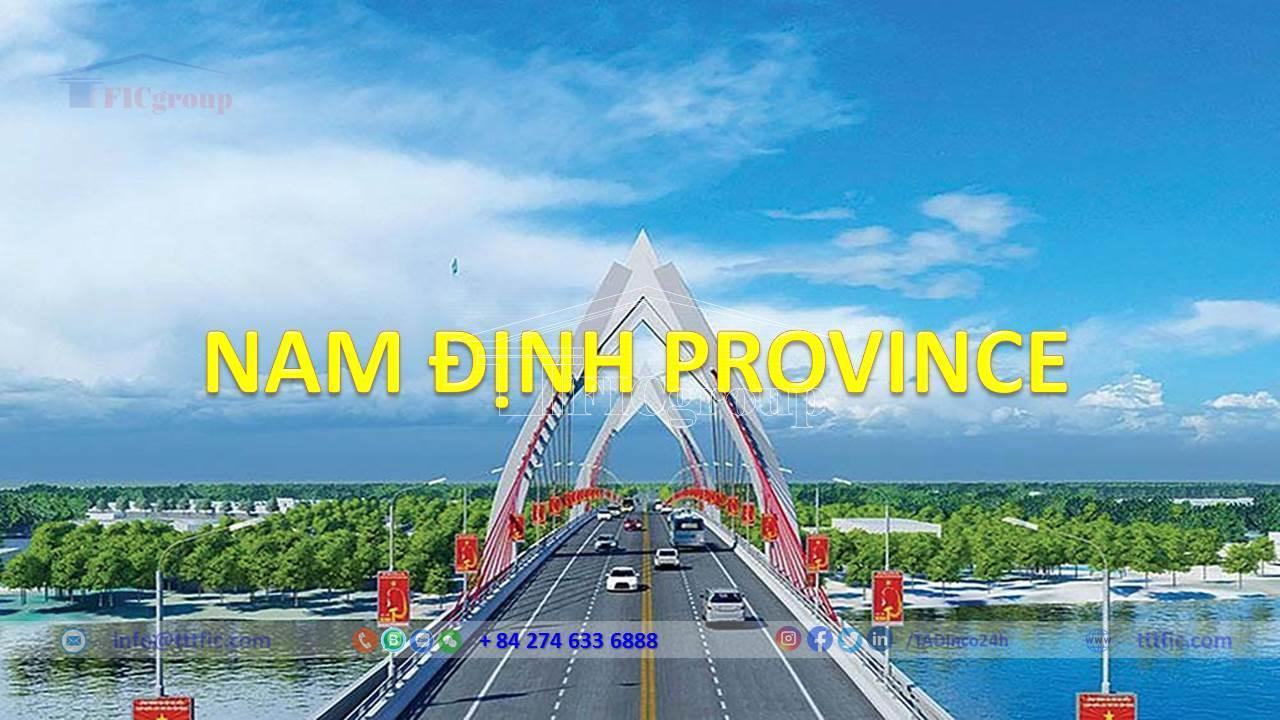
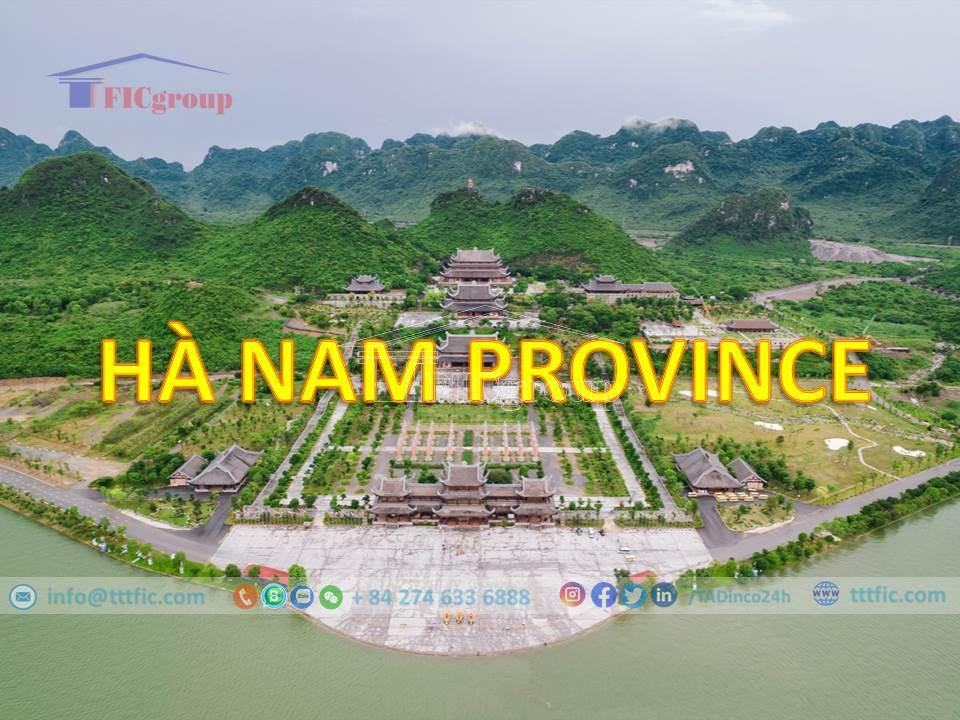
The new province was formed through the merger of:
The merger combined three economic systems that were already individually significant.
Former Ha Nam contributed:
Former Ninh Binh contributed:
Former Nam Dinh contributed:
Together they create a new provincial investment structure:
INDUSTRIAL PARKS
INDUSTRIAL CLUSTERS
AUTOMOTIVE
ELECTRONICS
TEXTILES
HERITAGE
COASTAL ECONOMY
LOGISTICS
HIGH-TECH MANUFACTURING.
From TTTFIC’s investment perspective, the most important change is not simply administrative scale.
It is the creation of:
A MULTI-LAYER INDUSTRIAL LAND MARKET.
International investors can now potentially choose among:
That breadth is rare.
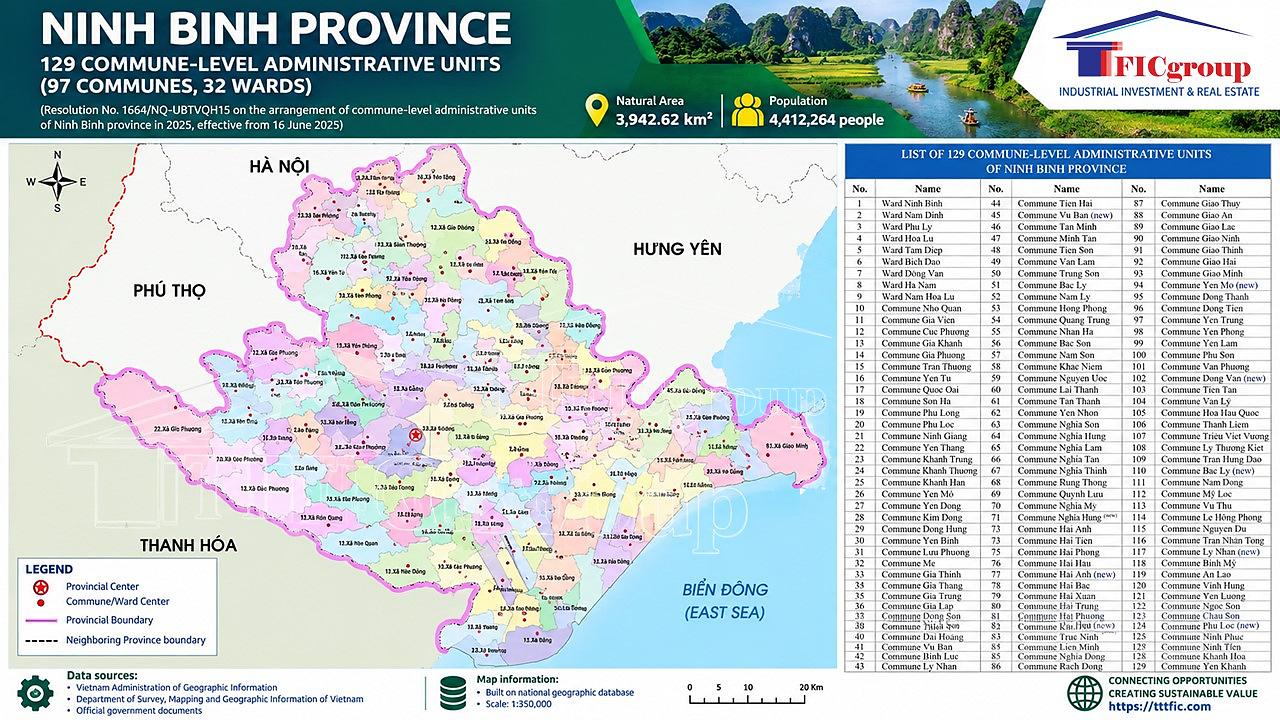
The new Ninh Binh Province has approximately:
Its post-merger economy combines:
In 2025, provincial GRDP expanded by:
10.65%.
The economy reached approximately:
VND 342.8 TRILLION.
GRDP per capita reached approximately:
VND 89.19 MILLION.
Industry and construction accounted for approximately:
47.05% OF THE ECONOMY.
This is an important indicator.
Ninh Binh is no longer simply a tourism-oriented province with selected factories.
It is an industrial economy with a globally recognized heritage and tourism platform.
The new Ninh Binh contains several very different industrial geographies.
Former Ha Nam:
Dong Van + Chau Son + Hoa Mac + Thanh Liem + Thai Ha + Kim Bang
This is the most mature high-density FDI manufacturing belt.
Former Ninh Binh:
Gian Khau + Khanh Phu + Phuc Son + Tam Diep
This zone combines:
Former Nam Dinh:
Hoa Xa + My Trung + Bao Minh + My Thuan + Rang Dong
This area brings:
Ninh Co + Rang Dong + Hai Long / VSIP + coastal industrial development
This is the future maritime-industrial growth corridor.
Together they create:
ONE PROVINCE – MULTIPLE INDUSTRIAL ECOSYSTEMS.

III | THE REAL SCALE OF NINH BINH’S INDUSTRIAL PARK SYSTEM
The industrial scale of the province must be described carefully.
It would be incorrect to say:
The correct TTMS™ interpretation is:
20 INDUSTRIAL PARKS ARE CURRENTLY OPERATING
but:
32 INDUSTRIAL PARKS HAVE ALREADY BEEN ESTABLISHED
and the adjusted provincial planning framework is substantially larger.
By August 2026:
The revised provincial planning framework identifies:
97 INDUSTRIAL PARKS
with potential total land demand of approximately:
47,796 HECTARES
through the long-term planning horizon.
This is a major industrial land pipeline.
Earlier 2025–early 2026 documents referenced:
53 INDUSTRIAL PARKS
under the then-current implementation framework.
The larger 97-KCN figure comes from the subsequently adjusted provincial planning framework.
Therefore:
53 KCN ≠ 97 KCN
because the figures refer to different planning dates and scopes.
And:
97 PLANNED KCN ≠ 97 OPERATING KCN.
That distinction must remain explicit.
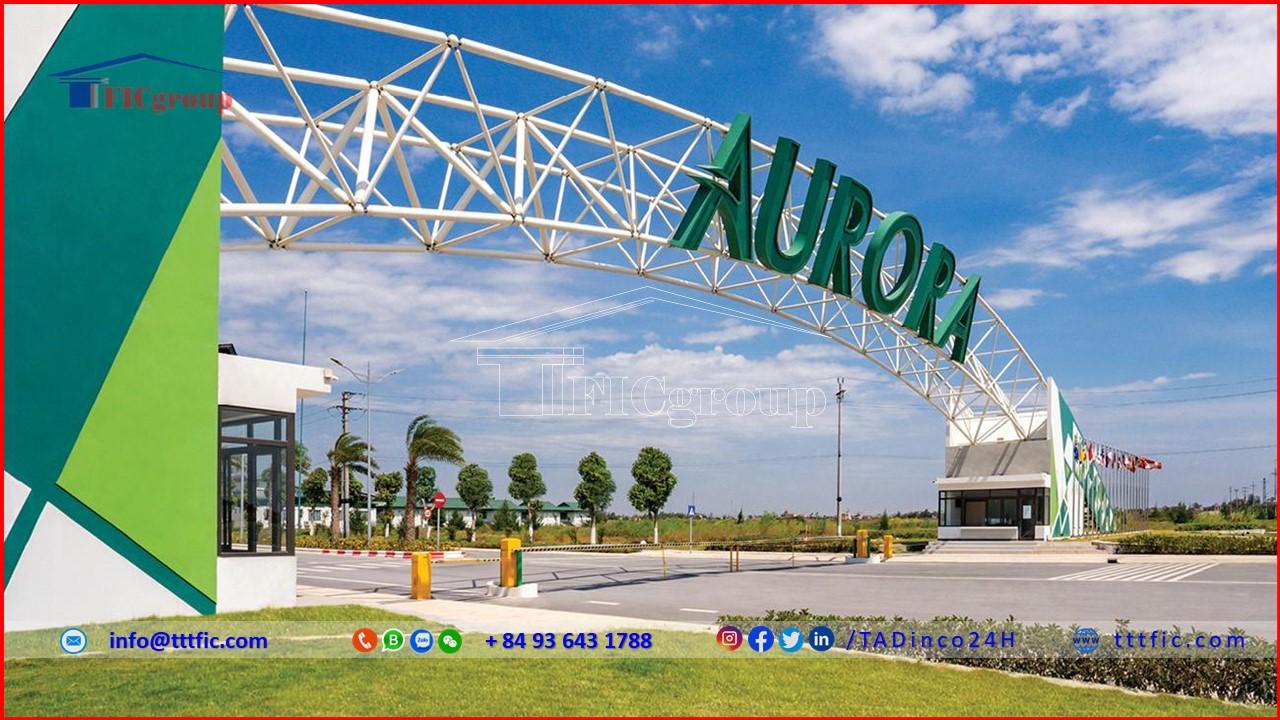
Ninh Binh currently has a broad operating KCN network that includes major locations such as:
The provincial Industrial Zone Authority currently categorizes approximately 20 KCN as operating.
These parks support a diversified industrial structure including:
A second group of KCNs is already moving through:
Examples include:
This industrial pipeline matters for investors because mature KCNs in the Hanoi industrial region increasingly face:
Ninh Binh’s next-generation industrial parks can provide alternative capacity for:
One of the most important features of Ninh Binh’s industrial geography is its extensive network of:
INDUSTRIAL CLUSTERS – CCN.
Under the adjusted provincial planning framework, Ninh Binh plans:
114 INDUSTRIAL CLUSTERS
with total area of approximately:
6,557 HECTARES.
By August 2026:
61 CCN HAD BEEN ESTABLISHED
covering more than:
3,113 HECTARES.
Their status included:
This means the CCN system itself is almost comparable to an entire provincial industrial-park ecosystem.
Ninh Binh’s geography helps explain why industrial clusters play such a significant role.
Large sections of the merged province consist of:
In many locations, assembling several hundred hectares for a conventional industrial park may be difficult or commercially inefficient.
Industrial clusters therefore provide an alternative model.
Typical CCN scale is much smaller.
Under Vietnam’s current regulatory framework, expanded industrial clusters generally remain within a maximum scale of approximately:
75 HECTARES.
This makes CCNs particularly suitable for:
The industrial geography becomes:
LARGE KCN
MEDIUM CCN
DISTRIBUTED MANUFACTURING.
This is one reason Ninh Binh possesses such a dense industrial network.
The adjusted planning framework lists operating CCNs including examples such as:
Many of these CCNs range roughly between:
10–75 HECTARES.
This scale can be very attractive to manufacturers that do not require a large industrial park or hundreds of hectares of contiguous industrial land.
This is an important point for international investors.
Vietnamese industrial clusters were originally designed primarily to organize:
However, the current national legal framework does not create a blanket prohibition preventing foreign-invested enterprises from manufacturing in industrial clusters.
Nghị định 32/2024/NĐ-CP applies to organizations and individuals investing and conducting production and business activities in CCNs.
Ninh Binh’s own CCN management regulation, adopted under Decision 171/2025/QĐ-UBND, manages CCN investment under the Investment Law, Land Law and national CCN regulations without establishing a blanket FDI exclusion.
This creates an important practical site-selection opportunity.
In selected CCNs, an eligible foreign-invested manufacturer may potentially obtain:
From TTTFIC’s market perspective, this is an important advantage.
Some provinces in practice concentrate FDI much more heavily inside formal KCNs because of:
Ninh Binh offers a comparatively broader industrial-site landscape.
However:
FDI ELIGIBILITY IN A CCN IS NOT AUTOMATIC.
TTTFIC must verify:
CCN EXISTS ≠ FDI PROJECT AUTOMATICALLY ACCEPTED
LAND AVAILABLE ≠ LEGALLY LEASABLE TO THE PROJECT
FOREIGN INVESTOR ≠ AUTOMATIC APPROVAL
CCN ≠ KCN IN LEGAL OR INFRASTRUCTURE STATUS
This distinction is essential.
Most international investors initially search only:
INDUSTRIAL PARKS.
That approach can miss suitable sites.
For a manufacturer requiring only:
a CCN may sometimes provide a better operating solution than a large industrial park.
Potential advantages may include:
This is particularly relevant for:
TTTFIC therefore treats Ninh Binh’s CCN network as a real part of the investor site-selection universe.
The former Ha Nam area is the province’s most mature high-density manufacturing geography.
Its strengths include:
The area includes several major KCN and CCN concentrations.
This makes it particularly attractive for projects requiring:
HANOI ACCESS
SUPPLIER NETWORK
FDI ECOSYSTEM
INDUSTRIAL LABOR.
The former Ha Nam alone already had a dense CCN network before merger, including highly occupied clusters such as:
Former Ninh Binh provides the province with an established automotive and engineering base.
The local ecosystem supports:
The strategic post-merger opportunity is supplier integration.
The industrial chain becomes:
AUTOMOTIVE OEM
↓
ELECTRONICS
↓
PRECISION ENGINEERING
↓
COMPONENTS
↓
SMALLER CCN SUPPLIERS
↓
LOGISTICS.
This is where the KCN + CCN combination becomes especially valuable.
Large manufacturers can anchor themselves in KCNs.
Smaller suppliers can potentially establish facilities in surrounding CCNs.
That creates:
INDUSTRIAL DENSITY.
Ninh Binh’s industrial policy increasingly prioritizes:
The post-merger industrial geography gives this strategy a strong base.
The former Ha Nam area already contains significant:
Future KCN and CCN development can provide additional capacity for:
HIGH-TECH POLICY ≠ HIGH-TECH CLUSTER
SEMICONDUCTOR INTEREST ≠ FAB PROJECT
SUPPORTING INDUSTRY POTENTIAL ≠ EXISTING SUPPLIER CONTRACT
Actual project conditions must be verified.
The former Nam Dinh territory brings a long-established textile and garment ecosystem.
Important industrial areas include:
This provides:
The future opportunity is to transition toward:
HIGHER VALUE TEXTILES
AUTOMATION
GREEN PRODUCTION
TRACEABILITY
LOW-CARBON SUPPLY CHAINS.
Ninh Co Economic Zone represents the largest structural addition to Ninh Binh’s future investment geography.
The zone currently has approximately:
13,950 HECTARES OF LAND
plus around:
16,000 HECTARES OF MARINE SPACE
within the planning study.
Its long-term functions include:
This introduces a new industrial model to the province:
INLAND INDUSTRIAL BELT
↓
COASTAL INDUSTRY
↓
PORT
↓
GLOBAL MARKET.
Ninh Co could therefore become a fourth major economic engine alongside:
Ninh Binh is equally strong on the tourism side.
In 2025, the province welcomed approximately:
19.42 MILLION VISITOR ARRIVALS
including more than:
2.2 MILLION INTERNATIONAL VISITORS.
Tourism revenue exceeded:
VND 21.27 TRILLION.
Its tourism portfolio now includes:
This creates a second major economic engine:
INDUSTRY
and
HERITAGE ECONOMY.
Very few provinces possess both at this scale.
The province also possesses important:
These resources support:
However:
TTTFIC therefore assesses resource-based projects separately from general provincial resource statistics.
The merger gives Ninh Binh a population base of more than:
4.4 MILLION PEOPLE.
This is strategically significant.
The combined workforce includes experience in:
The province’s dense settlement pattern can also support distributed manufacturing around CCNs.
But:
TTTFIC evaluates labor at actual site level based on:
This is the section I would emphasize most strongly.
Most provinces offer investors:
INDUSTRIAL PARKS.
Ninh Binh offers:
INDUSTRIAL PARKS
INDUSTRIAL CLUSTERS
ECONOMIC ZONE
EXISTING FACTORIES
FUTURE COASTAL INDUSTRY.
This creates a layered industrial market.
A multinational manufacturer may locate in a major KCN.
Its suppliers may locate in:
The model becomes:
ANCHOR MANUFACTURER
↓
TIER-1
↓
TIER-2
↓
TIER-3
↓
LOCAL SUPPLIERS
↓
DISTRIBUTED CCN NETWORK.
This structure can increase:
It is one of Ninh Binh’s most important competitive advantages.
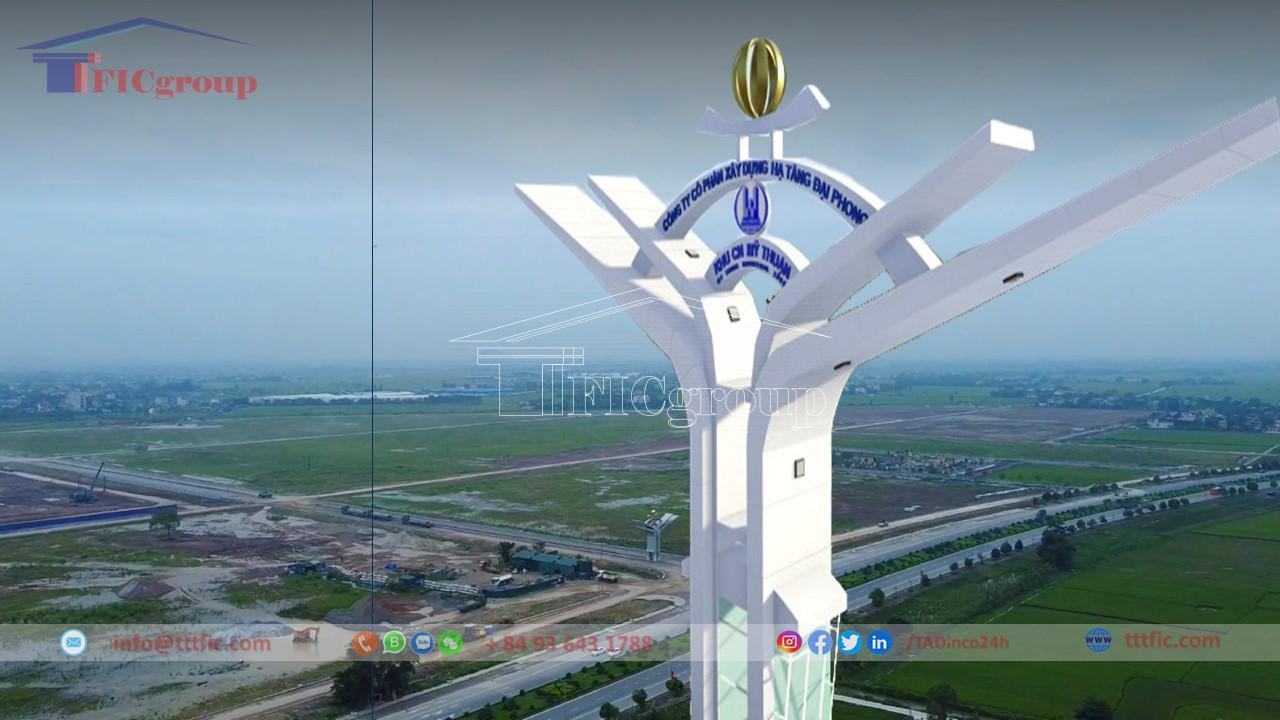
As of the latest August 2026 reporting:
97 KCN in adjusted long-term planning
32 KCN established
20 operating
12 under land clearance/infrastructure development
114 CCN in planning
61 established
25 operating
11 under infrastructure development
25 in investment / procedural / land-clearance stages.
This means Ninh Binh already has:
45 OPERATING KCN + CCN INDUSTRIAL LOCATIONS
before counting facilities still under development.
That industrial density is strategically important.
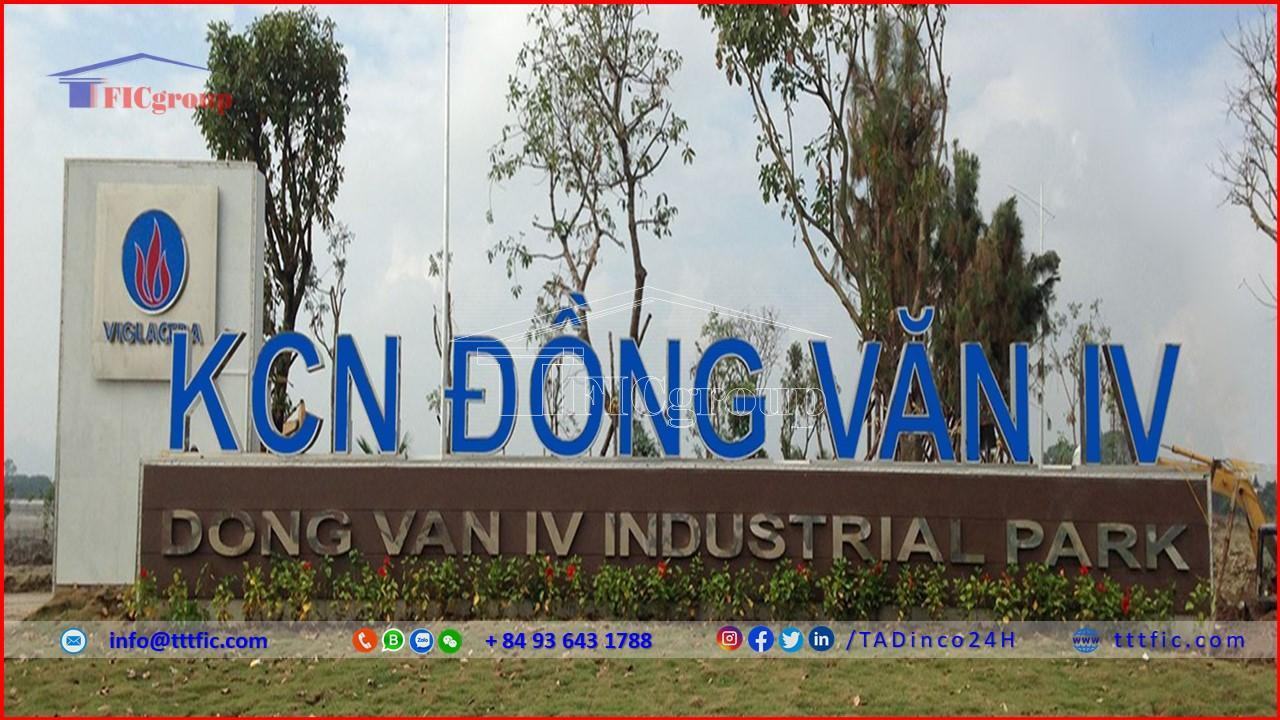
Ninh Binh’s industrial parks already host a major FDI base.
By 2025, the province reported more than:
500 FDI PROJECTS
inside KCNs, with total foreign registered capital around:
USD 10 BILLION
at that reporting stage.
By mid-August 2026, cumulative KCN foreign investment had risen to approximately:
USD 11.38 BILLION,
with 1,178 secondary investment projects across the KCN system.
In the first six months of 2026 alone, KCN businesses generated estimated export turnover of around:
USD 12.566 BILLION,
equivalent to approximately:
72.8% OF PROVINCIAL EXPORTS.
This demonstrates how central industrial parks are to Ninh Binh’s export economy.
TTTFIC identifies major opportunities in:
Selected newly completed KCN and CCN infrastructure.
TTTFIC verifies:
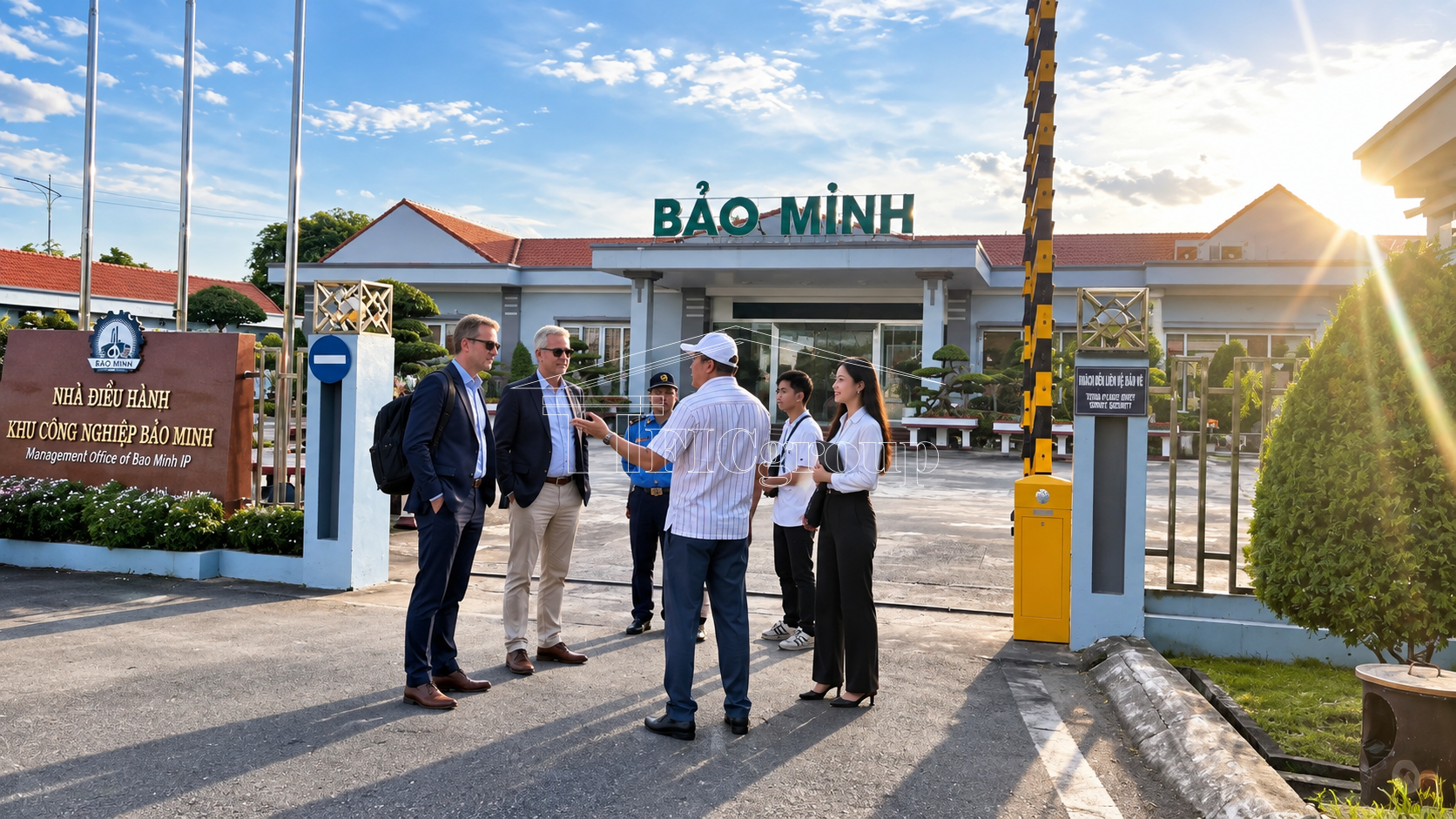
Ninh Binh’s industrial scale creates opportunity but also complexity.
These are not identical products.
Investors must verify the regulatory framework of each location.
Possible in eligible cases does not mean automatic approval everywhere.
Particularly important for:
Smaller land parcels can create opportunities through CCNs but may limit large contiguous projects.
Mature northern industrial areas may experience stronger recruitment competition.
Industrial projects near sensitive heritage and ecological areas require stricter planning analysis.
Future port and economic-zone capacity should not be modeled as current operating infrastructure.
Ninh Binh offers an industrial structure few provinces can replicate.
It combines:
20+ OPERATING KCN
25 OPERATING CCN
12 KCN UNDER DEVELOPMENT
36 ADDITIONAL ESTABLISHED / DEVELOPING CCN
LARGE FDI BASE
HANOI ACCESS
AUTOMOTIVE
ELECTRONICS
TEXTILES
HERITAGE TOURISM
COASTAL ECONOMY.
That makes the province attractive not only to large multinational manufacturers.
It can also support:
SMALLER FDI MANUFACTURERS
SUPPLIERS
COMPONENT PRODUCERS
SME INDUSTRIAL PROJECTS.
This is a major strategic distinction.
TTTFIC sees the new Ninh Binh as a six-node investment platform.
Electronics + FDI + Precision Manufacturing + Hanoi Connectivity
Automotive + Engineering + Materials
Textiles + Manufacturing + Labor
Large-Scale FDI Manufacturing
Distributed Manufacturing + SME + Supporting Industries + Selected FDI
Coastal Industry + Logistics + Port + Marine Economy
This creates a development hierarchy:
LARGE INDUSTRIAL PARKS
↓
ANCHOR FDI
↓
SUPPLIERS
↓
INDUSTRIAL CLUSTERS
↓
LOCALIZATION
↓
LOGISTICS
↓
EXPORT.
This is much more sophisticated than a province relying on several isolated industrial parks.
Ninh Binh possesses the potential to create a true:
INDUSTRIAL NETWORK ECONOMY.
Ninh Binh requires sophisticated site selection because there are now dozens of possible KCN and CCN locations.
TTTFIC does not simply ask:
We ask:
WHICH INDUSTRIAL LOCATION BEST FITS THE PROJECT?
That could be:
Our process is:
PROJECT REQUIREMENTS
↓
LOCATION STRATEGY
↓
KCN / CCN SCREENING
↓
FDI ELIGIBILITY
↓
SITE & INFRASTRUCTURE VERIFICATION
↓
LABOR & LOGISTICS ANALYSIS
↓
ENVIRONMENTAL REVIEW
↓
COMMERCIAL NEGOTIATION
↓
IRC / ERC
↓
DESIGN & BUILD
↓
OPERATION.
TTTFIC supports:
TTTFIC does not simply send investors a list of industrial parks.
WE BUILD THE INVESTMENT CASE FROM THE PROJECT BACKWARD.
Ninh Binh’s post-merger strength cannot be explained by one industry.
It is the combination that matters.
Former Ha Nam created:
INDUSTRIAL DEPTH.
Former Ninh Binh created:
AUTOMOTIVE + HERITAGE.
Former Nam Dinh created:
TEXTILES + LABOR + COAST.
The KCN network creates:
LARGE-SCALE MANUFACTURING.
The CCN network creates:
DISTRIBUTED MANUFACTURING.
Ninh Co creates:
FUTURE MARITIME INDUSTRY.
Tourism creates:
HERITAGE ECONOMY.
Together they form:
ONE OF NORTHERN VIETNAM’S MOST DIVERSIFIED INDUSTRIAL & INVESTMENT PLATFORMS.
For international investors, the key question is therefore no longer:
There are many.
The better question is:
“DOES MY PROJECT BELONG IN A KCN, A CCN, AN EXISTING FACTORY OR THE FUTURE COASTAL INDUSTRIAL CORRIDOR?”
That is exactly where TTTFIC Group adds value.
TTTFIC VIETNAM INVESTMENT INTELLIGENCE PLATFORM 2026
34 Provinces & Cities. One Updated Investment Intelligence Platform.
TTTFIC Group | Vietnam Industrial Investment & Business Advisory
Table of contents