Son My 1 Industrial Park (IPICO) - Lam Dong Province
- Investor: IPICO
- Price: 68 USD/M2
- Area: 1.070 Ha
LAM DONG PROVINCE, VIETNAM 2026
Vietnam’s Highlands-to-Sea Platform for Advanced Agriculture, Tourism, Minerals, Industry, Energy & Global Logistics
TTTFIC GLOBAL INVESTMENT PROFILE 2026
Lam Dong Province, Vietnam 2026 is emerging as a unique highlands-to-sea investment platform combining Da Lat, high-tech agriculture, tourism, bauxite and alumina, titanium, industrial parks, energy, Cambodia-border connectivity, expressways and international maritime logistics. This profile reviews the province’s post-merger economic geography, industrial infrastructure, mineral value chains, tourism corridors and major investment opportunities.
HIGH-TECH AGRICULTURE + DA LAT + TA DUNG + MUI NE + BAUXITE & ALUMINUM + TITANIUM + ADVANCED MANUFACTURING + BECAMEX VSIP + ENERGY + CAMBODIA BORDER + EXPRESSWAYS + INTERNATIONAL PORT + CAI MEP CONNECTIVITY + COAST + PHU QUY
Vietnam has changed. So has its investment map.
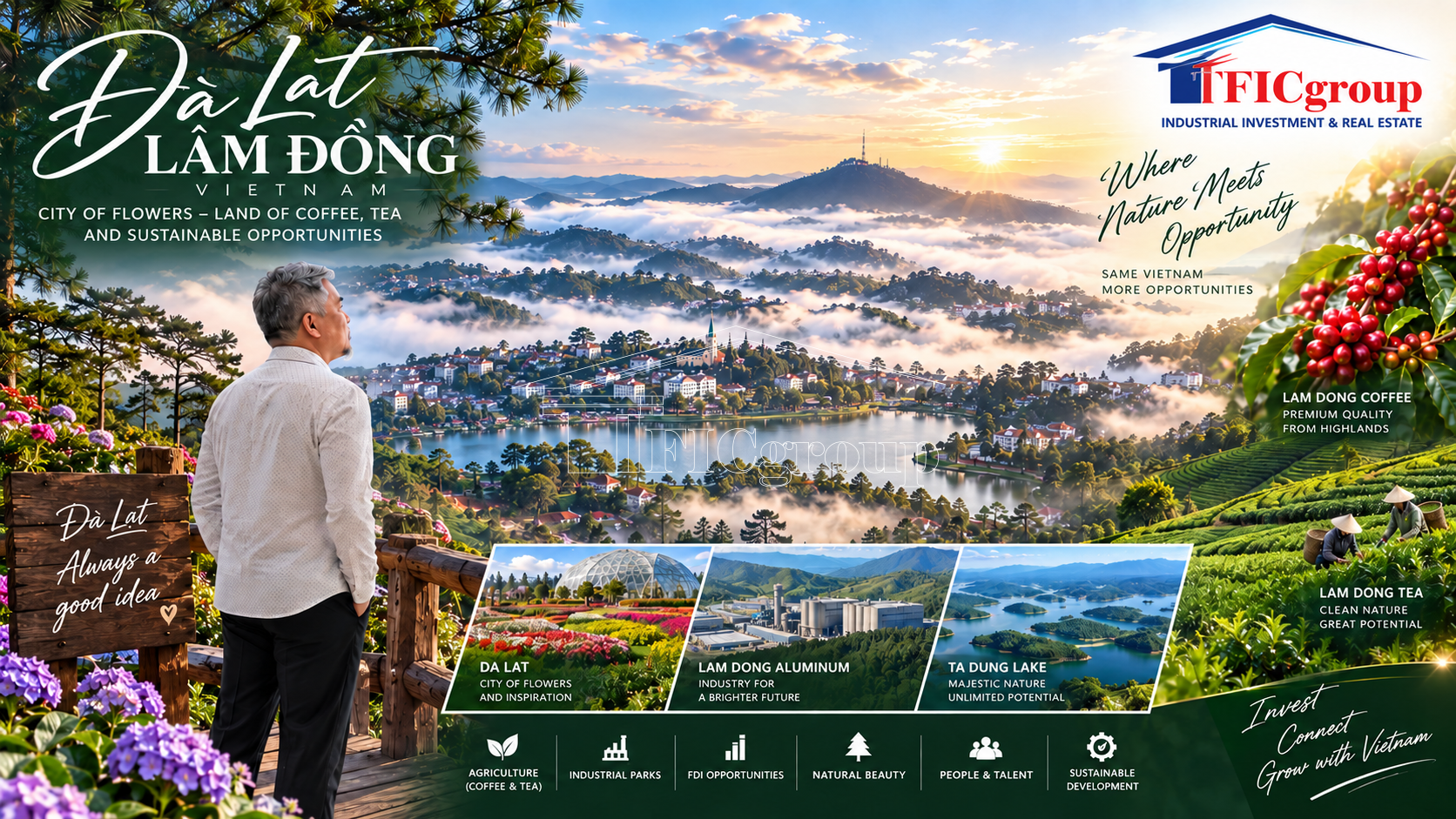
Few provinces illustrate that transformation more clearly than the new Lam Dong.
Following the historic merger of former Lam Dong Province, former Dak Nong Province and former Binh Thuan Province, Lam Dong has been transformed from a predominantly highland economy into one of Vietnam’s most geographically diverse investment territories.
The new province stretches:
FROM THE CAMBODIAN BORDER TO THE EAST SEA.
It connects the Central Highlands with the coast.
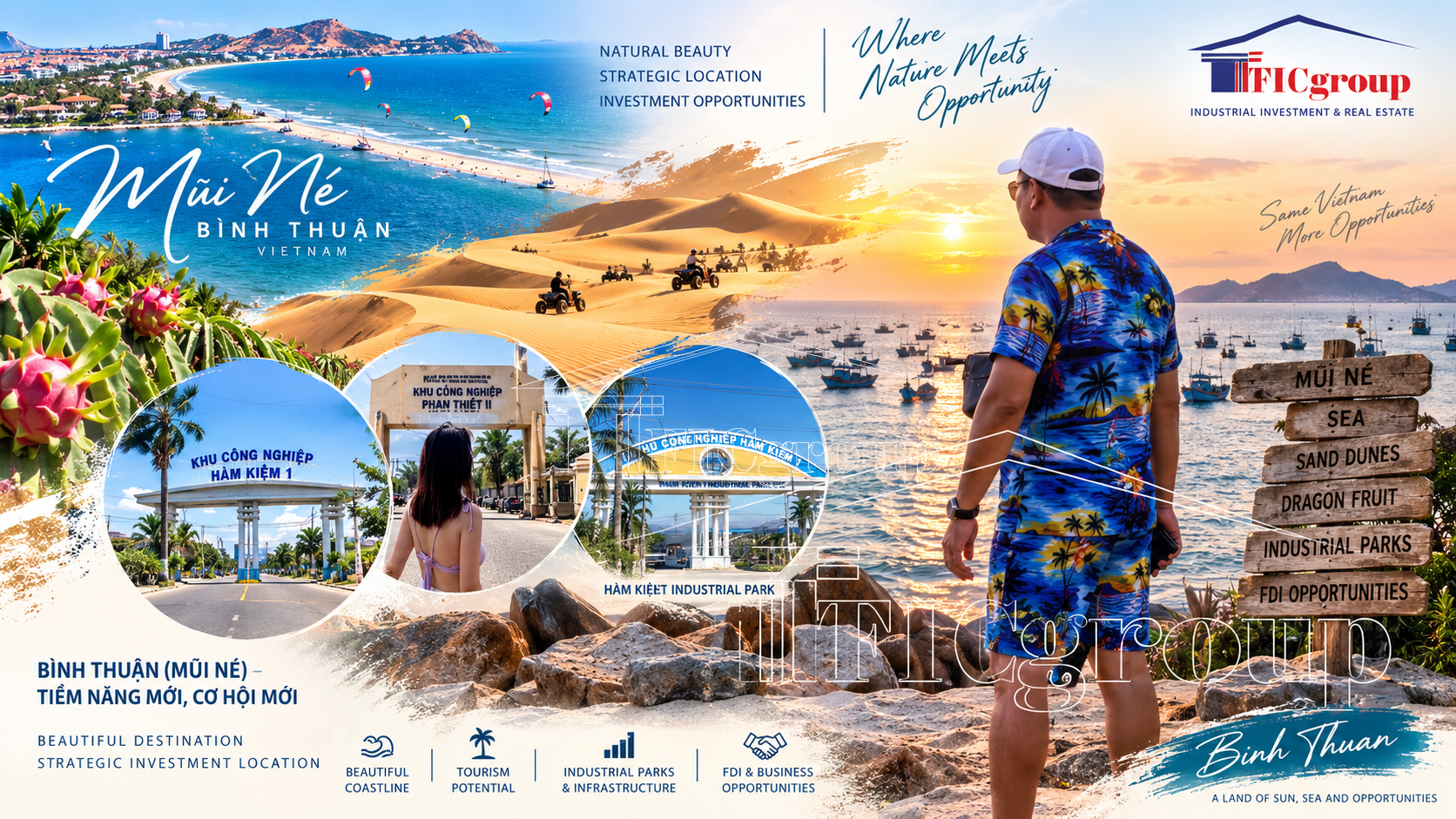
It combines Da Lat with Mui Ne.
It combines Ta Dung with Phu Quy.
It combines some of Vietnam’s most productive agricultural areas with major bauxite, alumina and titanium resources.
It combines hydropower with wind, solar and LNG-related energy development.
It combines highland production with expressways, industrial corridors and an operating international seaport.
And it combines established industrial locations with one of the province’s most significant future industrial opportunities:
THE BECAMEX VSIP BINH THUAN INDUSTRIAL – SERVICE – URBAN PLATFORM.
The merger therefore creates something substantially larger than three former provincial economies.
ONE PROVINCE.
THREE ECONOMIC GEOGRAPHIES.
FOUR MAJOR ECONOMIC PILLARS.
MULTIPLE GLOBAL VALUE CHAINS.
The new investment geography can be visualized as:
CAMBODIA BORDER
↓
CENTRAL HIGHLANDS
↓
AGRICULTURE + FORESTRY + MINERALS
↓
PROCESSING + ADVANCED MATERIALS
↓
INDUSTRIAL PARKS
↓
EXPRESSWAYS
↓
COASTAL INDUSTRIAL CORRIDORS
↓
INTERNATIONAL PORTS & GLOBAL LOGISTICS
↓
EAST SEA.
This is the new Lam Dong investment proposition.
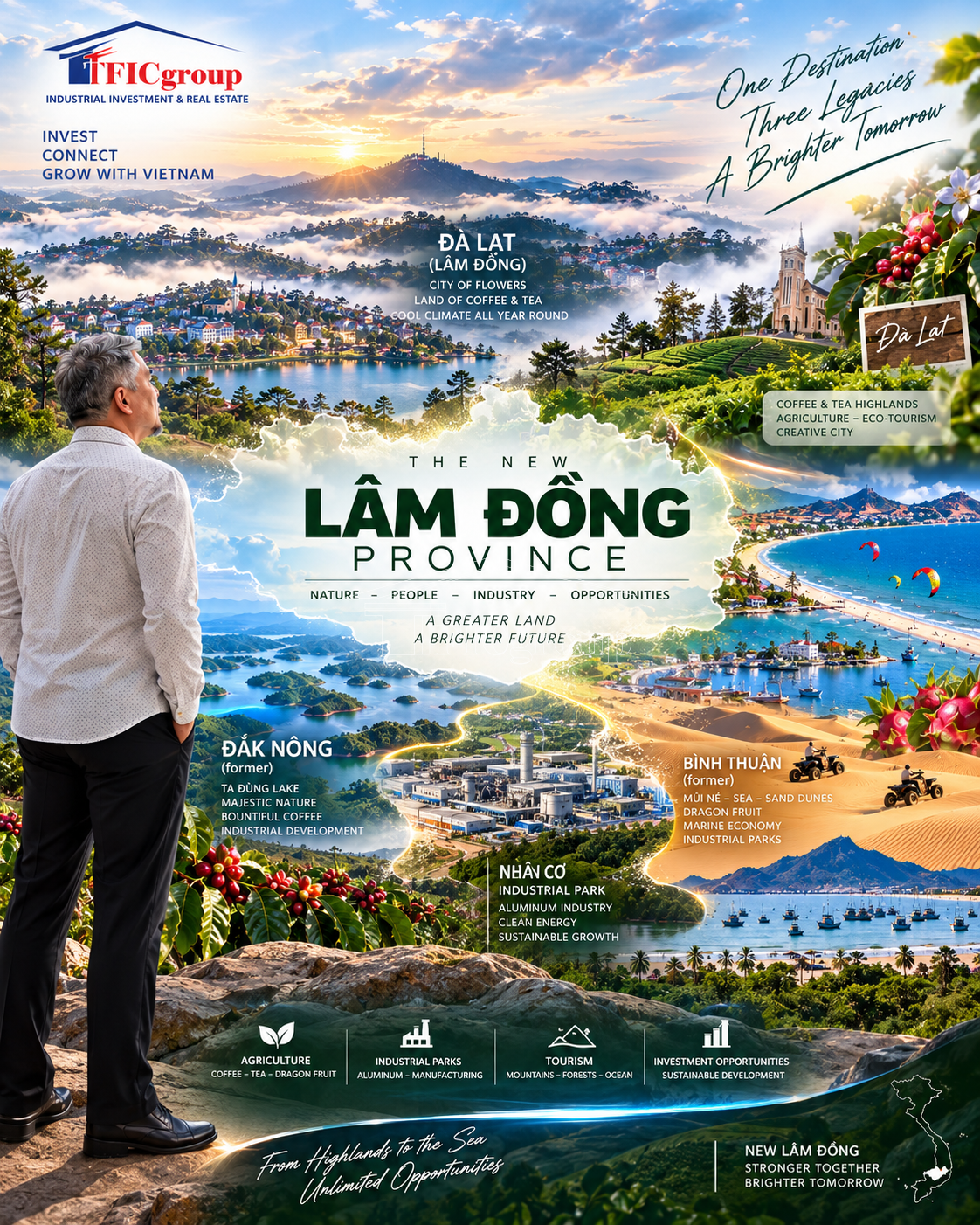
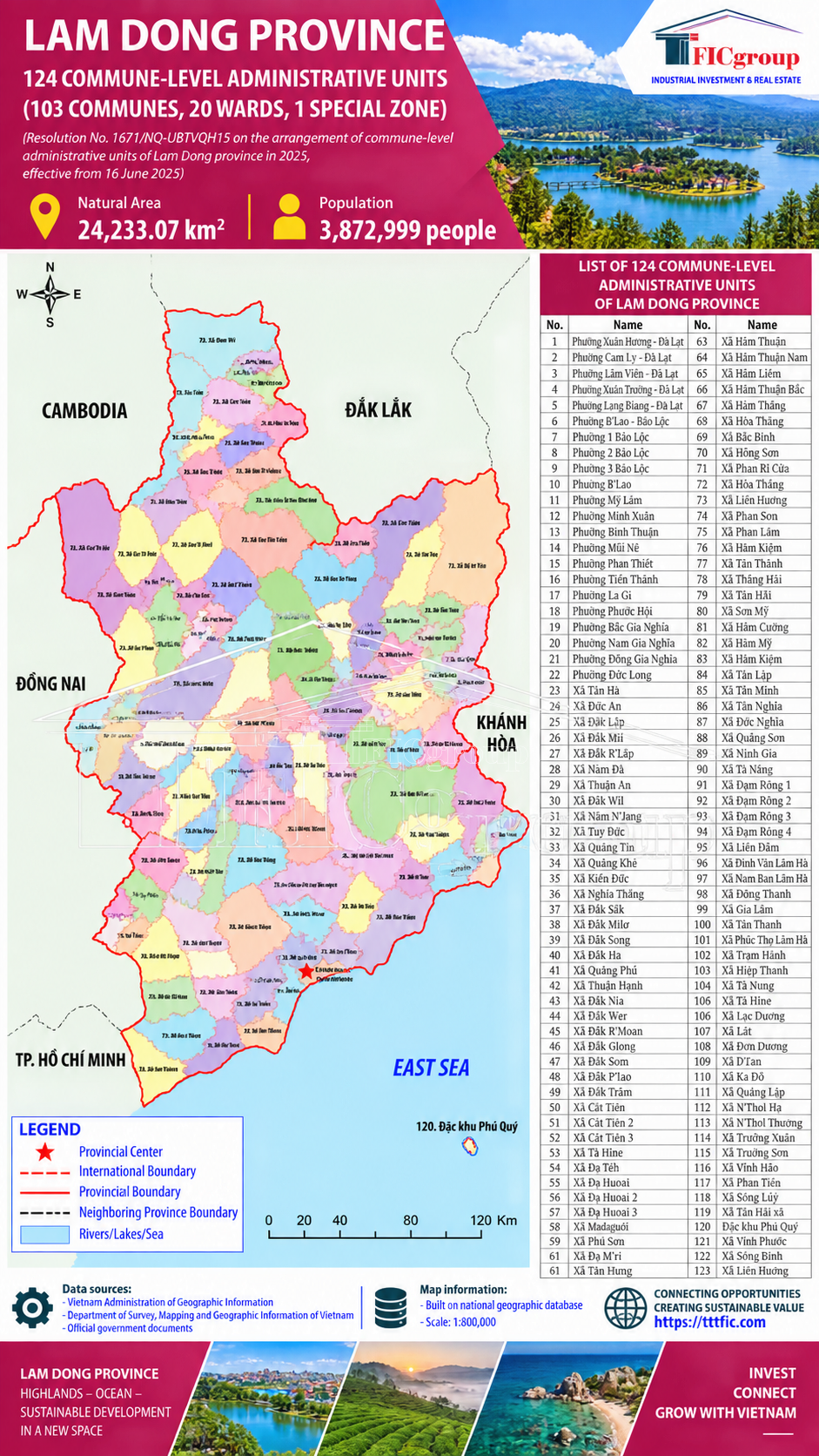
The new Lam Dong Province was established in 2025 through the merger of the entire territories and populations of:
The post-merger province has approximately:
By natural area, Lam Dong is now:
VIETNAM’S LARGEST PROVINCE.
The province borders:
It also includes:
PHU QUY SPECIAL ZONE.
These facts alone demonstrate how fundamentally the province has changed.
The former Lam Dong was landlocked.
The new Lam Dong is coastal.
The former Lam Dong had no international border.
The new Lam Dong borders Cambodia.
The former Lam Dong was primarily associated internationally with Da Lat, agriculture and tourism.
The new Lam Dong additionally possesses:
This is not simply a larger province.
IT IS A NEW ECONOMIC GEOGRAPHY.
The merger combines three complementary economic systems.
Da Lat + High-Tech Agriculture + Coffee + Tea + Flowers + Tourism + Food Processing + Education + Aviation
Bauxite + Alumina + Minerals + Forestry + Agriculture + Hydropower + Cambodia Border + Ta Dung
Coast + Mui Ne + Fisheries + Titanium + Energy + Expressways + International Port + Phu Quy
Together they create:
ONE HIGHLANDS-TO-SEA ECONOMY.
The strategic significance lies in integration.
Highland agriculture can connect with processing and export.
Mineral resources can connect with deeper industrial processing.
Industrial development can connect with energy.
Production centers can connect with expressways.
Southern industrial corridors can connect toward Cai Mep–Thi Vai and the Southern Key Economic Region.
Coastal industry can connect directly with maritime infrastructure.
Tourism can connect Da Lat, Ta Dung, Mui Ne and Phu Quy within one provincial strategy.
The result is an unusually diversified investment platform.
TTTFIC identifies four major pillars defining the province’s post-merger economy.
Coffee + Tea + Flowers + Vegetables + Fruit + High-Tech Agriculture + Agro-Processing
Da Lat + Ta Dung + UNESCO Geopark + Mui Ne + Phan Thiet + Phu Quy
Industrial Parks + Becamex VSIP + Bauxite + Alumina + Aluminum + Titanium + Advanced Manufacturing
Hydropower + Wind + Solar + LNG + Expressways + Vinh Tan International Port + Cai Mep Connectivity + Coastal Logistics
These four pillars should not be viewed independently.
Their greatest investment value comes from integration:
AGRICULTURE → PROCESSING → EXPORT.
MINERALS → ADVANCED MATERIALS → MANUFACTURING.
ENERGY → INDUSTRIAL DEVELOPMENT.
EXPRESSWAYS → PORTS → GLOBAL MARKET.
TOURISM → SERVICES → URBAN ECONOMY → HUMAN CAPITAL.
The post-merger economy is substantially larger and more diversified than the former Lam Dong economy.
In 2025, provincial GRDP increased approximately:
6.42%.
GRDP per capita reached approximately:
VND 105.24 MILLION.
The service sector grew approximately:
8.28%.
Industry and construction increased approximately:
5.54%.
Agriculture, forestry and fisheries increased approximately:
5.1%.
State budget revenue reached approximately:
VND 31.58 TRILLION.
The economy is therefore supported by multiple growth engines rather than one dominant sector.
For investors, this diversification matters.
Lam Dong can potentially support investments across:
Foreign investment is already an important component of Lam Dong’s economy.
By August 2026, the province had approximately:
246 ACTIVE FDI PROJECTS
with combined registered investment of approximately:
VND 224.97 TRILLION.
The broader investment platform included approximately:
2,960 ACTIVE INVESTMENT PROJECTS
with total registered investment approaching:
VND 938.7 TRILLION.
The significance for international investors is not simply the amount of registered capital.
It is the diversification of investment geography following the merger.
An investor can now evaluate within one province:
ACTIVE FDI PROJECT ≠ NEW FDI PROJECT
REGISTERED FDI ≠ DISBURSED FDI
INVESTOR INTEREST ≠ MOU
MOU ≠ APPROVED PROJECT
APPROVED PROJECT ≠ OPERATING PROJECT
Industrial development is one of the sectors most transformed by the merger.
The new Lam Dong combines the Industrial Park systems of all three former provinces.
Approximately:
10 INDUSTRIAL PARKS (IPs)
are currently operating.
The adjusted provincial planning creates a much larger future industrial platform.
For the 2026–2030 period, approximately:
35 INDUSTRIAL PARKS
are identified within the planning framework, covering approximately:
8,460 HECTARES.
Additional Industrial Parks are included in longer-term planning.
The strategic implication is significant.
Industrial geography is no longer concentrated around several traditional highland locations.
It now extends:
FROM THE CENTRAL HIGHLANDS
↓
THROUGH MINERAL & AGRICULTURAL PROCESSING CORRIDORS
↓
TO PHAN THIET / HAM KIEM
↓
TO BECAMEX VSIP
↓
TO VINH TAN / SON MY
↓
TO THE EAST SEA.
35 PLANNED IPs ≠ 35 OPERATING IPs
PLANNED IP ≠ ESTABLISHED IP
ESTABLISHED IP ≠ COMPLETED INFRASTRUCTURE
INDUSTRIAL LAND ≠ READY-TO-LEASE LAND
OPERATING INFRASTRUCTURE ≠ SITE-SPECIFIC UTILITY CAPACITY
Industrial Clusters (ICs) provide another layer of Lam Dong’s industrial development.
The adjusted provincial planning targets approximately:
74 INDUSTRIAL CLUSTERS BY 2030.
ICs can support:
This distributed industrial model is particularly relevant because Lam Dong now covers more than 24,000 km².
Production areas are widely dispersed.
Industrial Clusters can therefore help bring processing capacity closer to raw-material areas.
PLANNED IC ≠ ESTABLISHED IC
ESTABLISHED IC ≠ OPERATING IC
AVAILABLE LAND ≠ FDI ELIGIBILITY
One of the most important industrial opportunities inherited from former Binh Thuan is the large-scale:
BECAMEX VSIP BINH THUAN INDUSTRIAL – SERVICE – URBAN PLATFORM.
The broader development concept covers approximately:
5,000 HECTARES
in the former La Gi–Ham Tan area.
The historical development framework allocates more than:
3,000 HECTARES
toward industrial development, with the remaining area supporting urban, service and related functions.
Its scale makes this fundamentally different from a conventional standalone Industrial Park.
The model is:
INDUSTRY + URBAN DEVELOPMENT + SERVICES + INFRASTRUCTURE + LOGISTICS.
Its location is strategically important.
The southern Lam Dong corridor can connect toward:
This creates an opportunity to integrate southern Lam Dong with the wider Southern Key Economic Region.
The long-term industrial opportunity could include:
If the industrial, transport, energy and logistics ecosystem develops as planned, the La Gi–Ham Tan corridor could become one of Lam Dong’s most important next-generation manufacturing locations.
5,000-HA DEVELOPMENT CONCEPT ≠ 5,000 HA OF READY INDUSTRIAL LAND
INVESTMENT APPROVAL ≠ COMPLETED INFRASTRUCTURE
HIGH-TECH ORIENTATION ≠ ESTABLISHED HIGH-TECH CLUSTER
SEMICONDUCTOR OPPORTUNITY ≠ EXISTING SEMICONDUCTOR HUB
FUTURE PORT INFRASTRUCTURE ≠ OPERATING DEEP-WATER PORT
Another strategically distinctive industrial asset is:
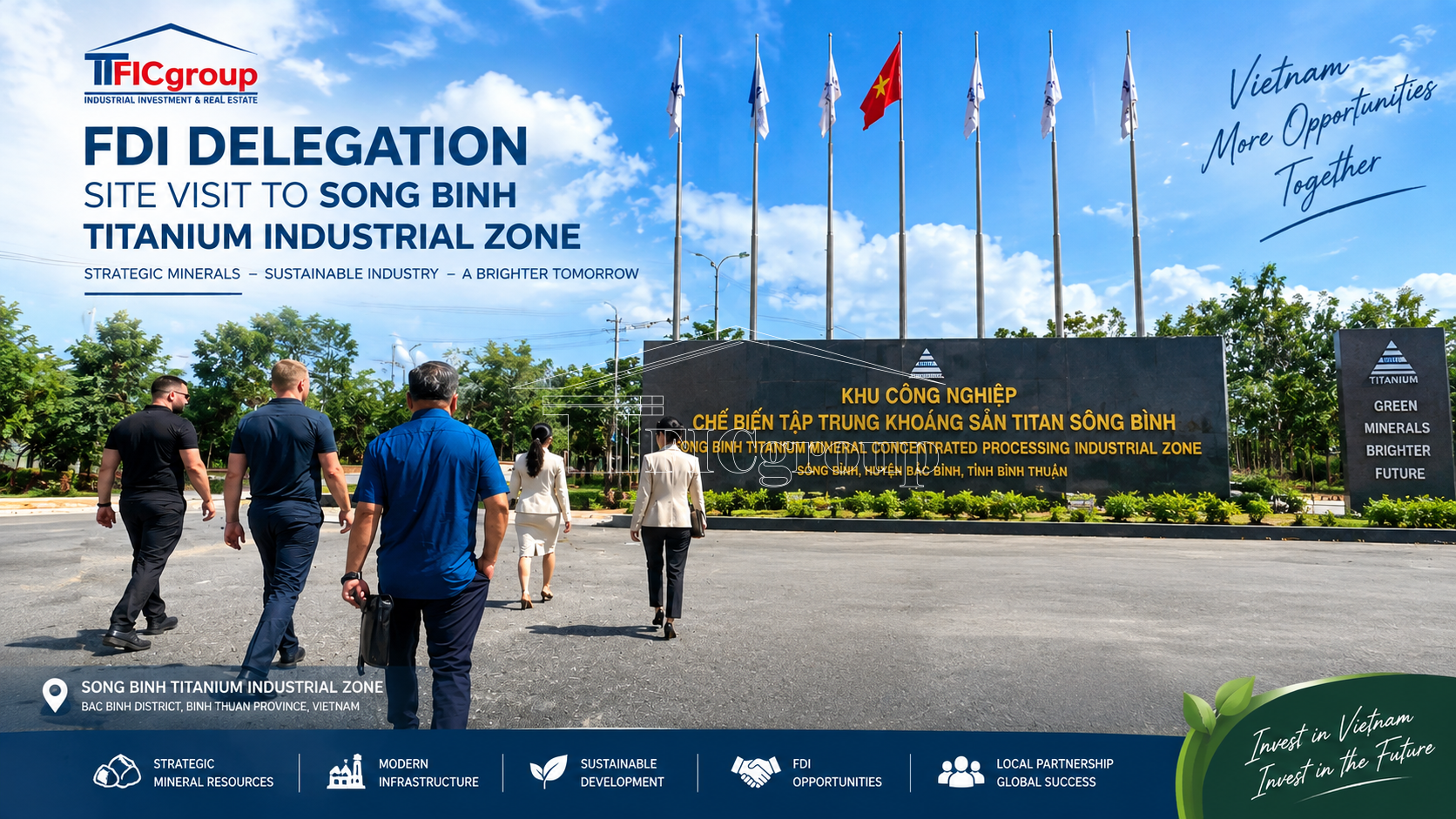
SONG BINH INDUSTRIAL PARK.
Song Binh is not simply a conventional multi-sector Industrial Park.
The approximately:
300-HECTARE
industrial development was planned around:
DEEP TITANIUM PROCESSING.
Potential product groups include:
This creates an industrial strategy beyond simple mineral extraction.
TITANIUM RESOURCE
↓
MINERAL CONCENTRATION
↓
DEEP PROCESSING
↓
TiO₂ / ZIRCON PRODUCTS
↓
TITANIUM METAL & ALLOYS
↓
ADVANCED MATERIALS
↓
HIGHER-VALUE MANUFACTURING.
Potential downstream markets can include:
Combined with the bauxite–alumina–aluminum platform inherited from former Dak Nong, the province can potentially develop two important mineral-to-industry value chains.
Former Dak Nong fundamentally changes the mineral-industrial profile of Lam Dong.
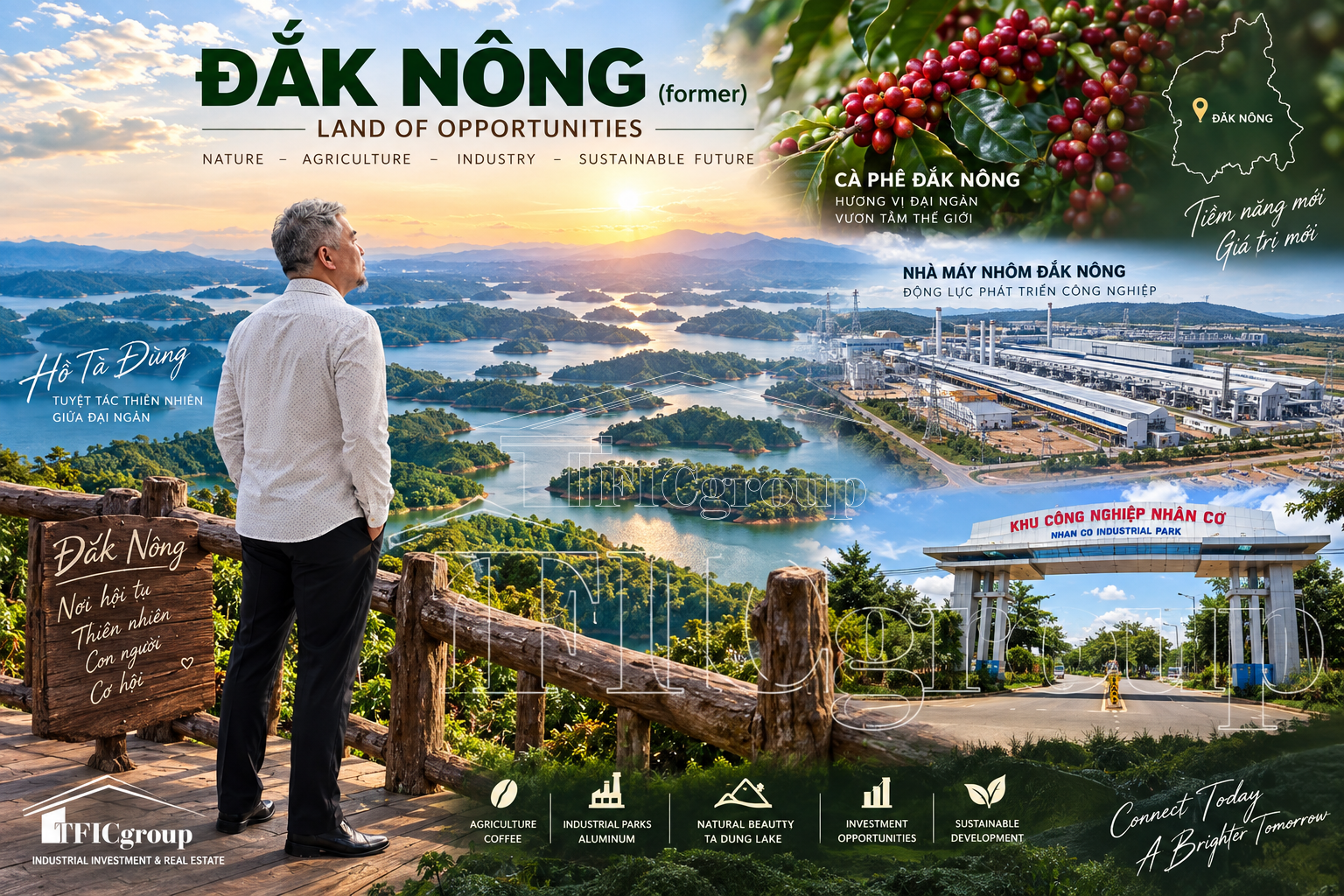
The new province contains two established major alumina production centers:
TAN RAI
and:
NHAN CO.
Together, they provide approximately:
1.3 MILLION TONNES OF ALUMINA CAPACITY PER YEAR.
The development of downstream aluminum production creates the potential to move beyond mineral extraction and alumina production.
The industrial value chain can become:
BAUXITE
↓
ALUMINA
↓
ALUMINUM
↓
ALUMINUM PRODUCTS
↓
INDUSTRIAL COMPONENTS
↓
DOMESTIC & EXPORT MARKETS.
The strategic opportunity is therefore:
DEEPER PROCESSING + DOWNSTREAM INDUSTRIALIZATION.
Combined with titanium, this creates the possibility of positioning Lam Dong as an important advanced-materials production location.
MINERAL OCCURRENCE ≠ LEGAL RESERVE
LEGAL RESERVE ≠ MINING LICENSE
MINING LICENSE ≠ OPERATING MINE
ALUMINA CAPACITY ≠ ALUMINUM CAPACITY
RESOURCE POTENTIAL ≠ BANKABLE PROJECT
Agriculture remains one of Lam Dong’s defining economic strengths.
The merger combines major production territories for:
The former Lam Dong already possessed one of Vietnam’s most developed high-tech agricultural ecosystems.
Former Dak Nong adds extensive coffee, agricultural and forestry production.
Former Binh Thuan adds major fruit, fisheries and coastal agricultural value chains.
The result is an exceptionally diversified agricultural base.
But the investment opportunity is not simply farming.
It is:
INDUSTRIALIZING AGRICULTURE.
The value chain is:
FARM
↓
AGRICULTURAL TECHNOLOGY
↓
STANDARDIZATION
↓
TRACEABILITY
↓
PROCESSING
↓
PACKAGING
↓
COLD CHAIN
↓
BRAND
↓
EXPORT.
Lam Dong can increasingly move away from commodity-only production toward higher-value products.
Potential investment areas include:
The strategic direction is:
LESS RAW COMMODITY EXPORT.
MORE VALUE-ADDED PROCESSING.
For international investors, this creates opportunities to locate processing closer to raw materials while using the province’s improving road and maritime logistics systems to access domestic and export markets.
The new Lam Dong possesses one of Vietnam’s most diversified provincial energy landscapes.
The highlands contribute:
The coastal territory contributes:
Strategically important energy locations include:
VINH TAN
and:
SON MY.
The Son My energy corridor has the potential to support:
The combined provincial energy portfolio can therefore include:
HYDROPOWER + SOLAR + WIND + LNG + BIOMASS.
This diversity can become an important component of future industrial development.
ENERGY POTENTIAL ≠ OPERATING CAPACITY
APPROVED PROJECT ≠ COMPLETED POWER PLANT
REGIONAL GENERATION ≠ SITE-SPECIFIC INDUSTRIAL POWER AVAILABILITY
One of the most transformational assets brought into the new Lam Dong is:
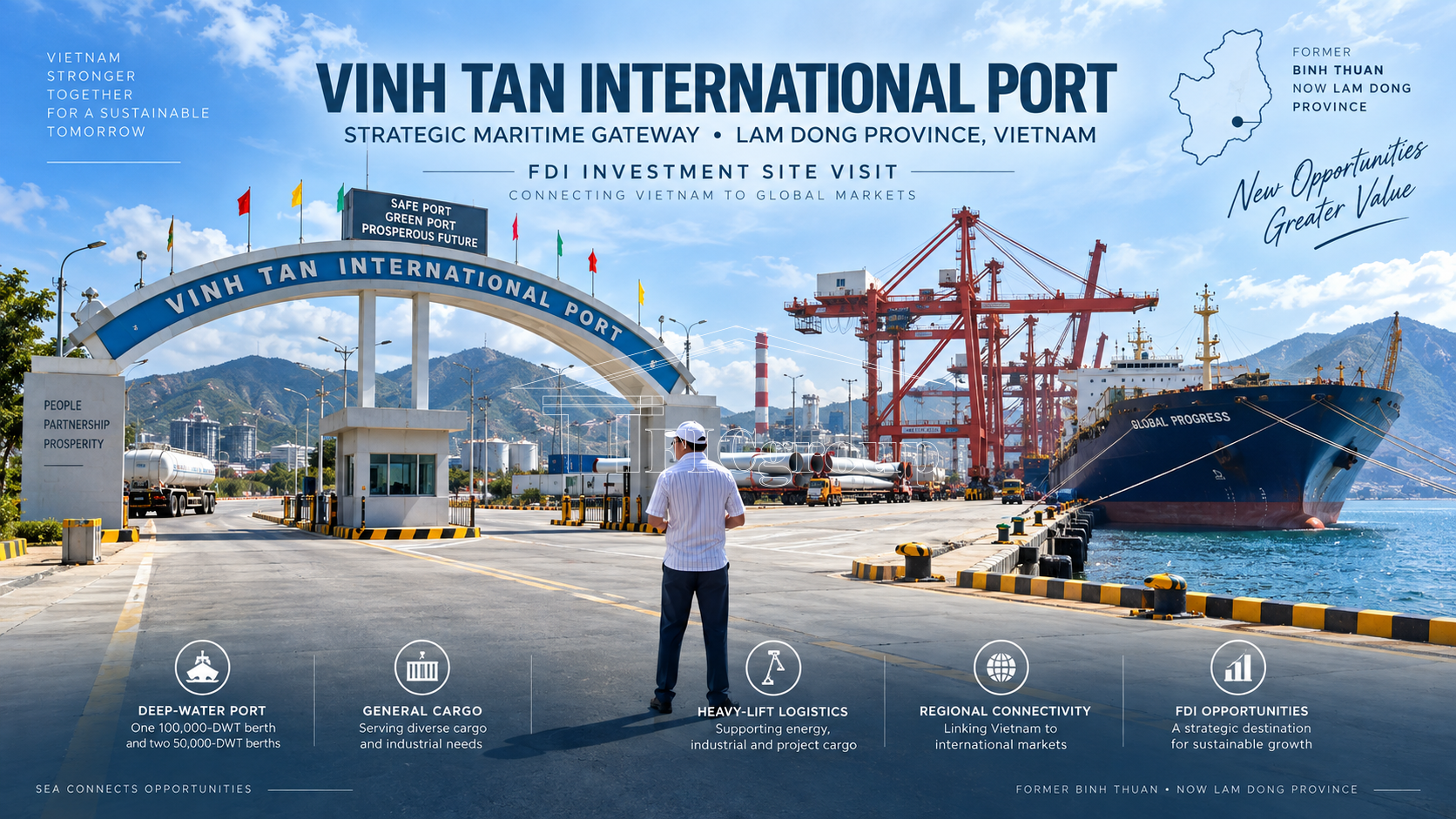
VINH TAN INTERNATIONAL PORT.
Unlike future port concepts:
VINH TAN IS AN OPERATING PORT.
The port handles industrial materials, machinery, minerals and bulk cargo.
This fundamentally changes Lam Dong’s logistics proposition.
The former highland province depended on maritime infrastructure outside its territory.
The new Lam Dong possesses its own operating international maritime gateway.
The logistics model can now include:
CENTRAL HIGHLANDS
↓
AGRICULTURE / MINERALS / INDUSTRY
↓
ROAD NETWORK
↓
COASTAL LAM DONG
↓
VINH TAN INTERNATIONAL PORT
↓
GLOBAL MARKET.
For mineral processing, energy and industrial projects, this is particularly important.
Southern Lam Dong has a second strategic maritime option.
The La Gi–Ham Tan corridor can connect toward:
DONG NAI
↓
BA RIA–VUNG TAU
↓
CAI MEP–THI VAI
↓
GLOBAL SHIPPING NETWORK.
This is particularly relevant to the future development of Becamex VSIP Binh Thuan and other industrial projects in southern Lam Dong.
The province can therefore develop two complementary maritime logistics orientations:
Highlands / Industry / Minerals → Vinh Tan International Port
and:
La Gi / Ham Tan → Cai Mep–Thi Vai
Future coastal port development around the southern industrial and energy corridor could further strengthen this system.
ROAD PLANNING ≠ COMPLETED ROAD
PORT PLANNING ≠ OPERATING PORT
PROXIMITY TO CAI MEP ≠ AUTOMATIC LOGISTICS COMPETITIVENESS
Real competitiveness depends on travel time, road capacity, tolls, cargo type, container availability and port service requirements.
The former Binh Thuan territory contributes established expressway infrastructure connecting the province toward:
Further highland connectivity can progressively link:
The strategic model is:
HIGHLANDS → EXPRESSWAY → INDUSTRY → COAST → PORT.
Improved connectivity can directly affect the competitiveness of:
The merger with former Dak Nong gives Lam Dong direct international-border geography with Cambodia.
The new province therefore combines:
CAMBODIA BORDER + CENTRAL HIGHLANDS + EAST SEA.
This creates longer-term opportunities in:
The geography also creates a conceptual east–west investment corridor:
CAMBODIA
↓
WESTERN LAM DONG
↓
CENTRAL HIGHLANDS
↓
INDUSTRIAL & PROCESSING CENTERS
↓
EAST SEA.
INTERNATIONAL BORDER ≠ HIGH-CAPACITY TRADE CORRIDOR
Border investment must be evaluated according to border-gate status, customs capacity, roads and actual trade flows.
Tourism is not a secondary activity in the new Lam Dong.
It is one of the province’s four principal economic pillars.
The merger creates one of Vietnam’s most diverse tourism geographies.
DA LAT + TA DUNG + UNESCO GEOPARK + MUI NE + PHAN THIET + PHU QUY.
The tourism landscape now extends:
FROM MOUNTAINS TO OCEAN.
Da Lat remains one of Vietnam’s most recognizable tourism destinations.
Its competitive advantages include:
But Da Lat’s investment role is broader than tourism.
It also contributes:
For international investors, this strengthens the province’s ability to attract and retain technical, professional and managerial talent.
Former Dak Nong adds a completely different tourism landscape.
Ta Dung Lake is characterized by its expansive highland waters and numerous islands, creating the landscape often described as:
“HA LONG BAY OF THE CENTRAL HIGHLANDS.”
The surrounding territory also benefits from:
This creates investment opportunities in carefully controlled:
The objective should be high-quality development compatible with environmental protection.
Former Binh Thuan contributes another internationally recognized tourism brand:
MUI NE – PHAN THIET.
The coastal tourism economy includes:
The merger therefore allows Lam Dong to combine two nationally and internationally recognized tourism brands:
DA LAT
and:
MUI NE.
Rather than functioning as separate destinations, they can increasingly become part of one provincial tourism network.
The new province also includes:
PHU QUY SPECIAL ZONE.
Phu Quy adds:
Lam Dong therefore extends beyond the coast into the East Sea.
This creates a complete tourism and maritime geography:
HIGHLANDS → COAST → ISLAND.
The post-merger tourism proposition can be summarized as:
DA LAT
↓
TA DUNG
↓
UNESCO GEOPARK
↓
MUI NE / PHAN THIET
↓
PHU QUY.
This is an unusually diverse tourism system.
Within one province, visitors can experience:
The economic objective should therefore move beyond visitor numbers toward:
LONGER STAY
HIGHER SPENDING
YEAR-ROUND TOURISM
HIGHER-VALUE SERVICES
INTERNATIONAL VISITORS.
A successful FDI platform requires more than industrial land.
It requires people.
The new Lam Dong has a population approaching:
3.9 MILLION.
The province also combines established urban centers, tourism economies, universities, vocational training, agriculture, industry and service employment.
Da Lat provides an important quality-of-life advantage.
Phan Thiet and the coastal urban system add another population and service base.
The enlarged labor catchment can support:
However:
LARGE POPULATION ≠ AVAILABLE INDUSTRIAL LABOR
Investors must evaluate:
The adjusted provincial planning introduces another major strategic development:
THE SOUTHEAST COASTAL ECONOMIC ZONE.
The proposed Economic Zone (EZ) covers approximately:
75,000 HECTARES.
Its development orientation can integrate:
If implemented successfully, this could become one of Lam Dong’s most important future industrial, energy and logistics growth engines.
PLANNED EZ ≠ ESTABLISHED EZ
ESTABLISHED EZ ≠ OPERATING EZ
75,000-HA PLANNING AREA ≠ READY INDUSTRIAL LAND
NON-TARIFF ORIENTATION ≠ OPERATING FREE-TRADE ZONE
TTTFIC identifies ten major opportunity groups.
Coffee, tea, flowers, vegetables, fruit and specialty crops.
Food ingredients, beverages, extracts, frozen products, packaging and advanced processing.
Subject to mineral, environmental, energy and legal requirements.
Deep processing and downstream industrial applications.
Electronics, precision engineering, automation, supporting industries and selected semiconductor-related supply chains.
Hydropower, wind, solar, biomass, LNG-related infrastructure and industrial services.
Vinh Tan, southern logistics corridors and Cai Mep connectivity.
Da Lat, Ta Dung, Mui Ne, Phan Thiet and Phu Quy.
Serving agriculture, food, fisheries and distribution.
Engineering, R&D, environmental technology, digital infrastructure and industrial support.
Before recommending a site, TTTFIC verifies:
LAND
LEGAL STATUS
PLANNING
SITE CLEARANCE
FDI ELIGIBILITY
INDUSTRY ELIGIBILITY
MINERAL RIGHTS WHERE APPLICABLE
POWER
WATER
WASTEWATER
ENVIRONMENT
FIRE SAFETY
LABOR
RAW MATERIALS
ROAD ACCESS
PORT ACCESS
AIRPORT ACCESS
BORDER CONNECTIVITY
LOGISTICS COST
COMMERCIAL TERMS
IMPLEMENTATION TIMELINE.
Lam Dong’s scale creates opportunity, but also complexity.
At more than 24,000 km², distances between investment nodes can be substantial.
PLANNED LAND ≠ READY-TO-LEASE LAND.
Mining and mineral processing require strict verification of reserves, licensing, environmental requirements, water and energy.
Water availability can be a significant issue for mining, mineral processing, industry, tourism and agriculture.
Regional power generation does not guarantee site-specific industrial capacity.
A port within the province does not mean every industrial location has competitive access to that port.
Industrial, mining and energy development must coexist with major tourism destinations, forests, coastal environments and protected landscapes.
Legacy planning, land and investment documents may still refer to former Lam Dong, Dak Nong or Binh Thuan.
Investors must verify which documents remain valid and which have been superseded, integrated or adjusted.
The new Lam Dong combines an extraordinary range of economic assets within one province:
VIETNAM’S LARGEST PROVINCIAL LAND AREA
CENTRAL HIGHLANDS
CAMBODIA BORDER
HIGH-TECH AGRICULTURE
DA LAT
TA DUNG
MUI NE
PHU QUY
BAUXITE & ALUMINA
TITANIUM
INDUSTRIAL PARKS
BECAMEX VSIP
ADVANCED MANUFACTURING POTENTIAL
ENERGY
EXPRESSWAYS
EAST SEA COAST
OPERATING INTERNATIONAL PORT
CAI MEP CONNECTIVITY.
Few Vietnamese provinces combine this range of resources, infrastructure, industrial potential and tourism assets.
The investment proposition lies not in any single element.
IT LIES IN CONNECTING THEM.
TTTFIC sees the new Lam Dong as a multi-node investment system rather than one homogeneous market.
Services + Tourism + High-Tech Agriculture + Research + Human Capital + Aviation
Coffee + Tea + Agro-Processing + Industry
Bauxite + Alumina + Minerals + Agriculture + Forestry + Ta Dung + Cambodia Connectivity
Industry + Logistics + Expressways + Tourism + Services
Next-Generation Industry + Advanced Manufacturing + Technology + Southern Economic Connectivity
Titanium + Deep Processing + Advanced Materials
International Port + Energy + Industrial Logistics
LNG + Energy + Future Economic Zone + Industry + Logistics
International Tourism + Hospitality + Coastal Services
Island Economy + Fisheries + Tourism + Maritime Potential
This creates several investment corridors.
Agriculture / Minerals → Processing → Industry → Expressways → Port → Global Market
Becamex VSIP → Dong Nai / Ba Ria–Vung Tau → Cai Mep–Thi Vai → Global Market
Da Lat → Ta Dung → Mui Ne → Phu Quy
Bauxite / Titanium → Deep Processing → Advanced Materials → Manufacturing
This is why site selection within the new Lam Dong cannot be reduced to:
“Where is industrial land available?”
The correct question is:
“WHICH INVESTMENT CORRIDOR BEST FITS THE INVESTOR’S INDUSTRY, RAW MATERIALS, LABOR, UTILITIES, LOGISTICS AND EXPORT STRATEGY?”
TTTFIC Group | Vietnam Industrial Investment & Business Advisory
The expanded Lam Dong requires sophisticated site selection.
A coffee processor should not evaluate the province in the same way as an electronics manufacturer.
A titanium processor has different infrastructure requirements from a tourism investor.
An aluminum project has different energy requirements from an agro-processing facility.
A semiconductor-related supplier has different labor, utility and logistics requirements from a mineral-processing project.
TTTFIC therefore begins with the investor’s operating model.
Our process is:
INVESTOR REQUIREMENTS
↓
INDUSTRY & SUPPLY-CHAIN ANALYSIS
↓
REGIONAL LOCATION STRATEGY
↓
INDUSTRIAL PARK / INDUSTRIAL CLUSTER / FACTORY SCREENING
↓
LAND & LEGAL DUE DILIGENCE
↓
UTILITIES & ENVIRONMENTAL ANALYSIS
↓
LABOR & RAW-MATERIAL ANALYSIS
↓
LOGISTICS / PORT / AIRPORT ANALYSIS
↓
COMMERCIAL NEGOTIATION
↓
IRC / ERC & REGULATORY COORDINATION
↓
DESIGN & BUILD
↓
OPERATION.
TTTFIC supports:
TTTFIC does not recommend a site simply because land is available.
We evaluate whether the location is:
LEGALLY + TECHNICALLY + LOGISTICALLY + COMMERCIALLY + OPERATIONALLY SUITABLE
for the investor.
The 2025 merger fundamentally changed Lam Dong.
Former Lam Dong contributed:
DA LAT + HIGH-TECH AGRICULTURE + TOURISM + HUMAN CAPITAL + AVIATION.
Former Dak Nong contributed:
BAUXITE + ALUMINA + MINERALS + FORESTRY + TA DUNG + CAMBODIA BORDER.
Former Binh Thuan contributed:
MUI NE + COAST + TITANIUM + INDUSTRY + ENERGY + EXPRESSWAYS + PORT + PHU QUY.
Together, they create:
VIETNAM’S HIGHLANDS-TO-SEA INVESTMENT PLATFORM.
The strategic opportunity is integration.
FARM → PROCESSING → GLOBAL FOOD MARKET.
BAUXITE → ALUMINA → ALUMINUM → INDUSTRIAL PRODUCTS.
TITANIUM → DEEP PROCESSING → ADVANCED MATERIALS.
INDUSTRIAL LAND → ADVANCED MANUFACTURING → LOGISTICS.
ENERGY → INDUSTRY.
HIGHLANDS → EXPRESSWAYS → COAST.
BECAMEX VSIP → SOUTHERN ECONOMIC REGION → CAI MEP.
VINH TAN → EAST SEA → GLOBAL MARKET.
DA LAT → TA DUNG → MUI NE → PHU QUY.
CAMBODIA BORDER → CENTRAL HIGHLANDS → EAST SEA.
The old Lam Dong was internationally recognized primarily for:
DA LAT + AGRICULTURE + TOURISM.
The new Lam Dong represents something substantially broader:
AGRICULTURE + TOURISM + MINERALS + ADVANCED MATERIALS + INDUSTRY + ENERGY + BORDER + EXPRESSWAYS + PORTS + SEA.
For international investors, the question is therefore no longer simply:
“Why Lam Dong?”
The more important question is:
“WHERE WITHIN THE NEW LAM DONG SHOULD WE INVEST?”
And equally important:
“WHICH OF LAM DONG’S NEW ECONOMIC CORRIDORS BEST CONNECTS OUR FACTORY, SUPPLY CHAIN AND GLOBAL MARKET?”
That is the question TTTFIC Group is designed to help investors answer.
TTTFIC VIETNAM INVESTMENT INTELLIGENCE PLATFORM 2026
TTTFIC Group | Vietnam Industrial Investment & Business Advisory
FDI INVESTORS — CONTACT TTTFIC GROUP
Vietnam Nationwide + Thailand
Tel / WhatsApp: +84 936 431 788
Email: marketing@tttfic.com
Table of contents